
Atlantic West Europe: From Conflict to Consolidation …
Years: 1432 - 1443
Atlantic West Europe: From Conflict to Consolidation (1432–1443)
The era 1432–1443 in Atlantic West Europe during the Upper Late Medieval Age (1396–1539) marks a significant transition from intense dynastic and territorial conflicts toward gradual political consolidation, economic stabilization, and cultural flourishing. While warfare remains ever-present, this decade witnesses crucial shifts toward internal strengthening and strategic realignments.
Political and Military Developments
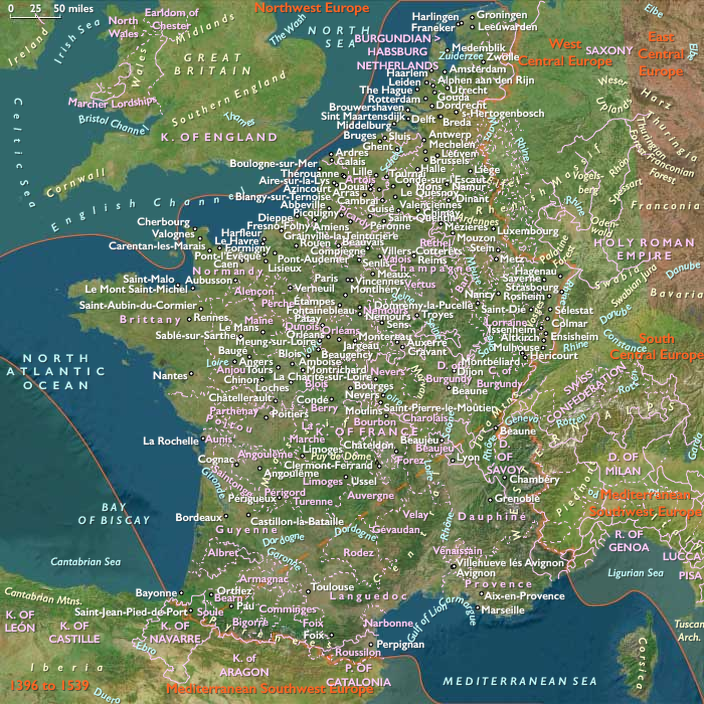
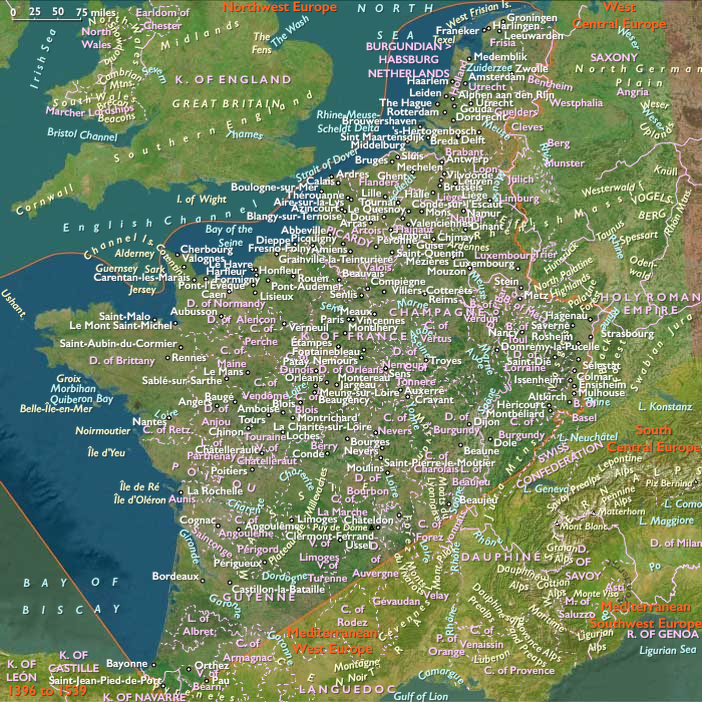
Following the execution of Joan of Arc (1431), French fortunes in the Hundred Years' War undergo a remarkable turnaround. Under Charles VII, France embarks on the reconquest of territories previously lost to England, most notably capturing Paris in 1436. The English position weakens further with internal divisions, culminating in power struggles among English nobility. In parallel, the Treaty of Arras (1435) ends the destructive civil war between Armagnacs and Burgundians, aligning Burgundy more closely with France and isolating England diplomatically. This treaty represents a major diplomatic victory for France, fundamentally altering the power dynamics within the region.
Economic Developments
Economic recovery gradually takes root during this period, driven largely by stabilization in regions less affected by active combat. Bruges, Ghent, and Antwerp continue to reassert themselves as hubs of commerce, with the cloth and textile trade expanding significantly. Maritime trade benefits from improved naval security, despite occasional piracy and warfare disrupting commerce. The regional economy shifts increasingly toward specialization, and cities leverage their strategic positions on trade routes to bolster prosperity.
Cultural and Artistic Trends
Cultural life thrives in this comparatively peaceful decade. The Burgundian court at cities like Dijon, Bruges, and Ghent becomes renowned for its artistic and intellectual patronage. Jan van Eyck, whose masterpiece, the Ghent Altarpiece (completed 1432), exemplifies unprecedented realism and detail, dominates artistic innovation. His techniques spread widely across Europe, solidifying Flanders’ position as the epicenter of Northern Renaissance art. Literature and manuscript illumination flourish under ducal patronage, highlighting the cultural resilience of the period.
Technological and Societal Changes
Technological innovation continues apace, particularly in military and maritime fields. Improvements in artillery technology, influenced by earlier warfare experiences, lead to advancements in fortification designs and siege techniques. In society, urban centers grow stronger, with guilds and merchant associations gaining influence, laying foundations for stronger municipal governance. Rural areas, however, recover more slowly, still bearing the economic scars of recent decades of conflict.
Long-term Consequences and Significance
This period (1432–1443) represents a critical turning point. Politically, the Treaty of Arras establishes lasting peace between Burgundy and France, realigning power balances and diminishing English continental ambitions. Economically, the era’s stabilization lays groundwork for future prosperity, particularly in the increasingly dominant cities of the Low Countries. Culturally, the influence of the Burgundian court shapes artistic and intellectual developments, defining an enduring cultural legacy that significantly impacts subsequent European art.
Overall, this decade bridges an era of conflict and territorial upheaval to one of political consolidation, economic revival, and cultural innovation, setting the trajectory for Atlantic West Europe's emergence as a pivotal region in the coming Renaissance age.
People
Groups
- Flanders, County of
- Burgundy, Duchy of
- France, (Valois) Kingdom of
- Netherlands, Burgundian
- England, (Plantagenet, Lancastrian) Kingdom of
Topics
- Hundred Years' War
- Northern Renaissance
- Hundred Years' War: French Victory
- Western Art: 1432 to 1444
Commodoties
Subjects
Regions
Subregions
Related Events
Showing 10 events out of 42013 total
Years: 1432 - 1443
People
Groups
- Flanders, County of
- Burgundy, Duchy of
- France, (Valois) Kingdom of
- Netherlands, Burgundian
- England, (Plantagenet, Lancastrian) Kingdom of
Topics
- Hundred Years' War
- Northern Renaissance
- Hundred Years' War: French Victory
- Western Art: 1432 to 1444
Commodoties
Subjects
Regions
Subregions