
The British had become the major power …
Years: 1836 - 1836
April
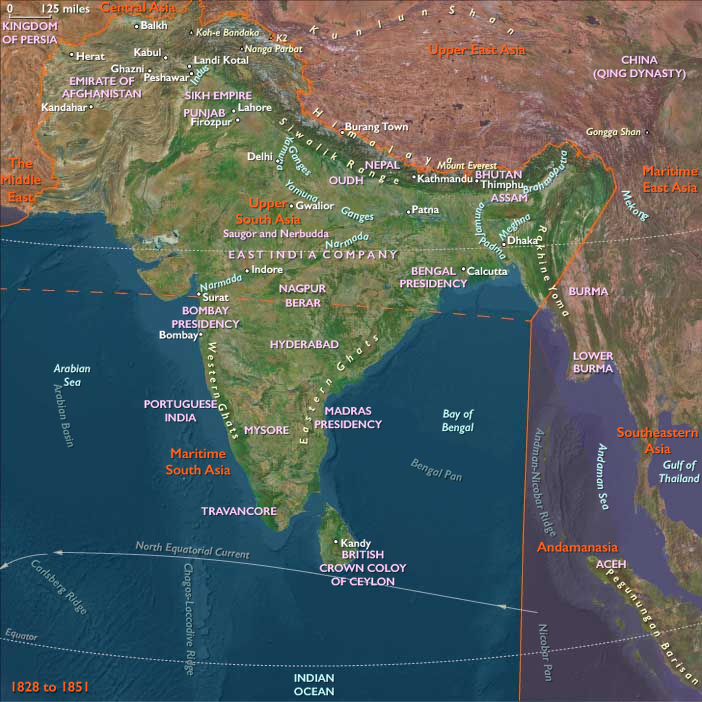
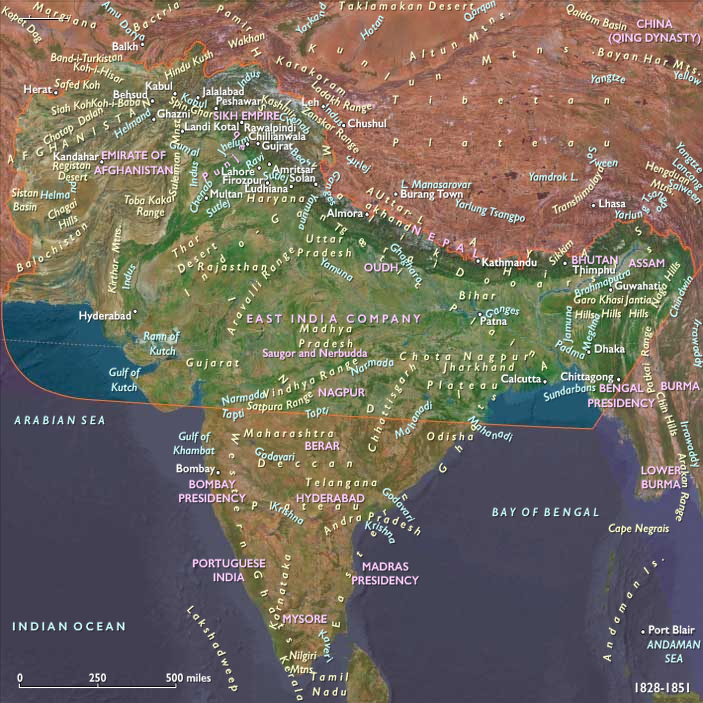
The British had become the major power in the Indian subcontinent after the Treaty of Paris in 1763, but had for decades remained relatively unconcerned with the collection of petty princes and warring tribes that make up Afghanistan.
This changes with the Russian push for an advantage in the Afghan region to place pressure on British India.
Dost Mohammad, rejecting overtures from Russia, endeavors to form an alliance with the British, who, fearful that Persia is falling completely under Russian influence, are ever eager to enter into alliances with the rulers of Herat, Kabul, and Qandahar.
Deciding to contact the British directly for help in dealing with the Sikhs, Dost Mohammad writes in the spring of 1836 to the new governor general of India, Lord Auckland, a letter of congratulations and asks his advice on dealing with the Sikhs.
Just as Dost Mohammad's letter formally sets the stage for British intervention in Afghanistan, so also does Lord Auckland's reply foreshadow the duplicitous policy of the British in dealing with the Afghans.
Auckland responds that he will send a commercial mission to Kabul and states, "it is not the practice of the British Government to interfere with the affairs of other independent states."
Locations
People
Groups
- East India Company, British (United Company of Merchants of England Trading to the East Indies)
- Russian Empire
- India, East India Company rule in
- Persia, Qajarid Kingdom of
- Sikh Empire
- Britain (United Kingdom of Great Britain and Ireland)
- Afghanistan (fragmented)
Topics
Subjects
Regions
Subregions
Related Events
Showing 10 events out of 18452 total
Years: 1836 - 1836
April
Locations
People
Groups
- East India Company, British (United Company of Merchants of England Trading to the East Indies)
- Russian Empire
- India, East India Company rule in
- Persia, Qajarid Kingdom of
- Sikh Empire
- Britain (United Kingdom of Great Britain and Ireland)
- Afghanistan (fragmented)
Topics
Subjects
Regions
Subregions