
The British East India Company, consolidating its …
Years: 1690 - 1690
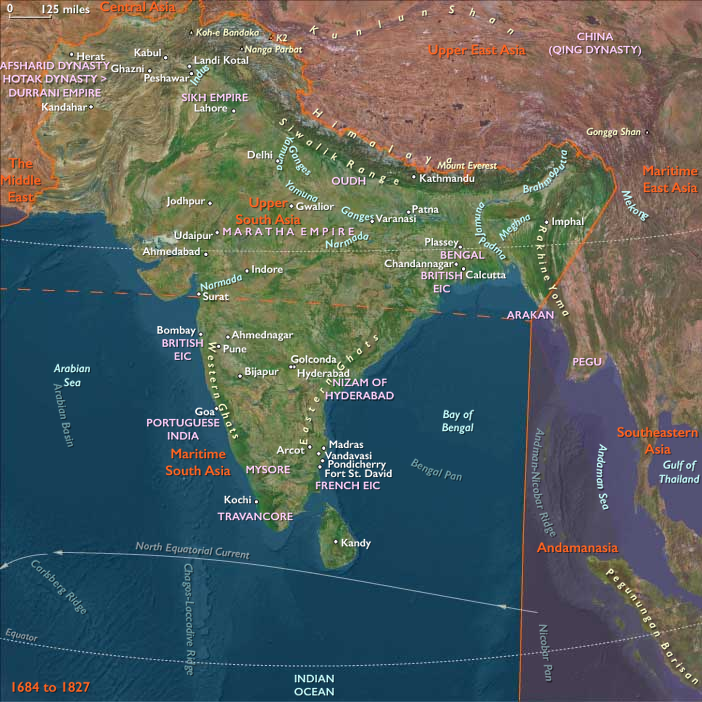
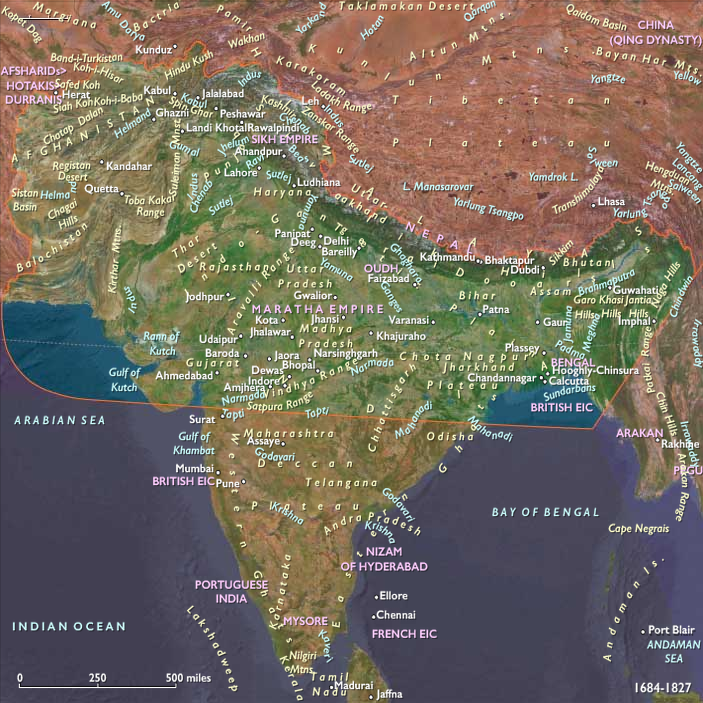
The British East India Company, consolidating its trade business in Bengal in 1690, acquires coastal enclaves on the east bank of the Hooghly River.
At this time Kolkata, under direct rule of the Nawab of Bengal Siraj-Ud-Daulah, comprises three villages: Kalikata, Govindapur and Sutanuti.
Charnock, threatened in Hooghly by the Mughal (Mogul) viceroy in Bengal, in 1690 moves his operations twenty-seven miles south to Sutanati, the site of what is now Calcutta.
The later selection of Calcutta as the capital of British India is largely the result of his persistence.
Constructing Fort William, the English authorities finally conclude peace with the Mughal Empire in 1690, when they agree to pay fees to continue their trade in Bengal.
Frequently at odds with Indian leaders and his superiors, Charnock has at times been accused of mismanagement, theft, brutality to Indian prisoners, and having questionable morals; he was once recommended for dismissal.
He lives with an Indian widow, whom he had rescued from her husband's funeral pyre, and has fathered several of her children.
Today the cultural capital of India and the commercial capital of Eastern India, the Kolkata metropolitan area, including suburbs, has a population exceeding fifteen million, making it the third most populous metropolitan area in India and the thirteenth most populous urban area in the world.
The city is also classified as the eighth largest urban agglomeration in the world.
Locations
People
Groups
- East India Company, British (The Company of Merchants of London Trading into the East Indies)
- Mughal Empire (Delhi)
- England, (Stewart, Restored) Kingdom of
Topics
Commodoties
Subjects
Regions
Subregions
Related Events
Showing 10 events out of 29283 total
Years: 1690 - 1690
Locations
People
Groups
- East India Company, British (The Company of Merchants of London Trading into the East Indies)
- Mughal Empire (Delhi)
- England, (Stewart, Restored) Kingdom of
Topics
Commodoties
Subjects
Regions
Subregions