
The War of the Three Sanchos (1065–1067 …
Years: 1066 - 1066
The War of the Three Sanchos (1065–1067 CE)
The War of the Three Sanchos arises in part from the lingering tensions following the division of Sancho III the Great’s empire in 1035. That partition had left Navarre as the dominant kingdom over the “petty kingdoms” (regula) of Castile and Aragon. However, by 1065, Navarre had fallen into vassalage under Castile, which had been joined with León after the death of Ferdinand I.
The Castilian Claim to Bureba and Alta Rioja
Sancho II of Castile, now ruling over Castile and León, covets Bureba and Alta Rioja, territories that his father, Ferdinand I, had helped reconquer from the Caliphate. However, Ferdinand later ceded these lands to his elder brother, García Sánchez III of Navarre, the father of Sancho IV of Navarre.
Sancho of Castile seeks to reclaim these disputed lands, launching a series of frontier raids. In response, Sancho IV of Navarre seeks an alliance with Sancho Ramírez of Aragon, fearing Castilian expansion.
The Conflict and the Role of El Cid
Most of the war takes place in the Burgos and La Rioja regions, reflecting Castile’s aim of recovering key frontier territories. The conflict is also tied to Castile’s capacity to participate in the Reconquista, which had been weakened by the division of Ferdinand’s kingdom in 1065.
During the campaign, Sancho of Castile attempts to extend his influence over the Muslim Taifa of Zaragoza, which pays him parias (tribute).
According to the 12th-century Crónica Najerense, a key battle occurs in which Sancho of Castile’s alférez (standard-bearer), Rodrigo Díaz de Vivar, defeats his Navarrese counterpart, Jimeno Garcés. This victory earns him the nickname "campi doctor" or "master of the field [of battle]", later immortalized in Spanish literature as El Campeador, the legendary El Cid.
The War of the Three Sanchos reflects the ongoing power struggles between the Christian kingdoms of Iberia, as each ruler seeks to expand their domains while weakening their rivals.
Locations
People
- Alfonso VI of León and Castile
- Ferdinand I of León and Castile
- García II of Galicia
- Sancho II of León and Castile
- Sancho IV Garcés
- Sancho Ramírez
Groups
Topics
Commodoties
Subjects
Regions
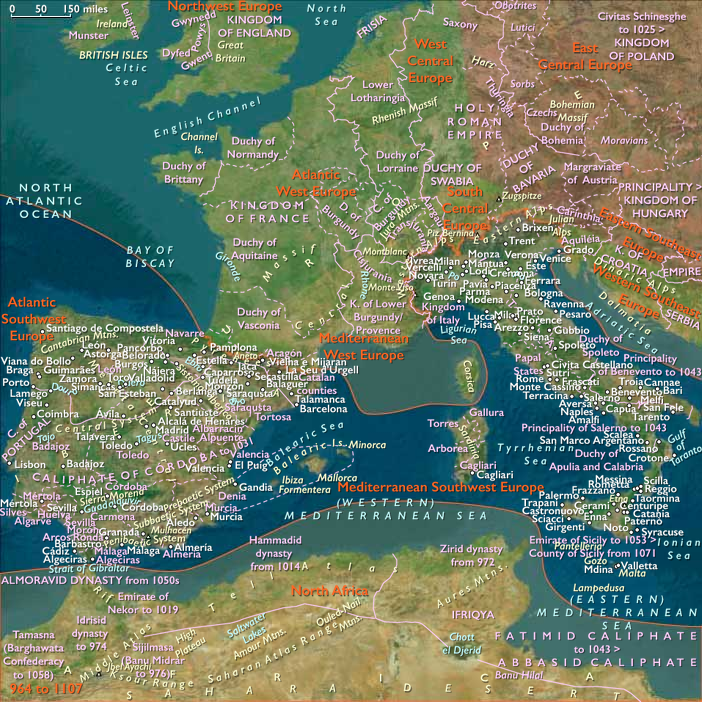
Subregions
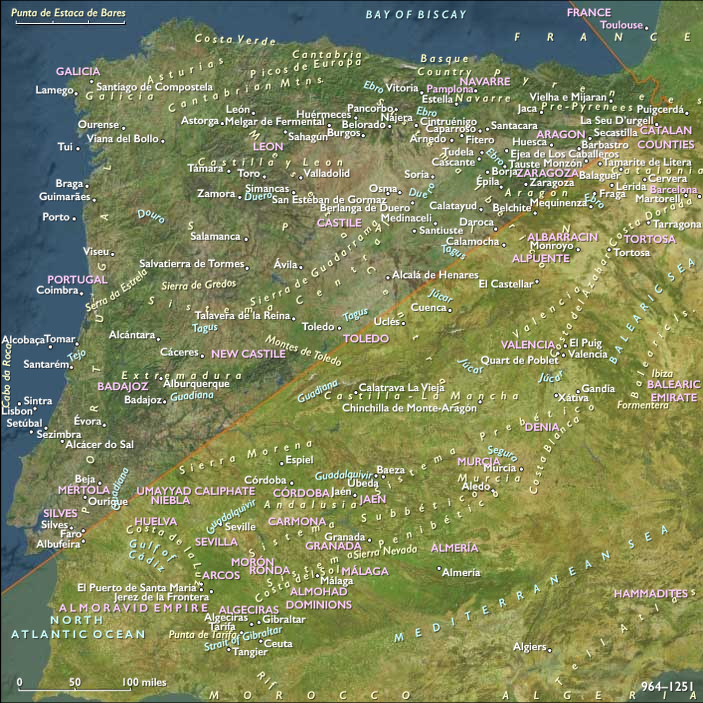
Years: 1066 - 1066
Locations
People
- Alfonso VI of León and Castile
- Ferdinand I of León and Castile
- García II of Galicia
- Sancho II of León and Castile
- Sancho IV Garcés
- Sancho Ramírez
Groups
Topics
Commodoties
Subjects
Regions
Subregions