
The Empire's great landowners, whom the government …
Years: 1024 - 1035
The Empire's great landowners, whom the government in Constantinople are no longer able to check after the death of Emperor Basil II in 1025, integrate the lands of small freeholders, spurring the consequent feudalization of the empire.
People
Groups
Commodoties
Subjects
Regions
Subregions
Related Events
Filter results
Showing 10 events out of 51637 total
Srivijaya, dominating the Malacca and Sunda straits, controls both the spice route traffic and local trade, charging a toll on passing ships.
Serving as an entrepôt for Chinese, Malay, and Indian markets, the port of Palembang, accessible from the coast by way of a river, has accumulated great wealth.
Although historical records and archaeological evidence are scarce, it appears that Srivijaya, with its main urban centers at Palembang, had by the seventh century established suzerainty over large areas of Sumatra, western Java and much of the Malay Peninsula.
Envoys travel to and from China frequently.
The relation between Srivijaya and the Chola dynasty of south India had been friendly during the reign of Raja Raja Chola I but beginning in 1025, during the reign of Rajendra Chola I, the Chola Dynasty starts to attack Srivijaya cities to protect Chola trade with China.
The kingdom survives, but henceforth will decline in importance.
The penultimate Russo-Byzantine War, as documented by medieval Greek sources, takes place in 1024, when a relative of the Kievan prince, with eight hundred men and twenty ships, penetrates into the Bosporus and, defeating a unit of the imperial coast guard, sails into the Aegean Sea.
The Kievans reach the island of Lemnos, where they are annihilated by a much stronger imperial fleet.
The conflict is not documented in Kievan sources and its motivation is obscure.
Millennial Panic and the Fear of Apocalypse (c. 1033 CE)
As the one-thousandth anniversary of Christ’s crucifixion approached, widespread apocalyptic anxiety gripped medieval Europe. Rooted in interpretations of the Book of Revelation, many believed that the year 1033—a millennium after the death of Christ—would mark the end of the world. This fear was intensified by extreme weather patterns, leading to an outburst of religious fervor across Christendom.
Origins of the Apocalyptic Fear
- The Book of Revelation spoke of a thousand-year period before the final judgment and the destruction of the world.
- While some earlier interpretations had focused on the year 1000, attention soon shifted to 1033, believed to be the millennial anniversary of Christ’s crucifixion, reinforcing expectations of divine reckoning.
- Religious preachers warned that the signs of the apocalypse were unfolding, driving people to acts of extreme penitence and devotion.
Harsh Weather and Omens of Doom
- The early 1030s saw a period of harsh spring weather, including floods, famines, and cold spells, which many interpreted as divine warnings of impending judgment.
- These climate anomalies heightened fears, prompting mass pilgrimages, public acts of penance, and donations to monasteries in hopes of securing divine mercy.
- Natural disasters, famines, and plagues—common in the Middle Ages—were woven into the apocalyptic narrative, reinforcing the collective anxiety.
Responses to the Millennial Panic
- Many abandoned their daily lives, seeking spiritual refuge in monasteries and pilgrimage sites, most notably Jerusalem and Santiago de Compostela.
- Religious reform movements gained momentum, as people sought to purify their souls in preparation for the expected Day of Judgment.
- Some local rulers and clerics exploited the fear, encouraging acts of piety, charity, and church-building, further strengthening the Church’s moral and social authority.
The Gradual Dissipation of Fear
- When 1033 passed without apocalyptic events, fear gradually subsided, and confidence in continued earthly existence was restored.
- The failure of the anticipated apocalypse led to shifts in religious thought, encouraging a more practical focus on Church reform, social order, and economic expansion.
- This period laid the foundation for new religious and cultural movements, including the Cluniac reforms, the Peace of God, and the intellectual revival of the later Middle Ages.
Legacy
- The millennial panic of 1033 was one of the first documented cases of widespread eschatological fear in medieval Europe, illustrating how scriptural interpretation, natural events, and social uncertainty could trigger mass hysteria.
- Although no apocalypse occurred, the religious fervor it inspired deepened faith, strengthened monastic institutions, and reinforced the Church’s moral authority.
- The failure of the prophecy also led some to rethink eschatological beliefs, shifting toward a more long-term, institutionalized approach to salvation rather than immediate end-times expectations.
The anxieties of 1033 serve as a reminder of how historical events, environmental changes, and religious beliefs have long shaped societal reactions to perceived existential threats, influencing the course of medieval Europe’s religious and cultural development.
Christianization has to some extent settled the Vikings.
The Danes, who, under Cnut the Great, have created a North Sea empire by reconquering England, swallow parts of Sweden and all of Norway in 1028, although the Norse Earldom of Orkney in Northern Scotland never really falls into the Danish sphere.
East Central Europe (1024–1035 CE): End of the Ottonians, Polish Consolidation under Mieszko II, and Hungary's Royal Authority under Stephen I
Between 1024 and 1035 CE, East Central Europe—encompassing modern-day Poland, Czechia, Slovakia, Hungary, and eastern parts of Germany and Austria east of 10°E and north of the defined southeastern boundary—underwent critical political realignments and cultural developments. The period witnessed the end of the Ottonian dynasty and the rise of the Salian dynasty in the Holy Roman Empire, internal challenges to Polish unity following Bolesław I’s death, and the continued strengthening of royal authority and Christian institutionalization under Hungary’s first king, Stephen I. These events significantly reshaped the medieval political landscape of the region.
Political and Military Developments
Transition from Ottonians to Salians in the Holy Roman Empire
-
After the death of Emperor Henry II in 1024, the Ottonian dynasty ended, and the Salian dynasty began under Emperor Conrad II (r. 1024–1039). Conrad continued assertive policies towards East Central Europe, seeking influence over Bohemia and Poland, affecting regional political stability and alignments.
Challenges in Poland under Mieszko II
-
Upon Bolesław I’s death in 1025, his son Mieszko II Lambert (r. 1025–1034) faced significant internal and external difficulties. Internal divisions, dynastic conflicts, and pressure from neighboring states weakened Poland’s previously extensive territorial control, diminishing its regional dominance.
Hungarian Stability and Expansion under Stephen I
-
King Stephen I (r. 1000–1038) maintained Hungary’s internal stability, continuing extensive administrative reforms, strengthening royal authority, and expanding Hungary’s influence into adjacent territories. His rule solidified Hungary’s political organization and Christian identity.
Přemyslid Stability in Bohemia under Oldřich
-
Duke Oldřich of Bohemia (r. 1012–1033, intermittently) stabilized Bohemia following earlier dynastic turmoil, consolidating Přemyslid authority, strengthening administrative structures, and maintaining a balanced diplomatic stance between the Holy Roman Empire and Poland.
Economic and Technological Developments
Continuity and Expansion of Trade Networks
-
Despite political disruptions in Poland, trade networks in Hungary and Bohemia remained robust, exchanging goods such as textiles, amber, metals, and agricultural products, promoting regional economic stability and prosperity.
Development of Fortified Urban Centers
-
Fortifications and urban growth continued across the region. Hungary (Esztergom, Székesfehérvár), Bohemia (Prague), and Poland (Gniezno, Kraków, Poznań) enhanced their defensive infrastructure, urban administration, and commercial vitality.
Cultural and Artistic Developments
Polish Cultural Continuity amid Political Turmoil
-
Although facing political fragmentation, Poland retained a vibrant ecclesiastical and cultural life through continued artistic patronage, monastic expansion, and manuscript production, reflecting ongoing integration into broader European culture.
Hungarian Ecclesiastical and Royal Culture under Stephen I
-
Stephen I’s sustained patronage of ecclesiastical institutions and cultural projects, including construction of cathedrals, monasteries, and royal residences, profoundly shaped Hungary’s religious, cultural, and royal identity.
Přemyslid Cultural Patronage in Bohemia
-
Under Duke Oldřich, Bohemia enjoyed renewed cultural vitality, evident in ecclesiastical architecture, manuscript illumination, and religious institutions, reinforcing Prague’s status as a central cultural and ecclesiastical hub.
Settlement and Urban Development
Growth of Hungarian Royal and Administrative Centers
-
Stephen I’s Hungary experienced significant urban and administrative growth, notably at Esztergom and Székesfehérvár, solidifying their roles as royal, ecclesiastical, and economic centers.
Polish Urban Stability Amid Dynastic Challenges
-
Despite internal struggles, urban centers such as Gniezno, Kraków, and Poznań maintained their importance as administrative and ecclesiastical hubs, underpinning Poland’s continued social cohesion.
Consolidation of Bohemian Towns
-
Under Přemyslid rule, Bohemian towns—especially Prague—experienced renewed urbanization and fortification, strengthening Bohemia’s administrative and cultural coherence.
Social and Religious Developments
Strengthening of Christianity and Ecclesiastical Structures
-
Christianity’s societal role solidified further across East Central Europe. Ecclesiastical institutions played central roles in governance, education, and cultural life in Poland, Hungary, and Bohemia.
Dynastic and Aristocratic Consolidation
-
Despite instability in Poland, regional dynastic and aristocratic structures strengthened, defining clear social hierarchies and governance models critical for future medieval societal stability.
Long-Term Consequences and Historical Significance
The era 1024–1035 CE represented a transitional period in East Central Europe’s history. The shift from Ottonian to Salian imperial dominance, internal challenges in Poland following Bolesław’s reign, and continued stability and expansion under Stephen I in Hungary significantly shaped regional political alignments and cultural identities. These developments laid crucial foundations for future medieval kingdoms and their evolving relationships within the broader European context.
Eastern Southeast Europe (1024–1035 CE): Imperial Challenges and Byzantine Feudalization
Settlement and Migration Patterns
Stability Amidst Political Changes
Between 1024 and 1035 CE, demographic stability persisted across Eastern Southeast Europe, despite significant changes in landholding patterns and external threats impacting regional dynamics.
Political and Military Developments
Byzantine Feudalization
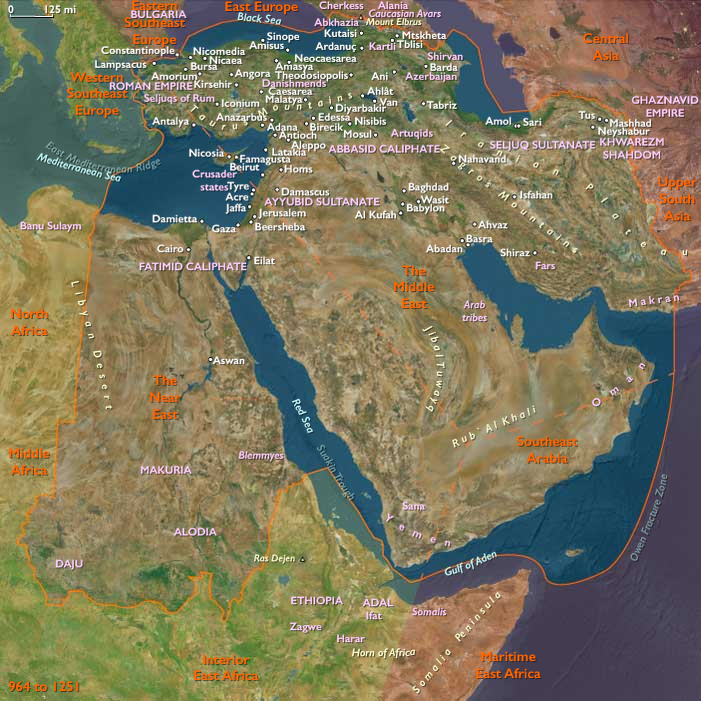
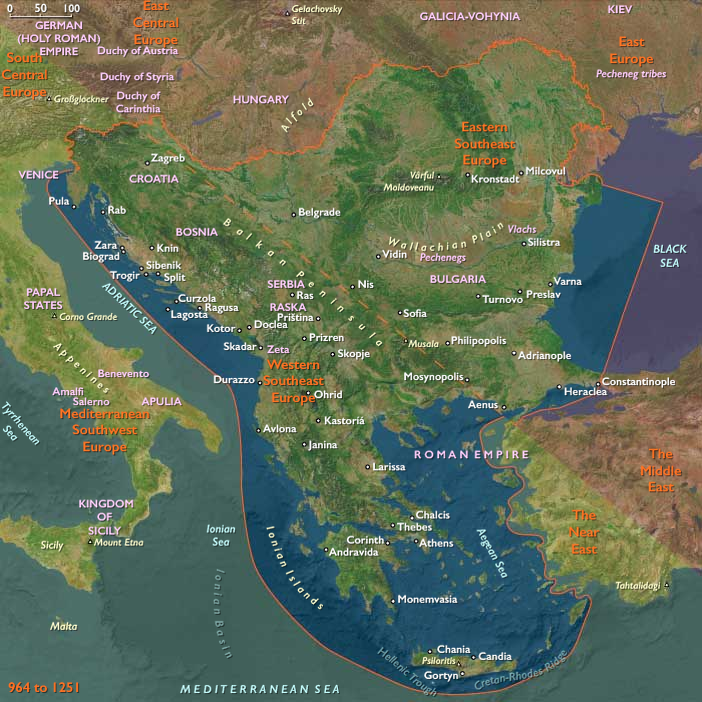
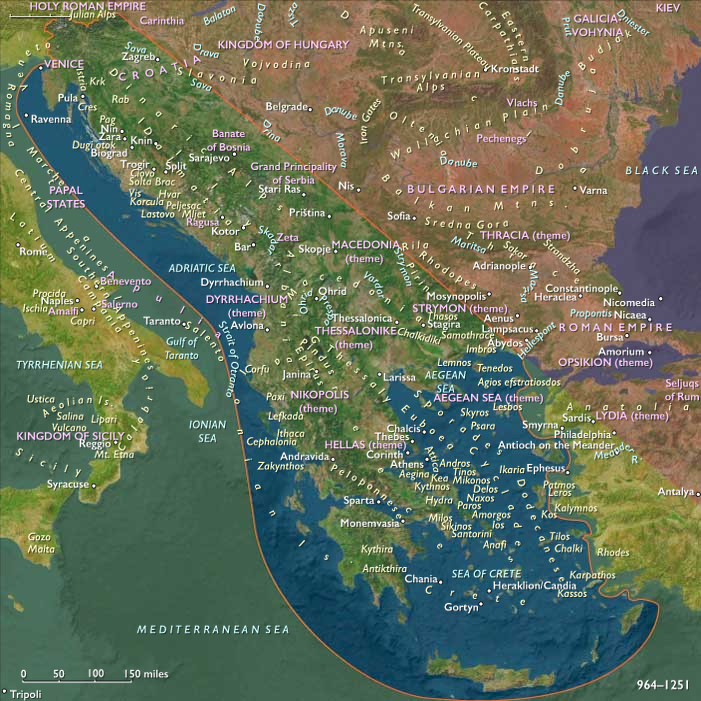
After the death of Emperor Basil II in 1025, the Byzantine government in Constantinople lost much of its ability to restrain powerful landowners. These influential magnates rapidly integrated lands held by small freeholders, accelerating the feudalization of the empire, shifting power away from central imperial control toward local aristocratic dominance.
Russo-Byzantine War of 1024
The penultimate Russo-Byzantine War occurred in 1024, as documented by medieval Greek sources. A relative of the Kievan prince, commanding around eight hundred men and twenty ships, successfully penetrated the Bosporus, defeating a Byzantine coastal defense unit before advancing into the Aegean Sea. The conflict concluded when the Kievans reached the island of Lemnos, where they were annihilated by a superior imperial fleet. Notably, this conflict lacks documentation in Kievan sources, and its motivations remain unclear.
Economic and Technological Developments
Economic Disruptions and Adaptations
The growing feudalization and military engagements led to disruptions in regional trade networks and agricultural practices. However, fortified urban centers and established economic activities continued to provide some resilience against these pressures.
Fortifications and Defensive Infrastructure
The Byzantine Empire continued enhancing defensive infrastructure to address internal political fragmentation and external military threats, focusing particularly on coastal and border fortifications.
Cultural and Artistic Developments
Continued Cultural Expression
Despite political instability and warfare, cultural and artistic activities persisted. Artistic and literary traditions, supported by ecclesiastical institutions and monastic scriptoria, continued to thrive, reflecting enduring cultural resilience.
Social and Religious Developments
Dominance of Orthodox Christianity
Orthodox Christianity retained its central role, ensuring societal stability and reinforcing community cohesion amidst ongoing political and military upheaval. Ecclesiastical authorities continued to wield significant influence within society.
Ongoing Influence of Religious Movements
The Bogomil movement continued its presence, especially within rural populations, perpetuating distinctive religious and societal dynamics that shaped regional identities.
Long-Term Consequences and Historical Significance
The period from 1024 to 1035 CE was marked by significant internal changes in Byzantine landholding practices, leading to a pronounced feudalization process. Coupled with external military challenges such as the Russo-Byzantine conflict of 1024, these developments profoundly influenced regional stability and imperial authority, reshaping Eastern Southeast Europe's socioeconomic and political landscape.
Entire provinces in India are depopulated during three great famines in India from 1022 through 1052.
The wandering of the so-called Gypsies, or Romani, of North India begins at approximately this time.
The absence of a written history has meant that the origin and early history of the Romani people was long an enigma.
Linguistic evidence indicates the Romanies originated from the Rajasthani people, emigrating from India towards the northwest no earlier than the eleventh century.
Contemporary populations sometimes suggested as sharing a close relationship to the Romani are the Dom people of Central Asia and the Banjara of India.
Genetic evidence connects the Romani people and the Jat people, the descendants of groups that emigrated from India towards Central Asia during the medieval period.
There are serological similarities shared with several populations that linked the two people in a 1992 study.
A limited medical survey of haplotypes frequently found in the Jat Sikhs and Jats of Haryana, and those found in the Romani populations revealed no matches in 2007.
However, in 2009 researchers discovered the "Jat mutation", which causes a type of glaucoma in Romani people.
The cause of the Romani diaspora is unknown.
However, the most probable conclusion is that the Romanies were part of the military in North India.
When there were repeated raids by Mahmud of Ghazni and these soldiers were defeated, they were moved west with their families into the Eastern Roman Empire.
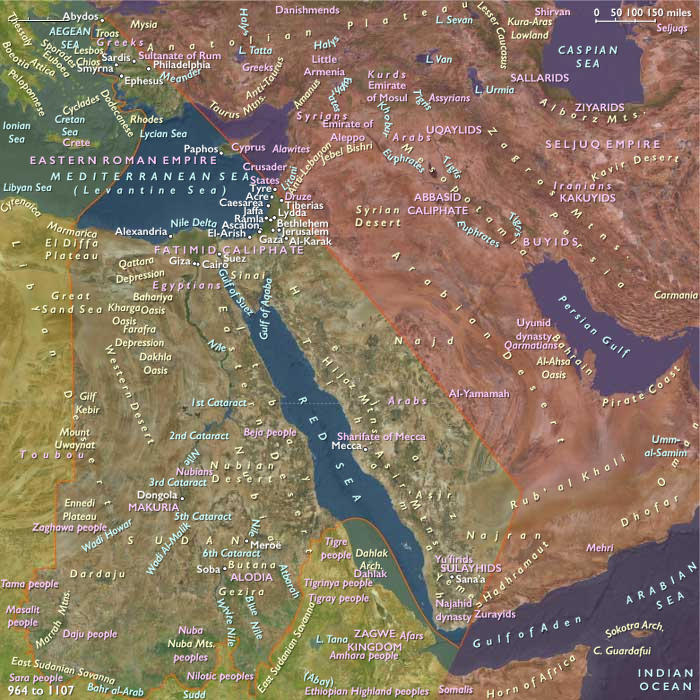
Hamza develops the doctrines of the Druze faith following the disappearance of al-Hakim; this includes the belief that al-Hakim will return on Judgment Day.
The several letters written by al-Hakim and Hamza become part of the collection of one hundred and eleven letters that constitute the most authoritative Druse religious text, the Kitab al-hikma (”Book of Wisdom”).
The Druze, whose belief in Hakim as the final manifestation of God invalidates all other religions, describe themselves as muwahhidun (monotheists).
They also believe in God's gradual manifestation in five cosmic emanations: Universal Intelligence, Universal Soul, the Word, the Right Wing, and the Left Wing, Hamza being the embodiment of the Universal Intelligence.
Those few initiated into the teachings of the hikma (religious doctrine) are known as the uqqual.
The great majority of the Druze community, called the juhhal, remains unfamiliar with these tenets.
Truthfulness to one another and mutual support are among the seven basic duties of the Druze, whose strong sense of identity allows no conversion or intermarriage.
Koper, having arisen from an ancient settlement built on an island in the southeastern part of the Gulf of Koper in the northern Adriatic, was known as Aegida (Goat Town) in Ancient Greek, later becoming known by the Latin names of Capris (Greek Copros), Caprea, Capre, or Caprista, from which the modern Slovenian name stems.
Roman citizens of nearby Tergeste (modern Trieste) had fled to Capris in 568 due to an invasion of the Lombards.
The town, renamed Justinopolis in honor of the emperor Justinian II, was later under both Lombard and Frankish rule and was briefly occupied by Avars in the eighth century.
Koper has been the seat of a diocese since the eighth century, possibly even since the sixth century.
Trade between Koper and Venice has been recorded since 932.
Koper is on the German side in the war between Venice and the Holy Roman Empire, and as a result is granted town rights by Emperor Conrad II in 1035.
Years: 1024 - 1035
People
Groups
Commodoties
Subjects
Regions
Subregions