
The Bimaran casket, the earliest surviving Indian …
Years: 105BCE - 94BCE
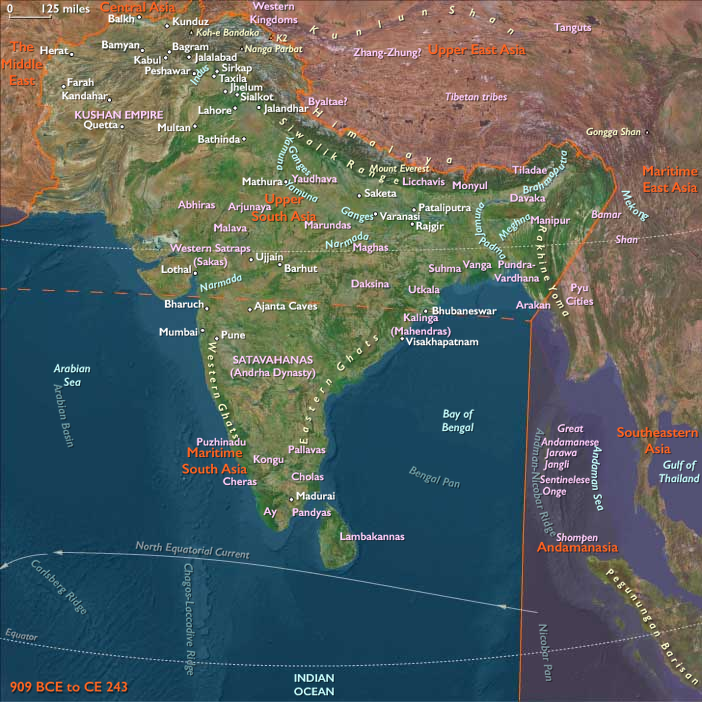
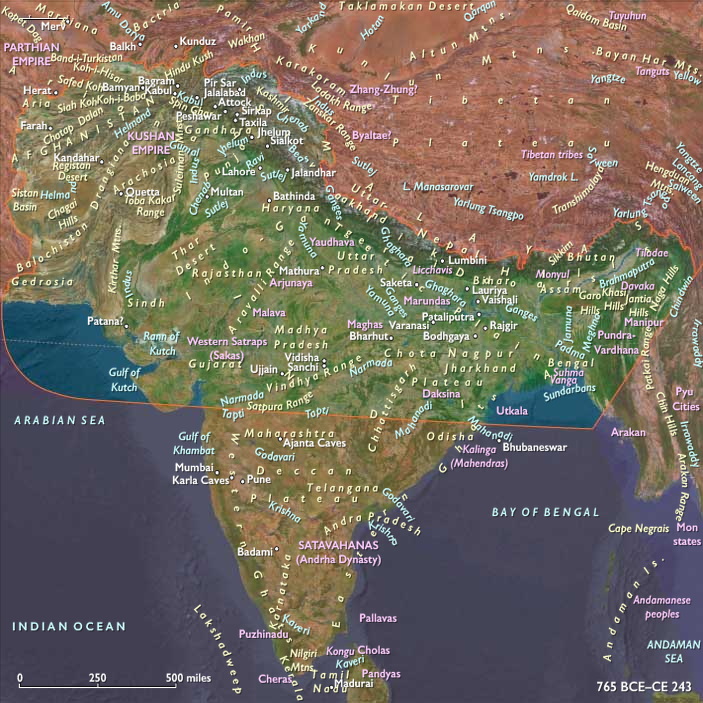
The Bimaran casket, the earliest surviving Indian jewel of importance, executed between about 100 BCE to 100 CE, is a superb example of repoussé work set with rubies.
A small gold reliquary for Buddhist relics, it was found by the archaeologist Charles Masson during his work in Afghanistan between 1833 and 1838 inside the stupa no.
2 at Bimaran, near Jalalabad in eastern Afghanistan.
The casket contained coins of the Indo-Scythian king Azes II, though recent research by Senior indicates Azes II never existed, and finds attributed to his reign probably should be reassigned to Azes I.
It is also sometimes dated to a slightly posterior date of 50 CE, based on a redeposition theory, and sometimes much later (second century CE), based on artistic assumptions.
The casket features Hellenistic representations of the Buddha (contrapposto pose, Greek himation, bundled hairstyle, realistic execution), surrounded by the Indian deities Brahma and Śakra, inside arches niches (called "homme arcade", or caitya) of Greco-Roman architecture.
There are altogether eight figures in high-relief (two identical groups of Brahman-Buddha-Indra, and two devotees in-between) and two rows of rubies from Badakhshan.
The casket is very small, with a height of seven centimeter (two and three-quarter inches), and is probably Indo-Greek work.
It is considered as a masterpiece of the Greco-Buddhist art of Gandhara.
Locations
Groups
Topics
Commodoties
Subjects
Regions
Subregions
Years: 105BCE - 94BCE
Locations
Groups
Topics
Commodoties
Subjects
Regions
Subregions