
The Billung March had been formed in …
Years: 955 - 955
October
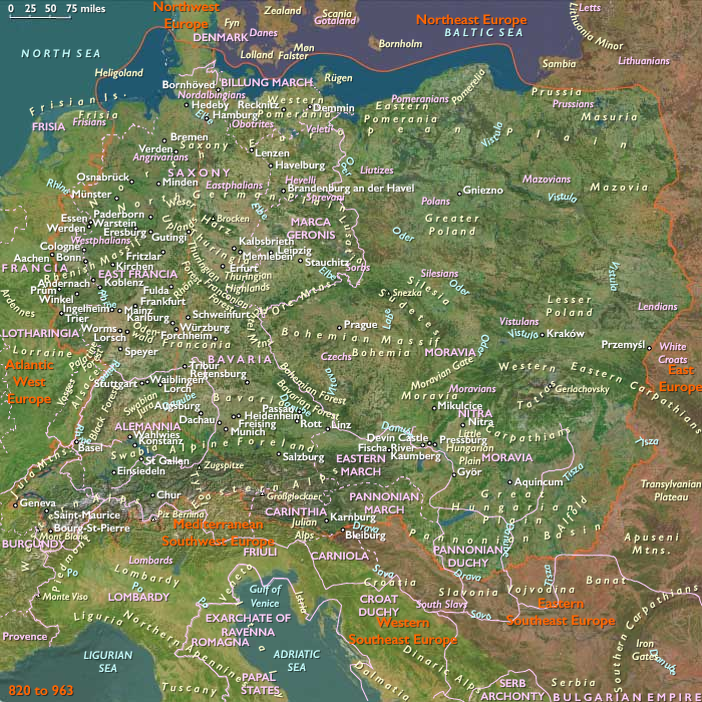
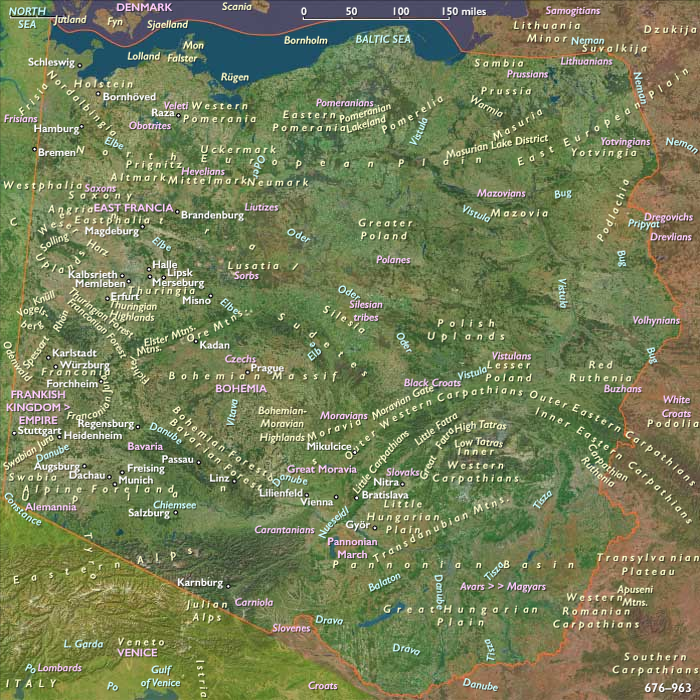
The Billung March had been formed in 936, when Otto I, Duke of Saxony and King of East Francia, made Hermann Billung princeps militiae (margrave, literally "prince of the militia"), granting him control of the border with rule over the West Slavic Obotrite tribes, including the Polabians, Warnabi and Wagri, as well as the Redarii, Circipani, and Kissini tribes of the Veleti confederation, and the Danes, who had repeatedly campaigned the territory.
Major parts of the land of the Liutizi and the Hevelli lay beyond Hermann's sphere in the Marca Geronis.
The Slavs of this region are often mutually hostile and so no organized resistance has been met.
Nevertheless, while King Otto is distracted by his campaigns against the Magyars in 955, the Obotrite chief Nako takes the chance and allies with Hermann's nephews, the Saxon counts Wichmann the Younger and Egbert the One-Eyed, in their domestic quarrel with their uncle.
The Obotrites invade Saxony and sack the Cocarescemians' settlement, killing the men of arms-bearing age and carrying off the women and children into slavery.
According to Widukind of Corvey, in the aftermath of Lechfeld, Otto pressed hard into Slav territory, where Wichmann and Egbert had sought refuge.
Otto razed the Slav population centers and soon had encircled them; he offered to spare his enemies if they would surrender.
A Slav embassy came to an assembly Otto held in Saxony and offered to pay annual tribute in return for being allowed self-government; "otherwise," they said, they would "fight for their liberty.
Timothy Reuter argues that this is indicative of a change in German governing practice: a change from overlordship, which the Slavs were willing to accept, to lordship, which the Slavs protested.
According to Reuter, Otto I's army of the day was drawn from every regnum (duchy) of the German kingdom, even Bohemia.
According to Widukind of Corvey, who gave the only surviving detailed record of the battle itself, Otto I's campaign came to a halt at the bank of the Raxa river, where the Obodrites and their allies, led by Stoigniew (Stoinef), had taken a defensive position on the opposite embankment.
Otto's margrave Gero, together with the allied tribe of the Ruani—most probably the earliest mention of the Rani—secretly move to a distinct part of the river to build three bridges, while a feint assault by the remaining forces distracts Stoigniew's army.
Stoigniew realizes too late that Otto's forces are already crossing the river on another side, and the ensuing encounter is won by the latter.
The fate of Stoigniew is described by both Widukind of Corvey and Thietmar of Merseburg.
While both agree that he was decapitated, their accounts on how that happened differ: Widukind says that during the battle, Stoigniew was chased into a wood, run down and killed by a soldier named Hosed, who was handsomely rewarded after presenting Otto with Stoigniew's severed head.
Thietmar of Merseburg says that the captured Stoigniew, whom he calls Stoinneg, was decapitated by Otto.
After the battle, according to Widukind, Stoinegin's head was raised on a pole and seven hundred of captured Slavs were executed before sundown.
Stoigniew’s brother Nako probably accepted Christianity, because there followed roughly thirty years of peace, during which, according to Adam of Bremen, the Slavs were Christian.
Locations
People
- Boleslaus II
- Bruno the Great
- Bulcsú
- Burchard III
- Conrad
- Egbert the One-Eyed
- Gero
- Liudolf
- Nako
- Otto I
- Ulrich of Augsburg
- Wichmann II the Younger
Groups
- Polytheism (“paganism”)
- Hungarian people
- Polabian Slavs (West Slavs)
- Christianity, Chalcedonian
- Obotrites (Slavic tribal confederation)
- Saxony, Duchy of
- Francia Orientalis (East Francia), Kingdom of
- Bohemia, Duchy of
- Hungary, Principality of
- March of Gero, or Marca Geronis
- Bavaria, Ottonian Duchy of
Topics
Commodoties
Subjects
Regions
Subregions
Related Events
Showing 10 events out of 52873 total
Years: 955 - 955
October
Locations
People
- Boleslaus II
- Bruno the Great
- Bulcsú
- Burchard III
- Conrad
- Egbert the One-Eyed
- Gero
- Liudolf
- Nako
- Otto I
- Ulrich of Augsburg
- Wichmann II the Younger
Groups
- Polytheism (“paganism”)
- Hungarian people
- Polabian Slavs (West Slavs)
- Christianity, Chalcedonian
- Obotrites (Slavic tribal confederation)
- Saxony, Duchy of
- Francia Orientalis (East Francia), Kingdom of
- Bohemia, Duchy of
- Hungary, Principality of
- March of Gero, or Marca Geronis
- Bavaria, Ottonian Duchy of
Topics
Commodoties
Subjects
Regions
Subregions