
The Berbers have long resented the second-class …
Years: 739 - 739
The Berbers have long resented the second-class status accorded to them by the ruling Arab military caste.
Berber Muslims have been intermittently subjected to extraordinary taxation and slave-tributes, contrary to Islamic law.
As a result, many Berbers have grown receptive to puritan Kharijite activists, particularly those of the Sufrite sect, that had begun arriving in the Maghreb, preaching a new political order in which all Muslims are to be treated without regard for ethnicity or tribal status.
Maysara's Matghara tribe has been particularly taken up with Sufrite influence.
In the late 730s, the new Umayyad governor Ubayd Allah ibn al-Habhab of Ifriqiya had ratcheted up his fiscal exactions to make up for the financial shortfalls.
His regional deputies, notably Omar ibn al-Moradi, governor of Tangiers, have implemented some inventive and highly oppressive schemes to extract more revenues from the Berbers under his jurisdiction.
Contravening Islamic law and the 718 edicts of the Caliph Umar II, Ubayd Allah has reinstated some of the extraordinary dhimmi taxation (the jizyah and kharaj) and slave-tributes on the Muslim Berber population, provoking immense opposition.
Similar policies have been implemented by his deputies Oqba ibn al-Saluli in al-Andalus and (with particular zeal) Omar ibn el-Moradi in Morocco, but Ubayd Allah has gone above and beyond his duties.
Seeking to satisfy the luxurious tastes of the nobles of Damascus, Ubayd Allah has sent his officials in the relentless pursuit of the highly prized wool of unborn Merino lambs, seizing (and destroying) entire flocks—the livelihoods of many Berber communities—just to gather the handful he could dispatch back to Syria.
Berber girls and women are also highly prized as concubines by Damascus lords.
Ubayd Allah, eager to please as always, has ordered them seized and kidnapped in great numbers, not stopping even at the wives and daughters of loyal Berber chieftains.
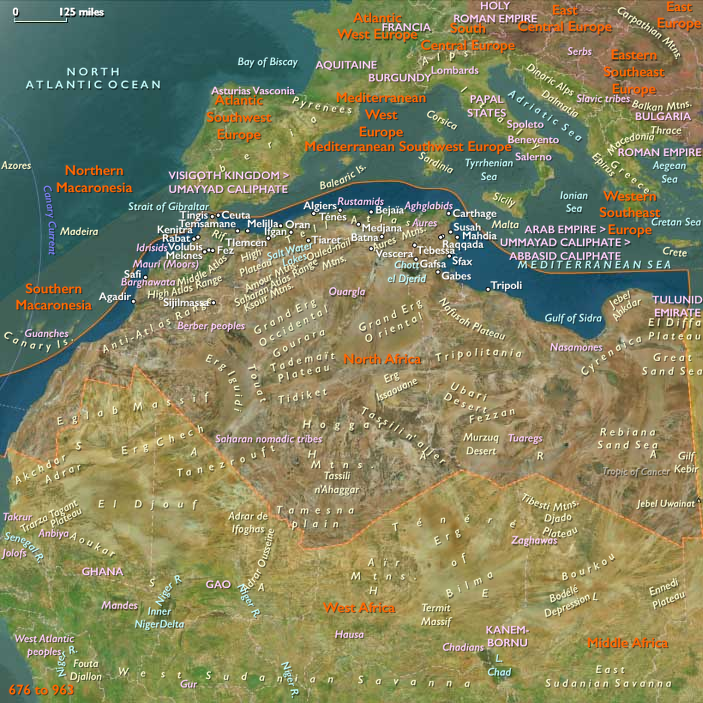
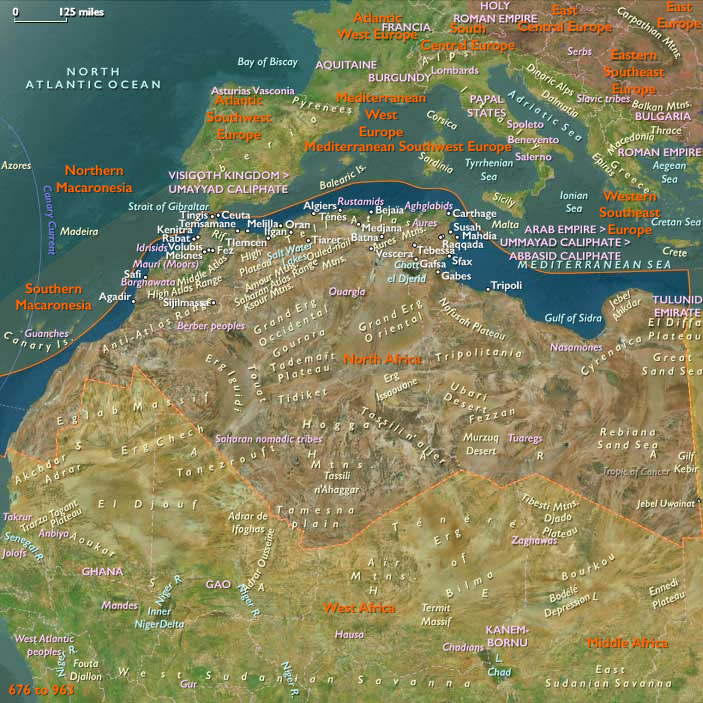
By 739 or so, the main Berber tribes under Omar's jurisdiction in western Morocco—principally the Gomara, Barghawata and Miknasa—decide they have had enough and prepare for rebellion.
Forming an alliance, they elect the Matghara chieftain Maysara to lead them.
It is not a spontaneous uprising.
Maysara and the Berber commanders seem to have been careful enough to wait until the bulk of the Ifriqiyan army has left North Africa on an expedition to Sicily before springing into action.
The exact biographical details of Maysara at Maghari are obscure, and made more complicated by what are likely scurrilous stories circulated by his enemies.
Chroniclers have recorded allegations that Maysara was a low-born Berber water-seller in Kairouan or Tangiers, possibly a water-carrier in the caliphal army.
Chronicles routinely refer to him by the unflattering label of al-Hakir, 'the Ignoble' or 'the Vile'.
Ibn Khaldun, however, was probably closer to the truth in proposing that his origins were perhaps not so humble, that Maysara was probably a significant chieftain or sheikh of the Berber Matghara tribe.
Al-Tabari reports that Maysara had even headed a Berber delegation to Damascus to present the Berber complaints before the Caliph Hisham, and the complaints were many.
Locations
People
- Abd al-Rahman ibn Habib al-Fihri
- Hisham ibn Abd al-Malik
- Khalid ibn Hamid al-Zanati
- Maysara al-Matghari
- Obeid Allah ibn al-Habhab al-Mawsili
Groups
- Arab people
- Berber people (also called Amazigh people or Imazighen, "free men", singular Amazigh)
- Moors
- Miknasa (Zenata Berber tribe)
- Islam
- Muslims, Sunni
- Muslims, Kharijite
- Umayyad Caliphate (Damascus)
- Ifriqiya, Ummayad
- al-Andalus (Andalusia), Muslim-ruled
- Barghawata Confederacy (Masmuda Berber tribal confederacy)
Topics
Commodoties
Subjects
- Commerce
- Environment
- Labor and Service
- Conflict
- Faith
- Government
- Custom and Law
- Technology
- Movements
Regions
Subregions
Years: 739 - 739
Locations
People
- Abd al-Rahman ibn Habib al-Fihri
- Hisham ibn Abd al-Malik
- Khalid ibn Hamid al-Zanati
- Maysara al-Matghari
- Obeid Allah ibn al-Habhab al-Mawsili
Groups
- Arab people
- Berber people (also called Amazigh people or Imazighen, "free men", singular Amazigh)
- Moors
- Miknasa (Zenata Berber tribe)
- Islam
- Muslims, Sunni
- Muslims, Kharijite
- Umayyad Caliphate (Damascus)
- Ifriqiya, Ummayad
- al-Andalus (Andalusia), Muslim-ruled
- Barghawata Confederacy (Masmuda Berber tribal confederacy)
Topics
Commodoties
Subjects
- Commerce
- Environment
- Labor and Service
- Conflict
- Faith
- Government
- Custom and Law
- Technology
- Movements
Regions
Subregions