
The beginning of the last Ice Age …
Years: 132237BCE - 111502BCE
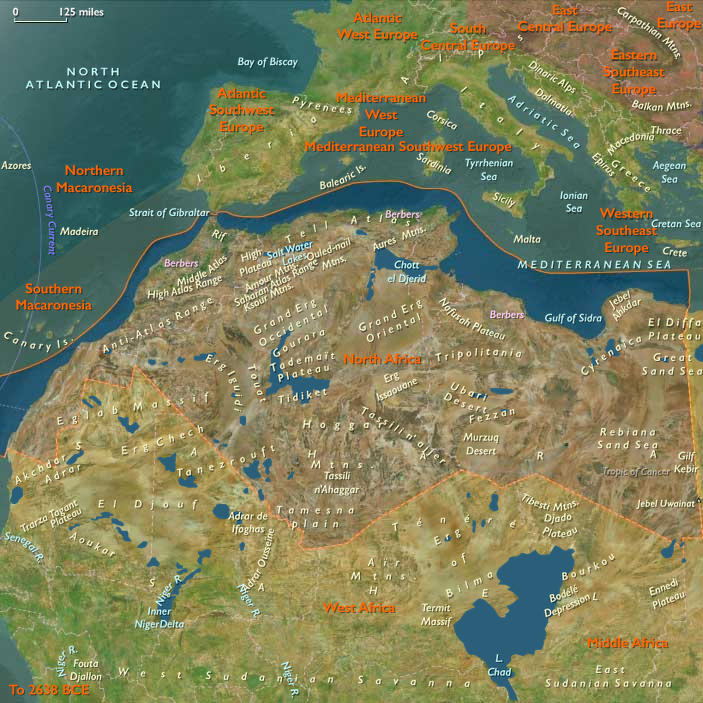
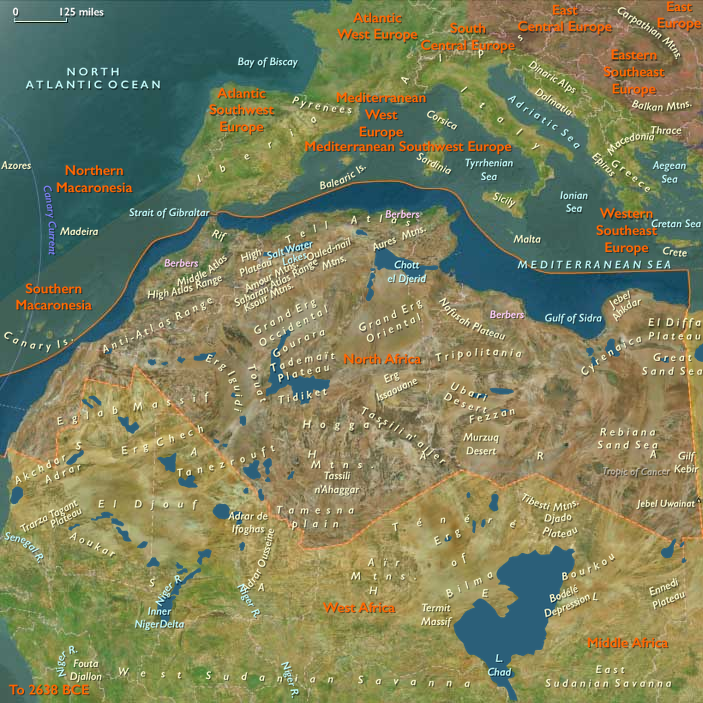
The beginning of the last Ice Age is conventionally dated at about one hundred and twenty thousand BCE with the onset of the Abbassia Pluvial, an extended wet and rainy period in the climate history of North Africa.
The Abbassia Pluvial, which lasted approximately thirty thousand years, and ended around ninety thousand ybp, spanned the end of the Lower Paleolithic and the start of the Middle Paleolithic eras—an interval that is also sometimes identified as the Acheulean (two hundred and fifty to ninety kybp).
As with the subsequent Mousterian Pluvial (circa fifty to thirty kybp), the Abbassia was brought about by global climate changes associated with the ice ages and interglacials of the Pleistocene Epoch.
Like the Mousterian Pluvial, the Abbassia Pluvial brought wet and fertile conditions to what is now the Sahara Desert, which bloomed with lush vegetation fed by lakes, swamps, and river systems, many of which later disappeared in the drier climate that followed the pluvial.
During this period, African wildlife now associated with the grasslands and woodlands south of the Sahara penetrated the entire North African.
Human Stone Age cultures—notably the Mousterian and Aterian Industries—flourished in Africa during the Abbassia Pluvial.
The shift to harsher climate conditions that came with the end of the pluvial promoted the emigration of modern Homo sapiens out of Africa and over the rest of the globe.
This was the third wave of the Sahara pump cycle.
Groups
Topics
Subjects
Regions
Subregions
Related Events
Showing 10 events out of 69735 total
Years: 132237BCE - 111502BCE
Groups
Topics
Subjects
Regions
Subregions