
Atlantic Southwest Europe (2637 – 910 BCE): …
Years: 2637BCE - 910BCE
Atlantic Southwest Europe (2637 – 910 BCE): River Valleys and Inland Atlantic Gateways
Geographic and Environmental Context
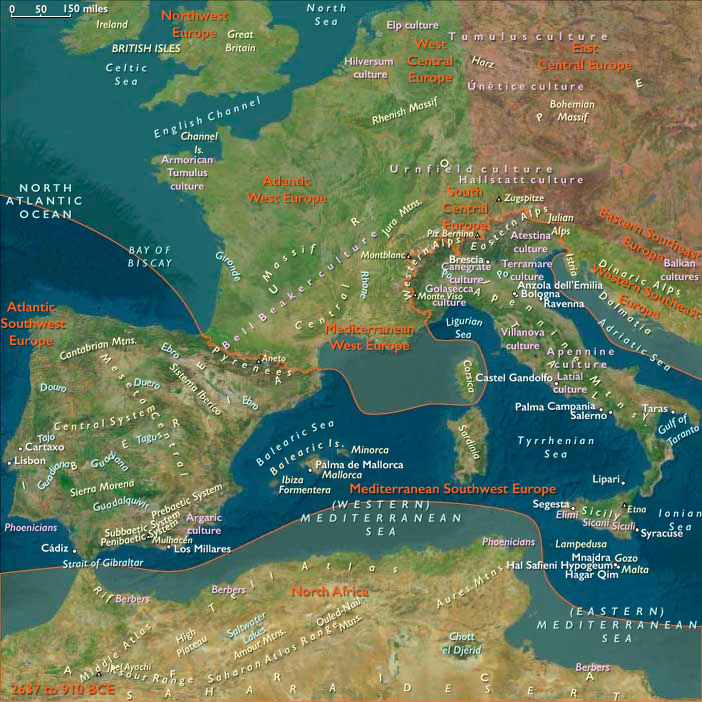
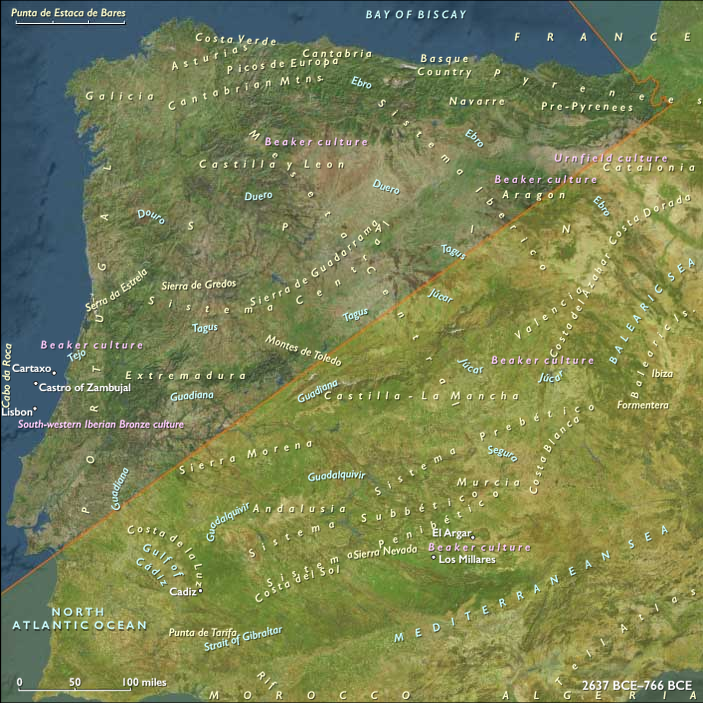
Atlantic Southwest Europe—including northern Spain and central to northern Portugal (with Lisbon and the surrounding Tagus Valley)—was characterized by a temperate Atlantic climate, rugged uplands, and fertile river basins. The Tagus, Douro, and Minho rivers carved productive valleys and served as natural corridors from the interior to the coast. The region’s inland plateaus and foothills of the Cantabrian Mountains contrasted with lowland agricultural zones, while the Atlantic coast provided sheltered estuaries and rich fishing grounds.
Subsistence and Settlement
By the mid–third millennium BCE, farming communities cultivated wheat, barley, and legumes, along with orchard crops such as olives and grapes in favorable microclimates. Herding of cattle, sheep, and goats complemented agriculture, and pigs were kept in lowland forests. Coastal and riverine settlements exploited fish, shellfish, and waterfowl, while inland hunting targeted deer, wild boar, and small game. Settlements ranged from hilltop fortified sites to open villages in fertile valleys.
Technological and Cultural Developments
Polished stone axes and adzes remained in use alongside the adoption of copper and early bronze for tools, weapons, and ornaments. Pottery included both undecorated utilitarian forms and vessels with incised geometric designs, reflecting local styles and interaction with broader Atlantic cultural zones. In some areas, megalithic tombs and stone circles continued in use, often re-purposed or rebuilt during the Bronze Age.
Maritime and Overland Networks
While not a center for long-distance seafaring at this stage, the Atlantic coast supported coastal trade and movement between estuaries. Overland routes linked the Douro and Tagus valleys to the Meseta and further to the interior of Iberia, moving salt, livestock, hides, and metal ores. Exchange connections extended northward into Atlantic West Europe and southward toward Mediterranean-linked networks.
Cultural and Symbolic Expressions
Burial traditions included both collective megalithic tombs and individual barrows, often accompanied by metal daggers, beads, and decorated pottery. Carved stelae in some areas depicted stylized weapons or human figures. The continued maintenance of megalithic monuments suggests the persistence of ancestral veneration and ceremonial gathering traditions.
Environmental Adaptation and Resilience
Communities adapted to Atlantic rainfall patterns through crop diversification and mixed farming, balancing grain production with livestock husbandry. Settlement placement reflected awareness of flooding risks in river valleys and the advantages of defensible upland locations. Access to both inland and coastal resources reduced vulnerability to localized shortages.
Transition to the Early First Millennium BCE
By 910 BCE, Atlantic Southwest Europe was a stable agricultural and pastoral landscape integrated into inland and coastal trade systems. The combination of fertile valleys, mineral resources, and strategic location along Atlantic cultural routes positioned it for increasing connectivity in the Late Bronze Age.
Groups
Topics
Commodoties
Subjects
- Commerce
- Symbols
- Watercraft
- Labor and Service
- Decorative arts
- Faith
- Custom and Law
- Technology
- Metallurgy
Regions
Subregions
Related Events
Showing 10 events out of 68553 total
Years: 2637BCE - 910BCE
Groups
Topics
Commodoties
Subjects
- Commerce
- Symbols
- Watercraft
- Labor and Service
- Decorative arts
- Faith
- Custom and Law
- Technology
- Metallurgy
Regions
Subregions