
Filters:
The origins of the Bani Yas tribe …
Years: 1684 - 1827
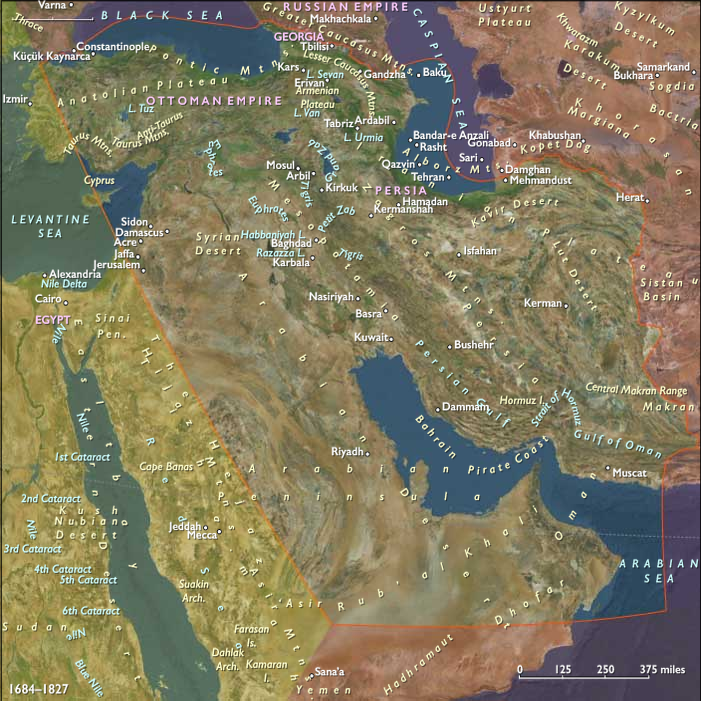
The origins of the Bani Yas tribe and the Al Qasimi family that rule in the present-day UAE are somewhat clearer.
The Bani Yas originate in central Arabia and probably establish themselves on the coast at Abu Dhabi around 1700; they later extend their influence to Dubai.
Historical evidence indicates that the Al Qasimi lived along the gulf during the pre-Islamic period and engaged in trade, pearling, and piracy.
The eighteenth and nineteenth centuries are a turbulent time for Arabia in general and for the gulf in particular.
To the southeast, the Al Said of Oman are extending their influence northward, and from Iraq the Ottoman Turks are extending their influence southward.
From the east, both the Iranians and the British are becoming increasingly involved in Arab affairs.
The most significant development in the region, however, is the Wahhabi movement.
The name Wahhabi derives from Muhammad ibn Abd al Wahhab, who dies in 1792.
He had grown up in an oasis town in central Arabia where he studied Hanbali law, usually considered the strictest of Islamic legal schools, with his grandfather.
While still a young man, he had left home and continued his studies in Medina and then in Iraq and Iran.
When he returns from Iran to Arabia in the late 1730s, he attacks as idolatry many of the customs followed by tribes in the area who venerate rocks and trees.
He extend his criticism to practices of the Twelve Imam Shia, such as veneration of the tombs of holy men.
He focuses on the central Muslim principle that there is only one God and that this God does not share his divinity with anyone.
From this principle, his students begin to refer to themselves as muwahhidun (sing., muwahhid), or "unitarians."
Their detractors refer to them as "Wahhabis."
Muhammad ibn Abd al Wahhab considers himself a reformer and looks for a political figure to give his ideas a wider audience.
He finds this person in Muhammad ibn Saud, the emire of Ad Diriyah, a small town near Riyadh.
In 1744 the two swear a traditional Muslim pledge in which they promise to work together to establish a new state (which will later become present-day Saudi Arabia) based on Islamic principles.
The limited but successful military campaigns of Muhammad ibn Saud cause Arabs from all over the peninsula to feel the impact of Wahhabi ideas.
The Wahhabis become known for a fanaticism similar to that of the early Kharijites.
This fanaticism helps to intensify conflicts in the gulf.
Whereas tribes from the interior have always raided settled communities along the coast, the Wahhabi faith provides them with a justification for continuing these incursions to spread true Islam.
Accordingly, in the nineteenth century Wahhabi tribes, under the leadership of the Al Saud, move at various times against Kuwait, Bahrain, and Oman.
In Oman, the Wahhabi faith creates internal dissension as well as an external menace because it proves popular with some of the Ibadi tribes in the Omani interior.
Wahhabi thought has a special impact on the history of Qatar.
Muhammad ibn Abd al Wahhab's ideas prove popular among many of the peninsula tribes, including the Al Thani, before the Al Khalifa attempt to take over the area from Bahrain at the beginning of the nineteenth century.
As a result, Wahhabi beliefs motivate Al Thani efforts to resist the attempt of the Al Khalifa, who reject Wahhabism, to gain control of the peninsula.
Wahhabism will distinguish Qatar religiously from its neighbors in the early twenty-first century.
Wahhabi fervor is also significant in the history of the present-day UAE.
The Al Qasimi tribes that have controlled the area since the eighteenth century adapt Wahhabi ideas and transfer the movement's religious enthusiasm to the piracy in which they had traditionally engaged.
Whereas Wahhabi thought opposes all that is not orthodox in Islam, it particularly opposes non-Muslim elements such as the increasing European presence in the Persian Gulf.
The increased European presence results in large part from commercial competition between Al Qasimi merchants and British merchants for the lucrative trade between India and the Persian Gulf in the early nineteenth century.
British merchants enlist the British navy to assist them by launching attacks on Al Qasimi strongholds in the present-day UAE as early as 1809.
The navy does not succeed in controlling the situation until 1819, in which year, the British send a fleet from India that destroys Ras al Khaymah, an Al Qasimi port at the east-ern end of the gulf.
From Ras al Khaymah, the British fleet destroys Al Qasimi ships along both sides of the gulf.
The British have no desire to take over the desolate areas along the gulf; they only wish to control the trading cities.
The British decide to leave most tribal leaders in power and conclude a series of treaties with them.
As a result of these truces, the Arab side of the gulf comes to be known as the "Trucial Coast."
This area had previously been under the nominal control of the sultan in Oman, although the Trucial Coast tribes are not part of the Ibadi imamate.
The area has also been referred to as "Trucial Oman" to distinguish it from the part of Oman under the sultan that is not bound by treaty obligation.
The British in 1820 seem primarily interested in controlling the Al Qasimi, whose main centers are Ras al Khaymah, Ajman, and Sharjah, which were all small ports along the southeastern gulf coast.
The original treaties, however, also involve Dubai and Bahrain, which are entrepôts. The inclusion of these ports bring two other extended families, the Bani Yas and the Al Khalifa, into the trucial system.
The Bani Yas originate in central Arabia and probably establish themselves on the coast at Abu Dhabi around 1700; they later extend their influence to Dubai.
Historical evidence indicates that the Al Qasimi lived along the gulf during the pre-Islamic period and engaged in trade, pearling, and piracy.
The eighteenth and nineteenth centuries are a turbulent time for Arabia in general and for the gulf in particular.
To the southeast, the Al Said of Oman are extending their influence northward, and from Iraq the Ottoman Turks are extending their influence southward.
From the east, both the Iranians and the British are becoming increasingly involved in Arab affairs.
The most significant development in the region, however, is the Wahhabi movement.
The name Wahhabi derives from Muhammad ibn Abd al Wahhab, who dies in 1792.
He had grown up in an oasis town in central Arabia where he studied Hanbali law, usually considered the strictest of Islamic legal schools, with his grandfather.
While still a young man, he had left home and continued his studies in Medina and then in Iraq and Iran.
When he returns from Iran to Arabia in the late 1730s, he attacks as idolatry many of the customs followed by tribes in the area who venerate rocks and trees.
He extend his criticism to practices of the Twelve Imam Shia, such as veneration of the tombs of holy men.
He focuses on the central Muslim principle that there is only one God and that this God does not share his divinity with anyone.
From this principle, his students begin to refer to themselves as muwahhidun (sing., muwahhid), or "unitarians."
Their detractors refer to them as "Wahhabis."
Muhammad ibn Abd al Wahhab considers himself a reformer and looks for a political figure to give his ideas a wider audience.
He finds this person in Muhammad ibn Saud, the emire of Ad Diriyah, a small town near Riyadh.
In 1744 the two swear a traditional Muslim pledge in which they promise to work together to establish a new state (which will later become present-day Saudi Arabia) based on Islamic principles.
The limited but successful military campaigns of Muhammad ibn Saud cause Arabs from all over the peninsula to feel the impact of Wahhabi ideas.
The Wahhabis become known for a fanaticism similar to that of the early Kharijites.
This fanaticism helps to intensify conflicts in the gulf.
Whereas tribes from the interior have always raided settled communities along the coast, the Wahhabi faith provides them with a justification for continuing these incursions to spread true Islam.
Accordingly, in the nineteenth century Wahhabi tribes, under the leadership of the Al Saud, move at various times against Kuwait, Bahrain, and Oman.
In Oman, the Wahhabi faith creates internal dissension as well as an external menace because it proves popular with some of the Ibadi tribes in the Omani interior.
Wahhabi thought has a special impact on the history of Qatar.
Muhammad ibn Abd al Wahhab's ideas prove popular among many of the peninsula tribes, including the Al Thani, before the Al Khalifa attempt to take over the area from Bahrain at the beginning of the nineteenth century.
As a result, Wahhabi beliefs motivate Al Thani efforts to resist the attempt of the Al Khalifa, who reject Wahhabism, to gain control of the peninsula.
Wahhabism will distinguish Qatar religiously from its neighbors in the early twenty-first century.
Wahhabi fervor is also significant in the history of the present-day UAE.
The Al Qasimi tribes that have controlled the area since the eighteenth century adapt Wahhabi ideas and transfer the movement's religious enthusiasm to the piracy in which they had traditionally engaged.
Whereas Wahhabi thought opposes all that is not orthodox in Islam, it particularly opposes non-Muslim elements such as the increasing European presence in the Persian Gulf.
The increased European presence results in large part from commercial competition between Al Qasimi merchants and British merchants for the lucrative trade between India and the Persian Gulf in the early nineteenth century.
British merchants enlist the British navy to assist them by launching attacks on Al Qasimi strongholds in the present-day UAE as early as 1809.
The navy does not succeed in controlling the situation until 1819, in which year, the British send a fleet from India that destroys Ras al Khaymah, an Al Qasimi port at the east-ern end of the gulf.
From Ras al Khaymah, the British fleet destroys Al Qasimi ships along both sides of the gulf.
The British have no desire to take over the desolate areas along the gulf; they only wish to control the trading cities.
The British decide to leave most tribal leaders in power and conclude a series of treaties with them.
As a result of these truces, the Arab side of the gulf comes to be known as the "Trucial Coast."
This area had previously been under the nominal control of the sultan in Oman, although the Trucial Coast tribes are not part of the Ibadi imamate.
The area has also been referred to as "Trucial Oman" to distinguish it from the part of Oman under the sultan that is not bound by treaty obligation.
The British in 1820 seem primarily interested in controlling the Al Qasimi, whose main centers are Ras al Khaymah, Ajman, and Sharjah, which were all small ports along the southeastern gulf coast.
The original treaties, however, also involve Dubai and Bahrain, which are entrepôts. The inclusion of these ports bring two other extended families, the Bani Yas and the Al Khalifa, into the trucial system.
Groups
- Iranian peoples
- Arab people
- Omanis
- Persian people
- Islam
- Muslims, Sunni
- Muslims, Kharijite
- Muslims, Shi'a
- Muslims, Ibadi
- Ismailism
- Qarmatians
- Ottoman Empire
- Bani Yas (Arab tribe)
- Persia, Safavid Kingdom of
- Sabah, House of
- Abyssinia (also called "Mecca and Medina"), Ottoman eyalet of
- Oman, Second Imamate of
- Yaruba dynasty
- Thani, House of
- Al Qasimi (Adnani Arabian tribe)
- Ra's al-Khaymah, or Ras al-Khaimah, Emirate of
- Abu Dhabi, Emirate of
- Al Khalifa family
- Sharjah (ash-Shariqah), Emirate of
- Oman, Sultanate of
- Ajman, or 'Ujman, Emirate of
- Umm al-Qaywayn, or Umm al-Quwain, Emirate of
- Dubai, Emirate of
- al-Fujayrah, or Fujairah, Emirate of
Commodoties
Subjects
Regions
Subregions
Years: 1684 - 1827
Groups
- Iranian peoples
- Arab people
- Omanis
- Persian people
- Islam
- Muslims, Sunni
- Muslims, Kharijite
- Muslims, Shi'a
- Muslims, Ibadi
- Ismailism
- Qarmatians
- Ottoman Empire
- Bani Yas (Arab tribe)
- Persia, Safavid Kingdom of
- Sabah, House of
- Abyssinia (also called "Mecca and Medina"), Ottoman eyalet of
- Oman, Second Imamate of
- Yaruba dynasty
- Thani, House of
- Al Qasimi (Adnani Arabian tribe)
- Ra's al-Khaymah, or Ras al-Khaimah, Emirate of
- Abu Dhabi, Emirate of
- Al Khalifa family
- Sharjah (ash-Shariqah), Emirate of
- Oman, Sultanate of
- Ajman, or 'Ujman, Emirate of
- Umm al-Qaywayn, or Umm al-Quwain, Emirate of
- Dubai, Emirate of
- al-Fujayrah, or Fujairah, Emirate of
Commodoties
Subjects
Regions
Subregions