
The aurochs or urus (Bos primigenius …
Years: 1627 - 1627
The aurochs or urus (Bos primigenius), the ancestor of domestic cattle, a type of huge wild cattle which has long inhabited Europe, Asia and North Africa, is far larger than most modern domestic cattle with a shoulder height of two meters (6.6 ft) and weighing one3 thousand kilograms (twenty-two hundred pounds).
Domestication of bovines had occurred in several parts of the world at roughly the same time, about eight thousand years ago.
The original range of the aurochs was from Britain and Ireland and southern Scandinavia, to northern Africa, the Middle East, India and central Asia.
The aurochs was regarded as a challenging quarry, contributing to its eventual extinction.
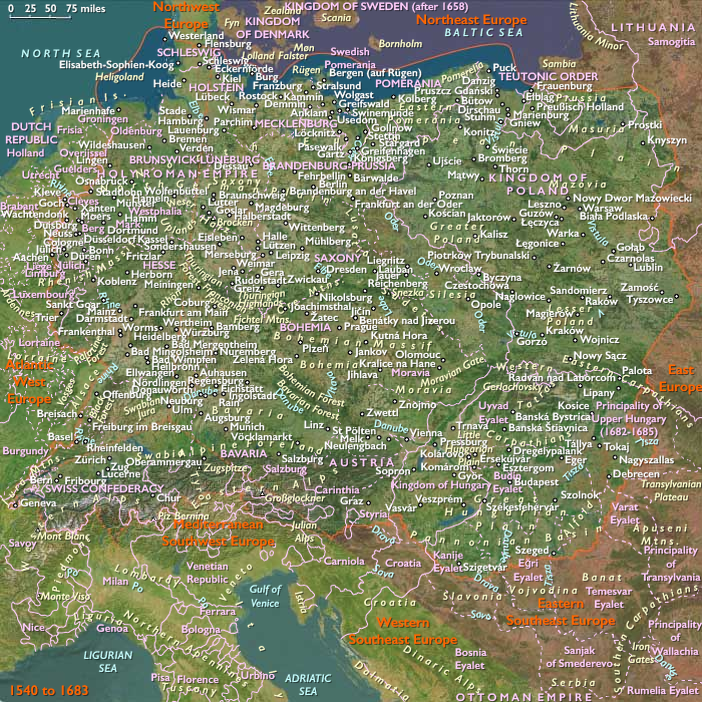
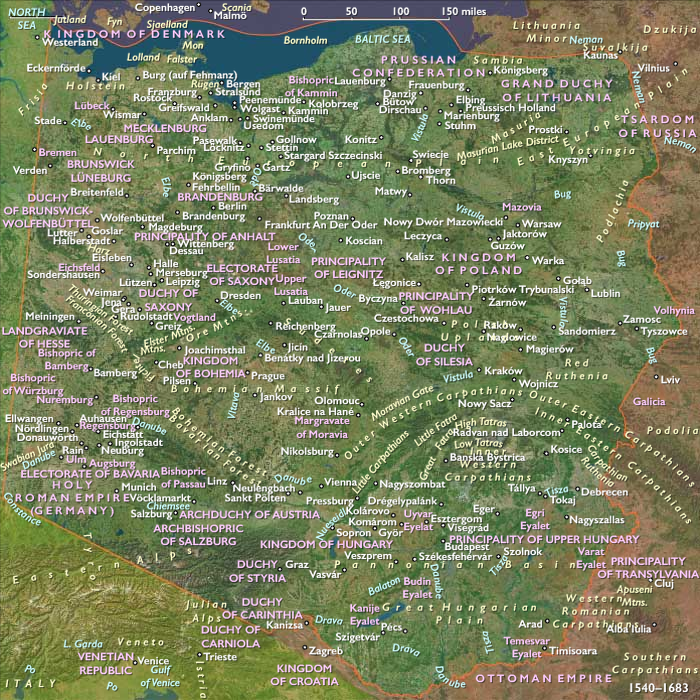
The aurochs' range was by the thirteenth century CE restricted to Poland, Lithuania, Moldavia, Transylvania and East Prussia.
The right to hunt large animals on any land was restricted to nobles and gradually to the royal household.
As the population of aurochs declined, hunting ceased but the royal court still required gamekeepers to provide open fields for the aurochs to graze in.
The gamekeepers were exempted from local taxes in exchange for their service and a decree made poaching an aurochs punishable by death.
The gamekeepers in 1564 knew of only thirty-eight animals, according to the royal survey.
The last recorded live aurochs, a female, dies in 1627 in the Jaktorów Forest, Poland, from natural causes.
Locations
Groups
Commodoties
Subjects
Regions
Subregions
Related Events
Showing 1 events out of 1 total
Years: 1627 - 1627
Locations
Groups
Commodoties
Subjects
Regions
Subregions