
The Cimbri’s Arrival in Gaul and the …
Years: 107BCE - 107BCE
The Cimbri’s Arrival in Gaul and the Spark of Celtic Resistance (109 BCE–107 BCE)
The arrival of the Cimbri in Gaul in 109 BCE and their decisive defeat of the Roman consul Marcus Junius Silanus triggered unrest among the recently conquered Celtic tribes in southern Gaul. This defeat destabilized Roman rule in the region, emboldening local Gallic and Alpine tribes to resist Roman authority.
The Cimbri’s Request for Land and Roman Rejection
- Before their battle with Silanus, the Cimbri had requested land within Roman territory to settle.
- The Roman Senate refused their request, maintaining its expansionist policies in Gaul.
- In response, Silanus launched a military campaign against the Cimbri, only to be completely defeated at an unknown location in Gallia Transalpina (southern Gaul).
The Role of the Tigurini and Their Migration South (109 BCE)
- The Tigurini, a pagus (clan or sub-tribe) of the Helvetii, encountered the Cimbri while traveling through the Alps.
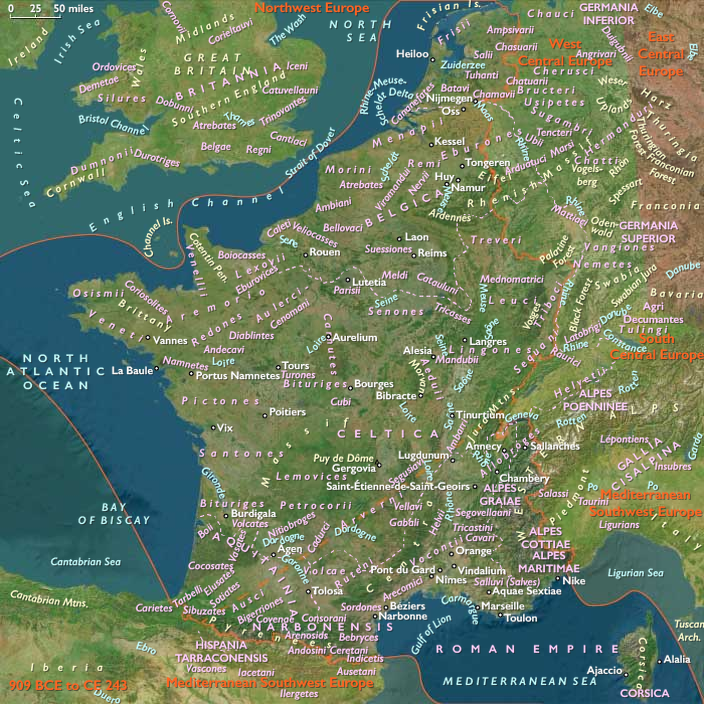
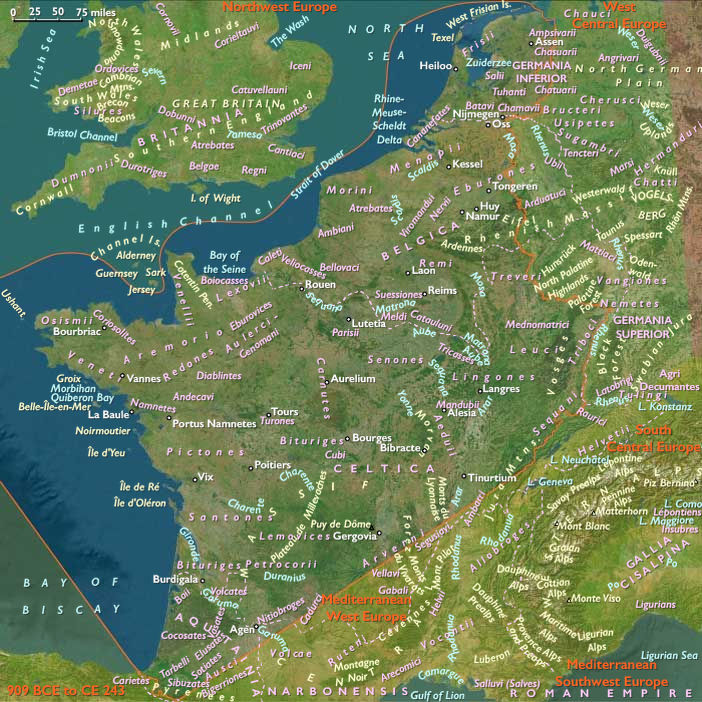
- The two groups formed an alliance, and the Tigurini migrated southward into the Roman province of Gallia Narbonensis (modern Provence).
- This movement further weakened Roman control over the region, as local Celtic tribes saw an opportunity to challenge Rome’s dominance.
The Defeat of Lucius Cassius Longinus at Agen (107 BCE)
- Two years later (107 BCE), the Roman consul Lucius Cassius Longinus led a campaign against the Tigurini in an effort to reassert Roman authority in Gaul.
- Near Agen, Longinus was completely defeated, marking yet another humiliating loss for the Roman Republic.
- Gaius Popillius Laenas, the senior surviving Roman officer, was forced to negotiate for the survival of his army by:
- Surrendering half of the baggage to the victors.
- Submitting to the ultimate Roman humiliation—having his army "march under the yoke," a symbolic act of total submission to the enemy.
Consequences of These Defeats
- The back-to-back defeats at the hands of the Cimbri and Tigurini severely damaged Rome’s prestige in Gaul, leading to increased Celtic resistance and unrest.
- The failure of Roman military leadership highlighted the Republic’s vulnerability to large-scale migratory groups, leading to panic in Rome and urgent calls for military reform.
- The Roman defeats of 109 and 107 BCE set the stage for the Cimbrian War (113–101 BCE), which would culminate in the rise of Gaius Marius and his sweeping military reforms to counter the barbarian threat.
These events mark a critical phase in Rome’s struggle for dominance in Gaul, foreshadowing the larger conflicts and political shifts that would shape the late Republic and the expansion of Roman control in Western Europe.
Locations
Groups
- Boii (Celtic tribe)
- Roman Republic
- Taurisci
- Helvetii
- Scordisci (Celtic tribe)
- Cimbri
- Teutons
- Ambrones
Topics
Commodoties
Subjects
Regions
Subregions
Related Events
Showing 10 events out of 62922 total
Years: 107BCE - 107BCE
Locations
Groups
- Boii (Celtic tribe)
- Roman Republic
- Taurisci
- Helvetii
- Scordisci (Celtic tribe)
- Cimbri
- Teutons
- Ambrones
Topics
Commodoties
Subjects
Regions
Subregions