
The arrival of Germanic-speaking invaders along the …
Years: 238 - 238
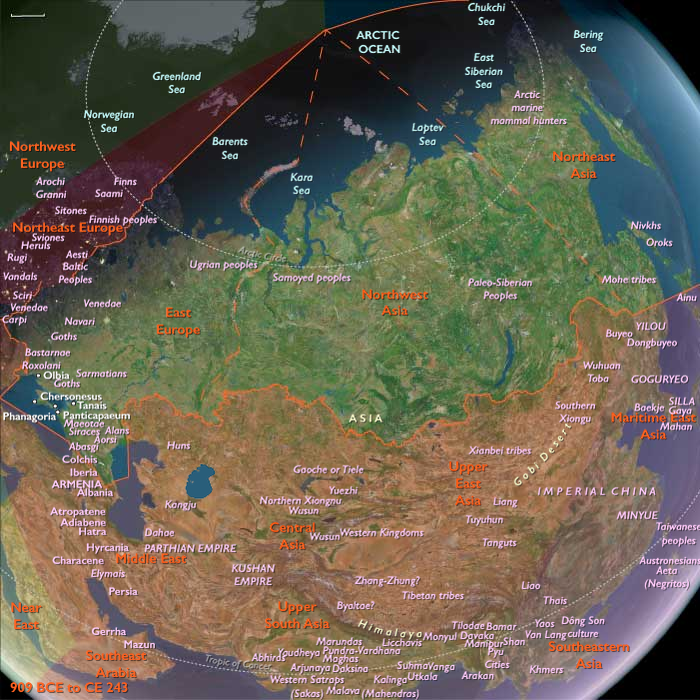
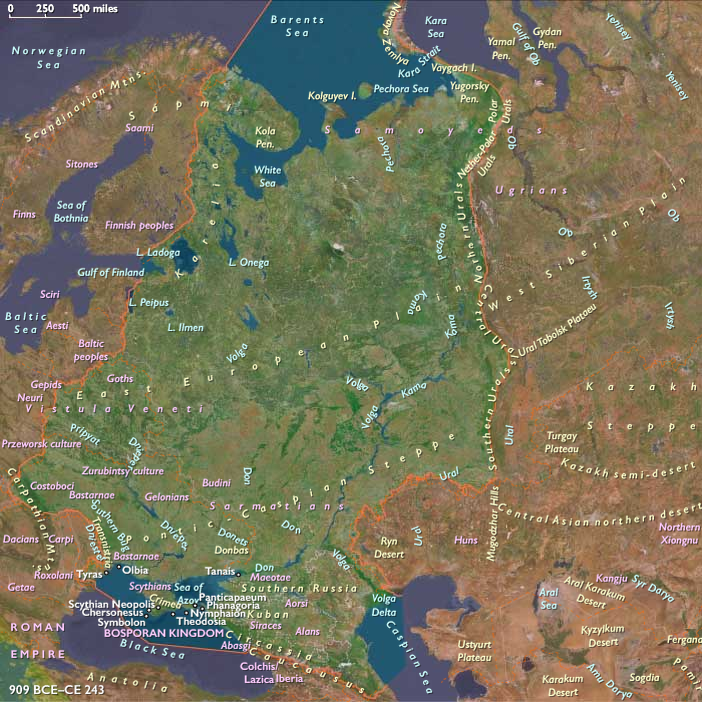
The arrival of Germanic-speaking invaders along the coast of the Black Sea is generally explained as a gradual migration of the Goths from what is now Poland to Ukraine, reflecting the tradition of Jordanes and old songs.
The Goths—Germans coming from what is now Sweden—will be followed by the Vandals, the Burgundians, and the Gepidae.
The aftereffect of their march to the southeast, toward the Black Sea, had been to push the Marcomanni, the Quadi, and the Sarmatians onto the Roman limes in Marcus Aurelius' time.
Their presence is brusquely revealed to the civilized Greco-Roman world when they attack the Greek towns on the Black Sea about 238.
Locations
Groups
- Bosporan Kingdom
- Sarmatians
- Greeks, Hellenistic
- Iazyges, or Iazygians
- Vandals (East Germanic tribe)
- Marcomanni (Germanic tribe)
- Gepids (East Germanic tribe)
- Quadi (Germanic tribe)
- Goths (East Germanic tribe)
- Moesia Inferior (Roman province)
- Burgundians (East Germanic tribe)
- Roman Empire (Rome): Non-dynastic
Topics
- Classical antiquity
- Roman Age Optimum
- Crisis of the Third Century (Roman Civil “War” of 235-84)
- Year of the Six Emperors, or Roman Civil War of 238
Commodoties
Subjects
Regions
Subregions
Related Events
Showing 10 events out of 60544 total
Years: 238 - 238
Locations
Groups
- Bosporan Kingdom
- Sarmatians
- Greeks, Hellenistic
- Iazyges, or Iazygians
- Vandals (East Germanic tribe)
- Marcomanni (Germanic tribe)
- Gepids (East Germanic tribe)
- Quadi (Germanic tribe)
- Goths (East Germanic tribe)
- Moesia Inferior (Roman province)
- Burgundians (East Germanic tribe)
- Roman Empire (Rome): Non-dynastic
Topics
- Classical antiquity
- Roman Age Optimum
- Crisis of the Third Century (Roman Civil “War” of 235-84)
- Year of the Six Emperors, or Roman Civil War of 238
Commodoties
Subjects
Regions
Subregions