
ftermath of the Battle of Verneuil (1424): …
Years: 1424 - 1424
ftermath of the Battle of Verneuil (1424): The Fate of the Scottish Army and the French Response
Despite suffering devastating losses at the Battle of Verneuil (August 17, 1424), the Army of Scotland was not completely annihilated. However, the defeat significantly weakened its role in future campaigns, as Scottish reinforcements to France drastically declined after this battle.
The Dauphin Charles VII, though devastated by the loss, continued to honor the Scottish survivors, recognizing their sacrifices in the fight against English domination.
I. The Diminished Role of the Scottish Army in France
- While the Franco-Scottish force had suffered enormous casualties, with over 4,000 Scots killed, some survivors remained active in the French cause.
- The battle marked a turning point, as Scotland could no longer provide large-scale military reinforcementsto France.
- The destruction of the Scottish contingent severely weakened Charles VII’s ability to challenge English control in northern France.
II. The Fate of the Captured Commanders
Among the high-ranking prisoners captured by the English were:
- John, Duke of Alençon, a key nobleman in the Dauphin’s army.
- Pierre, the Bastard of Alençon.
- Gilbert Motier de La Fayette, Marshal of France, who had fought alongside the Scots.
Their captivity further disrupted the French war effort, depriving Charles VII of important commanders.
III. Charles VII’s Response and the Recognition of Scottish Survivors
- Charles VII, though greatly saddened by the catastrophe at Verneuil, continued to honor the remaining Scottish troops who had fought for him.
- One such survivor was John Carmichael of Douglasdale, the chaplain to the slain Archibald Douglas, Earl of Douglas.
- In recognition of his service and the sacrifice of the Scottish troops, Carmichael was appointed Bishop of Orléans, a symbolic gesture of gratitude toward Scotland.
IV. Consequences for the Hundred Years' War
- Verneuil marked the effective end of large-scale Scottish involvement in the Hundred Years' War.
- The French were forced to rely more on native troops and diplomacy in their continued resistance against English rule.
- The defeat solidified English control over northern France, making the task of reconquering lost territories even more difficult for Charles VII.
The Battle of Verneuil (1424) was a disaster for the Franco-Scottish alliance, effectively ending Scotland’s ability to send major reinforcements and further weakening Charles VII’s military position. However, the recognition of Scottish survivors, like John Carmichael, showed that their sacrifices were not forgotten, as France continued its long struggle for independence from English rule.
Locations
People
- Charles VII of France
- Gilbert Motier de La Fayette
- Henry VI of England
- Jean II
- John of Lancaster
- Philip the Good
Groups
- Scottish people
- Normandy, Duchy of
- Christians, Roman Catholic
- Scotland, Kingdom of
- France, (Valois) Kingdom of
- England, (Plantagenet, Lancastrian) Kingdom of
Topics
- Hundred Years' War
- Anglo-Scottish Wars
- Armagnac-Burgundian Civil War
- Hundred Years' War: Resumption of the war under Henry V
- Verneuil, Battle of
Commodoties
Subjects
Regions
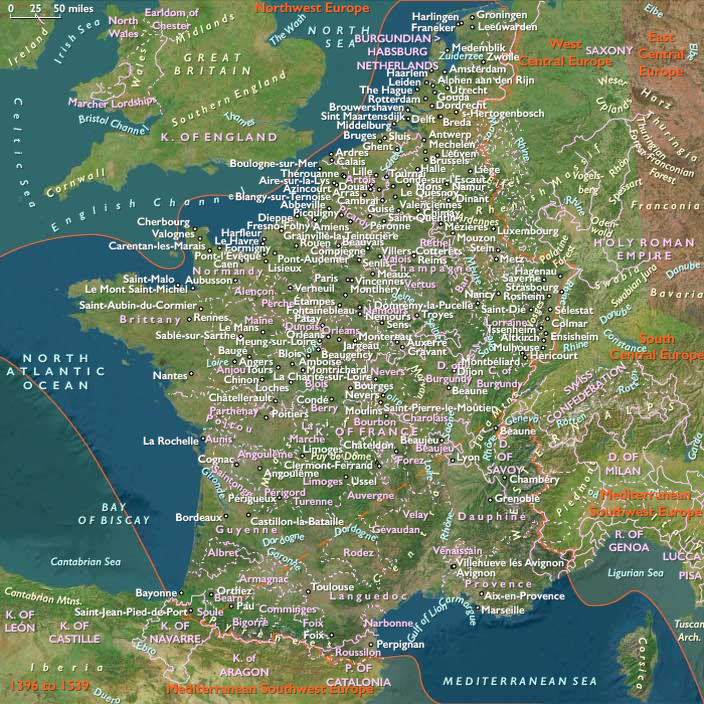
Subregions
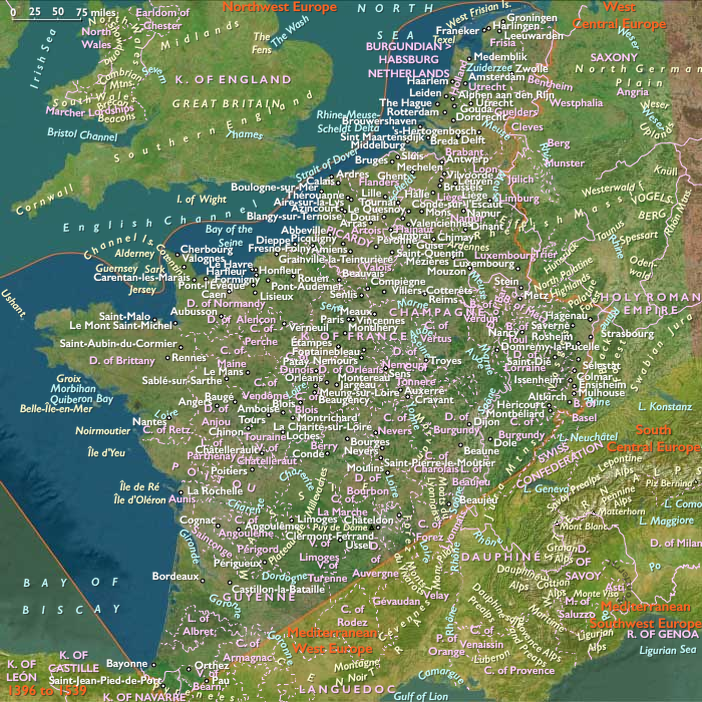
Related Events
Showing 10 events out of 42140 total
Years: 1424 - 1424
Locations
People
- Charles VII of France
- Gilbert Motier de La Fayette
- Henry VI of England
- Jean II
- John of Lancaster
- Philip the Good
Groups
- Scottish people
- Normandy, Duchy of
- Christians, Roman Catholic
- Scotland, Kingdom of
- France, (Valois) Kingdom of
- England, (Plantagenet, Lancastrian) Kingdom of
Topics
- Hundred Years' War
- Anglo-Scottish Wars
- Armagnac-Burgundian Civil War
- Hundred Years' War: Resumption of the war under Henry V
- Verneuil, Battle of
Commodoties
Subjects
Regions
Subregions