
Atlantic West Europe: Consolidation and Conflict (1396–1407) …
Years: 1396 - 1407
Atlantic West Europe: Consolidation and Conflict (1396–1407)
The period from 1396 to 1407 inaugurates the Upper Late Medieval Age in Atlantic West Europe, a region comprising northern France, the Low Countries (including the Flemish cities of Ghent, Bruges, and Antwerp), and the Loire Valley. This era is characterized by ongoing dynastic struggles, economic shifts, artistic innovation, and foundational changes in political alliances.
Political and Military Developments
The early 15th century sees sustained tensions and shifting alliances, notably influenced by the ongoing Hundred Years' War (1337–1453). England and France continue their intermittent conflicts, with Atlantic West Europe often at the center of confrontation. In 1396, a temporary truce stabilizes the region, allowing both sides to consolidate resources. However, the peace remains fragile, leading eventually to renewed hostilities.
Internal conflicts mark this era as well, including rivalries among noble houses that exacerbate regional instability. Northern France witnesses struggles between Burgundian and Armagnac factions, deeply dividing the French aristocracy and laying the groundwork for future civil unrest.
Economic Developments
Atlantic West Europe's economic life remains dominated by thriving trade networks centered in Flemish cities like Bruges and Ghent, which serve as major hubs for international commerce. Woolen textiles maintain their centrality in the regional economy, although competition and disputes with English merchants over wool supply lead to trade disruptions. Bruges solidifies its role as the leading commercial center, facilitating extensive trade with Italian and Hanseatic merchants. Meanwhile, artisanal guilds in these prosperous cities grow more powerful and assertive in their local influence.
Cultural and Artistic Trends
Culturally, the region continues to develop its artistic reputation, exemplified by the early works of the Flemish Primitive painters, who build foundations for later masters like Jan van Eyck. Artistic patronage from the Burgundian court supports an atmosphere of experimentation, laying the groundwork for the stylistic innovations soon to transform European art.
Literary culture flourishes as well, with increased emphasis on vernacular works in French and Dutch, reflecting a growing sense of regional identity distinct from classical Latin traditions.
Technological and Societal Changes
The turn of the 15th century witnesses advances in maritime technology, driven by an increased desire for oceanic exploration and commerce. Shipbuilding techniques improve steadily in response to growing trade demands and competition, particularly from rising maritime powers in Iberia. Societal structures experience modest changes, as urban elites in trading cities begin to consolidate power, increasing tension with traditional feudal aristocracies.
Long-term Consequences and Significance
The era from 1396 to 1407 proves formative for Atlantic West Europe, setting a trajectory marked by intensified regional tensions, burgeoning economic power, and burgeoning cultural prestige. While temporary truces provide brief stability, underlying political fragmentation remains unresolved, presaging intensified conflicts and transformations in the following decades.
This period, therefore, lays essential foundations for the region’s complex future, marking the start of a critical transitional age in Atlantic West Europe's evolution through the Upper Late Medieval period.
People
Groups
- Papal States (Republic of St. Peter)
- Flanders, County of
- Christians, Roman Catholic
- England, (Plantagenet, Angevin) Kingdom of
- France, (Valois) Kingdom of
- Netherlands, Burgundian
- England, (Plantagenet, Lancastrian) Kingdom of
Topics
- Hundred Years' War
- Western Schism or Papal Schism (also known as the Great Schism of Western Christianity)
- Hundred Years' War: Second Peace
- Armagnac-Burgundian Civil War
Commodoties
Subjects
Regions
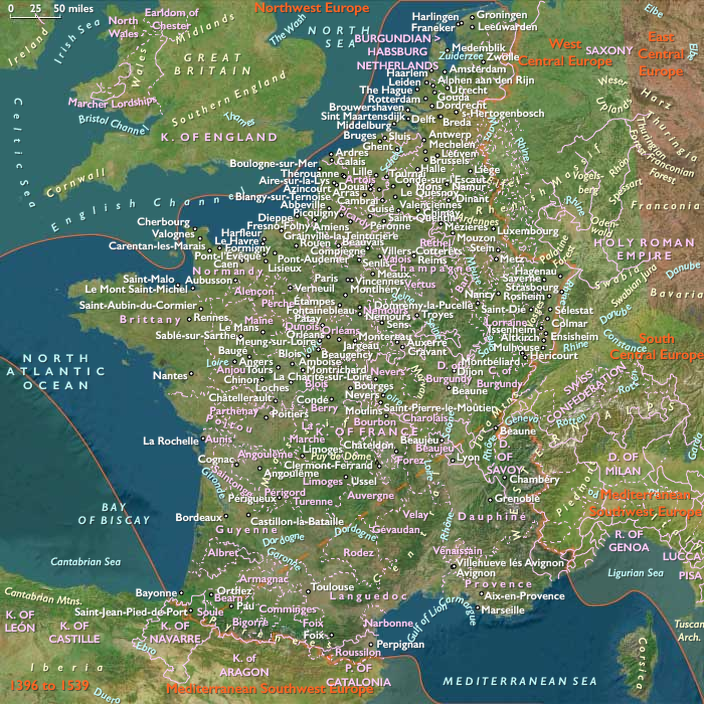
Subregions
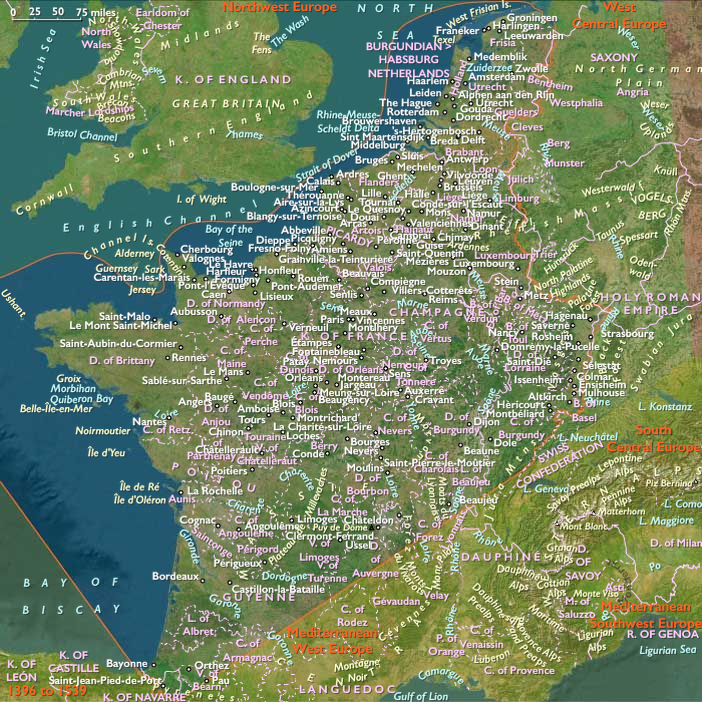
Years: 1396 - 1407
People
Groups
- Papal States (Republic of St. Peter)
- Flanders, County of
- Christians, Roman Catholic
- England, (Plantagenet, Angevin) Kingdom of
- France, (Valois) Kingdom of
- Netherlands, Burgundian
- England, (Plantagenet, Lancastrian) Kingdom of
Topics
- Hundred Years' War
- Western Schism or Papal Schism (also known as the Great Schism of Western Christianity)
- Hundred Years' War: Second Peace
- Armagnac-Burgundian Civil War
Commodoties
Subjects
Regions
Subregions