
The Arian controversy, the continuation of which …
Years: 357 - 357
The Arian controversy, the continuation of which has been aided by the conflicting politics of the empire after the death of Constantine, has emerged as three distinct types by the mid-fourth century.
Radical Arianism holds that the Son was "dissimilar" to the Father; homoeanism maintains that the Son was similar to the Father; and semi-Arianism veers off into orthodoxy in its position that the Son was similar yet distinct from the Father.
Constantius passes laws against paganism, and pagans as well as orthodox Nicaeans (Homoiousians) and extremist Arians (Anomoeans) are persecuted, for in 356-357 several edicts proscribe magic, divination, and sacrifices and order that the temples be closed.
The homoean party scores an initial success in 357, after which the semi-Arians join the orthodox ranks.
From 353 to 356 Bishop Hosius, who had been ecclesiastical advisor to Constantius’s father, the emperor Constantine, has strongly resisted the efforts of Constantius to have Athanasius condemned by the Western bishops and in a famous letter reproves the Arian emperor for intruding into ecclesiastical matters.
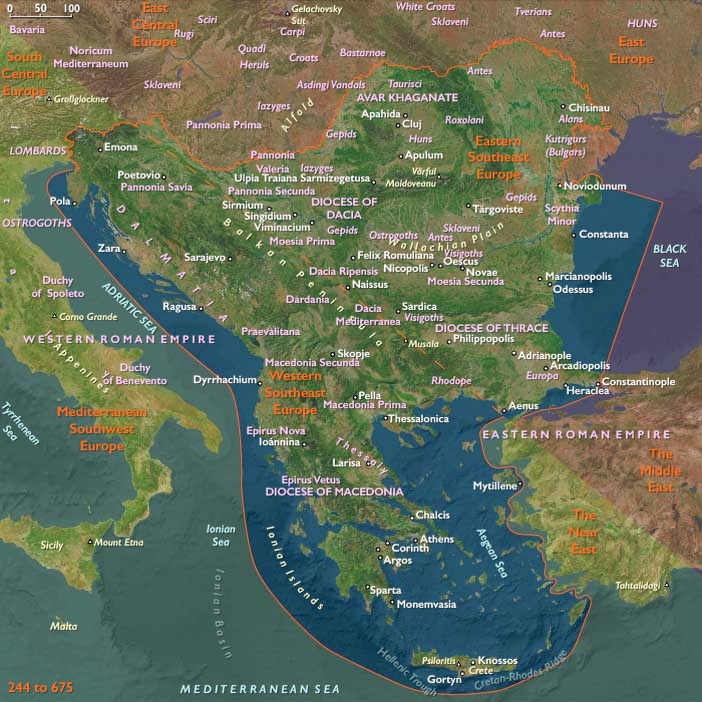
Summoned to Sirmium in 356 and detained at court for a year, after threats and physical violence, Hosius signs the Arian formula of Sirmium in 357.
Hosius retracts his signature, however, before he dies in Córdoba late in the year.
Locations
People
Groups
- Polytheism (“paganism”)
- Hispania Baetica (Roman province)
- Pannonia Secunda (Roman province)
- Christianity, Arian
- Pannonia, Diocese of
- Christianity, Nicene
- Roman Empire: Constantinian dynasty (Constantinople)
Topics
Subjects
Regions
Subregions

Related Events
Showing 4 events out of 4 total
Years: 357 - 357
Locations
People
Groups
- Polytheism (“paganism”)
- Hispania Baetica (Roman province)
- Pannonia Secunda (Roman province)
- Christianity, Arian
- Pannonia, Diocese of
- Christianity, Nicene
- Roman Empire: Constantinian dynasty (Constantinople)
Topics
Subjects
Regions
Subregions