
The area of today's Minsk had been …
Years: 1067 - 1067
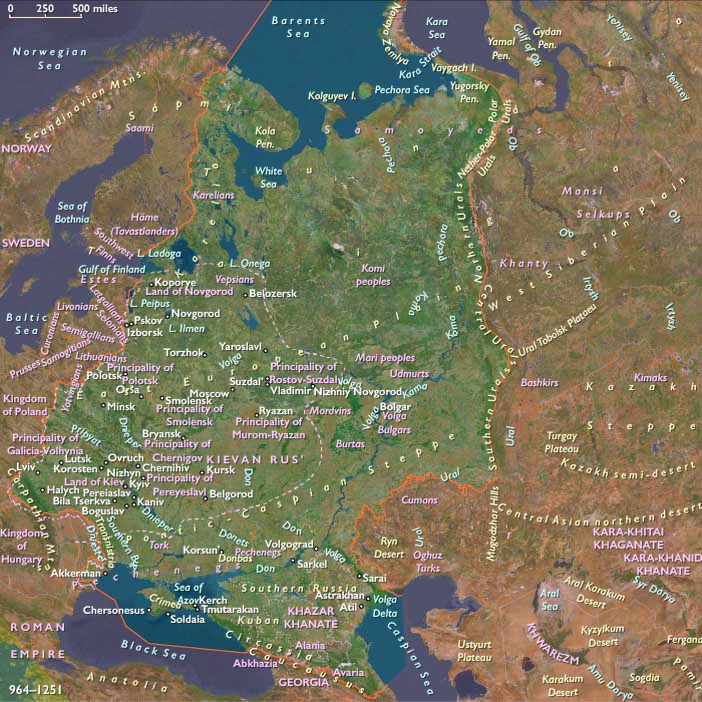
The area of today's Minsk had been settled by the Early East Slavs by the ninth century CE.
The Svislach River valley was the settlement boundary between two Early East Slav tribes – the Krivichs and Dregovichs.
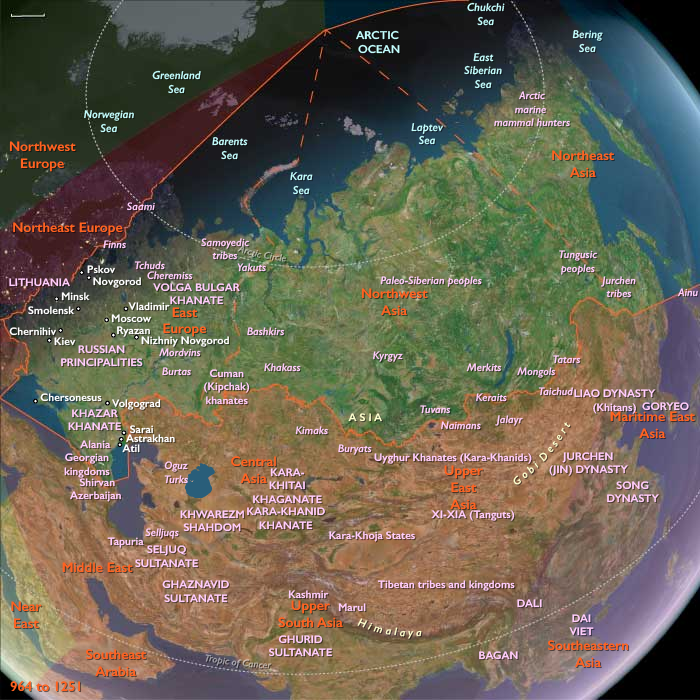
By 980, the area had been incorporated into the early medieval Principality of Polatsk, one of the earliest East Slav states.
Minsk was first mentioned in the Primary Chronicle for the year 1067 in association with the Battle on the river Nemiga.
1067 is now widely accepted as the founding year of Minsk.
City authorities consider the date of September 2, 1067, to be the exact founding date of the city, though the town (by then fortified by wooden walls) had certainly existed for some time by then.
The origin of the name is unknown but there are several theories.
Locations
Groups
Subjects
Regions
Subregions
Related Events
Filter results
Showing 10 events out of 50871 total
Sima Guang, born in 1019 in present-day Yuncheng, Shanxi to a wealthy family, had obtained early success as a scholar and officer.
When he was barely twenty, he passed the Imperial examination with the highest rank of jìnshì ("metropolitan graduate"), and spent the next several years in official positions.
In 1064, Sima presented to Emperor Yingzong of Song a book of five volumes, the Liniantu ("Chart of Successive Years").
It chronologically summarized events in Chinese history from 403 BCE to 959 CE, and was something like a prospectus for sponsorship of his ambitious project in historiography.
These dates were chosen because 403 BCE was the beginning of the Warring States period, when the ancient State of Jin was subdivided, which eventually led to the establishment of the Qin Dynasty; and because 959 CE was the end of the Five Dynasties and Ten Kingdoms period and the beginning of the Song Dynasty.
In 1066, he presented a more detailed eight-volume Tongzhi ("Comprehensive Records"), which chronicled Chinese history from 403 BCE to 207 BCE (the end of the Qin Dynasty).
The emperor issued an edict for compiling a groundbreaking universal history of China, granting full access to the imperial libraries, and allocating funds for all the costs of compilation, including research assistance by experienced historians such as Liu Ban (1022–88), Liu Shu (1032-78), and Fan Zuyu (1041–98).
After Yingzong dies in 1067, Sima is invited to the palace to introduce his work in progress to Emperor Shenzong of Song.
The new emperor not only confirms the interest his father had shown, but proclaims his favor by changing the title from Tongzhi ("Comprehensive Records") to the honorific Zizhi Tongjian ("Comprehensive Mirror to Aid in Government").
Scholars interpret this titular "Mirror" to mean a work of reference and guidance; indicating that Shenzong accepted Sima as his mentor in the science of history and its application to government.
Yizong, whose uncle and cousin had plotted against him in 1061, had had them executed and assumed direct control of Western Xia.
Yizong expands the central government, adding many offices.
He makes the armies more efficient and improves his control over distant states.
Yizong begins to attack the Song Dynasty and raids their villages; he also forces the surrender of the leader of the Uyghur Khanate in Turfan (aka the Kara-Khanids).
In later years, Yizong begins to improve diplomatic relationships with the Sung and Liao dynasties.
After Yizong's sudden death in 1067, his six-year-old son Huizong is put under house arrest by his mother, the Empress Madame Liang, and she attacks the Song Dynasty, unsuccessfully.
The reign of Yingzong of Song is known for controversy over the correct rituals to be performed by the Emperor for his father.
Yingzong had been adopted by Renzong and so the ritual sense Renzong was Yingzong's father.
In a more strictly biological sense, Zhao Yunrang was Yingzong's father.
Some officials wished Zhao Yunrang to be given the title of "Imperial Uncle", however Yingzong had sided with Ouyang Xiu and others and granted him the title "Parent".
This was not only an early sign of more conflict during Xiaozong's reign but also the Great Rites Controversy, which will take place in the decade following 1524 in Ming dynasty China.
At Yingzong’s death on January 25, 1067, Emperor Shenzong succeeds him.
Orsha, on the fork of the Dnieper and Arshytsa rivers, is first mentioned in 1067 as Rsha, making it one of the oldest towns in Belarus.
The town is named after the river, which was originally also named Rsha, probably from a Baltic root rus 'slowly flowing.'
The Yaroslavichi join forces and march north, coming upon Vseslav's army in the deep snow on the Niamiha River on March 3 and defeating him.
The precise course of battle is unknown, though it has become legendary as a bloodbath; The Tale of Igor's Campaign referred to "the bloody banks of the Nemiga" being sown not with blessings but with bones.
Vseslav flees back Polotsk and the Yaroslav princes do not pursue him.
However, in June, after the battle, the Yaroslav princes call for negotiations, “kiss the cross” (take an oath) and make promises of future safety; Vseslav is invited to Iziaslav's camp to celebrate the peace and is promptly arrested together with two of his sons and taken to prison in Kiev.
Harald, after concluding peace with Sweyn Estridsson, had set out on his campaign of conquering England from Harold Godwinson in 1066.
Before departing, he had appointed his eldest son Magnus as regent and king of Norway in his absence, and had his younger son Olaf accompany him on the expedition.
After initial success in the Battle of Fulford, Harald had been defeated and killed by Harold Godwinson in the Battle of Stamford Bridge.
Olaf survives and returns to Norway with the remaining troops in early 1067, and is proclaimed king and co-ruler with his brother Magnus.
Although it had been intended for Magnus and Olaf to rule the kingdom jointly without division, in practice Olaf rules over Viken (the southeastern part of Norway), while Magnus controls the Uplands and Trøndelag (the middle parts of Norway) along with Western Norway and Northern Norway.
Despite of this division, there are no signs of hostility between the brothers, and their relationship appears to have been peaceful.
Two rivals named Eric, both claiming the Swedish throne, have batted for power in Sweden since the death of Stenkil in 1066; both are killed in 1067.
Nothing more is known about them, though later historians have speculated that one of them was a Christian son of Stenkil, and the other a pagan; accordingly, they are sometimes assigned the names Eric Stenkilsson and Eric the Pagan, but no basis for such names can be found in any contemporary sources.
After Eric and Eric are dead, Halsten, son of King Stenkil, ascends to the throne.
King Solomon and his cousins closely cooperate in the period between 1064 and 1071.
Both Solomon and Géza had been, in 1065 or 1066, present at the consecration of the Benedictine Zselicszentjakab Abbey, established by Palatine Otto of the Győr clan, a partisan of the king.
They invade Bohemia together after the Czechs plunder the region of Trencsén (Trenčín, Slovakia) in 1067.
The ban of Croatia had at first been appointed by the kings of Hungary, and there was a single ban for all of the Kingdom of Croatia, but later the Slavonian domain received a separate ban.
It includes parts of present-day Central Croatia, western Slavonia and parts of northern Bosnia and Herzegovina.
Demetrius Zvonimir is the only notable ban, under king Peter Krešimir IV of Croatia.
Although his exact origin is a speculation, a theory suggests that Demetrius Zvonimir was most likely a descendant of Svetoslav Suronja and the younger cousin of Peter Kresmir IV.
It is believed that he had no real connection with the Croatian royal family of Trpimirović but had been designated by Krešimir IV and later elected (confirmed) by an assembly of nobles (bans).
The only few things that are truly known about his background assert that he had a magister (Latin for "teacher") named "Šestak", who also contributed to building monasteries around Croatia, that his maternal uncle was named Streza and that his family owned some estates near Biograd.
From about 1064, during the reign of Peter Kresimir IV (his relative through the Orseoli family of Venice), Demetrius Zvonimir has ruled in Slavonia, specifically the land between the rivers Drava and Sava, with the title of ban.
The neighboring Holy Roman Empire invades Croatia in 1067 by sending the Carantanian army to occupy the northern Banate.
This is probably a result of Zvonimir's close ties with Hungary, which is also at war with the Empire.
Since the Croatian king is preoccupied with rebellion in Dalmatia, due to the prohibition of Slavic liturgy, Demetrius is compelled to seek protection from Solomon, King of Hungary instead.
After they jointly repel the enemy from Croatia, Ban Zvonimir sends gifts to Solomon as a sign of gratitude.
Constantine, already old and unhealthy when he came to power, dies on May 22, 1067.
His final act had been to demand that only his sons succeed him, forcing his wife Eudokia Makrembolitissa to take a vow not to remarry.
Eudokia, the daughter of John Macrembolites and niece of the late Patriarch Michael Cerularius, is confirmed as regent for their sons Michael VII and Konstantios, along with Constantine's brother, the Caesar John Doukas.
Michael VII is just old enough to rule on his own, but nevertheless is considered co-emperor with his younger brother, while Eudokia runs the administration of the empire, wisely and moderately and personally taking charge of the education of the heir apparent.
