
The area around Lübeck had been settled …
Years: 1158 - 1158
The area around Lübeck had been settled after the last Ice Age.
Several Neolithic dolmens can be found in the area.
Slavic peoples started around CE 700 coming into the eastern parts of Holstein, which had previously been settled by Germanic inhabitants and were then evacuated in the course of the Migration Period.
In the early ninth century, Charlemagne, whose attempts to Christianize the area were opposed by the Saxons, had moved the Saxons out and brought in Polabian Slavs, allied to Charlemagne, in their stead.
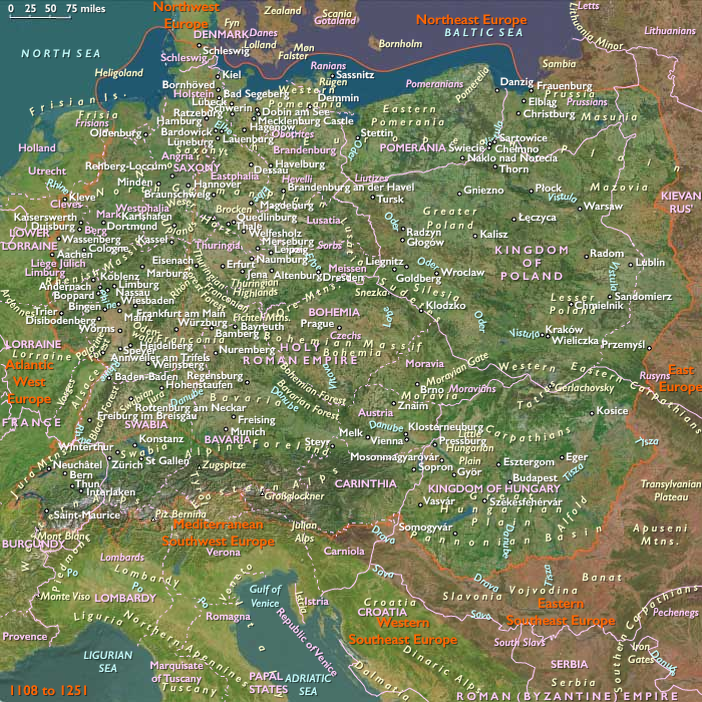
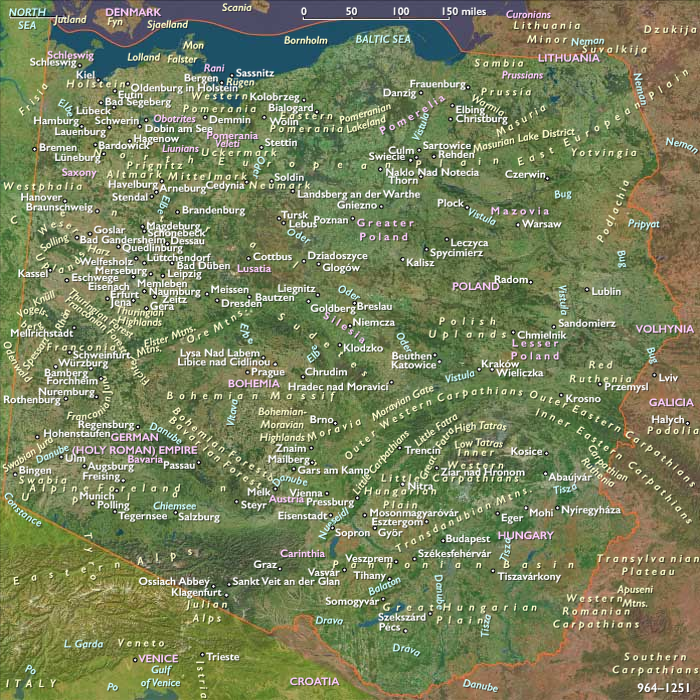
Liubice ("lovely") had been founded on the banks of the river Trave about four kilometers north of the present-day city center of Lübeck.
In the tenth, century it became the most important settlement of the Obotrite confederacy and a castle had been built.
The settlement had been burned down in 1128 by the pagan Rani, a West Slavic tribe based on the island of Rugia (Rügen) and the southwestern mainland across the Strelasund in what is today northeastern Germany.
The modern town was founded by Adolf II, Count of Schauenburg and Holstein, in 1143 as a German settlement on the river island Bucu.
He has established a new castle which was first mentioned by Helmold in 1147.
Adolf has to cede the castle to Henry the Lion in 1158.
Locations
People
Groups
- Polytheism (“paganism”)
- Saxons
- Germans
- Rani (Slavic tribe)
- Polabian Slavs (West Slavs)
- Obotrites (Slavic tribal confederation)
- Saxony, Duchy of
- Holstein, County of
- Christians, Roman Catholic
Topics
Subjects
Regions
Subregions
Years: 1158 - 1158
Locations
People
Groups
- Polytheism (“paganism”)
- Saxons
- Germans
- Rani (Slavic tribe)
- Polabian Slavs (West Slavs)
- Obotrites (Slavic tribal confederation)
- Saxony, Duchy of
- Holstein, County of
- Christians, Roman Catholic
Topics
Subjects
Regions
Subregions