
The area around Bologna, located at the …
Years: 190BCE - 190BCE
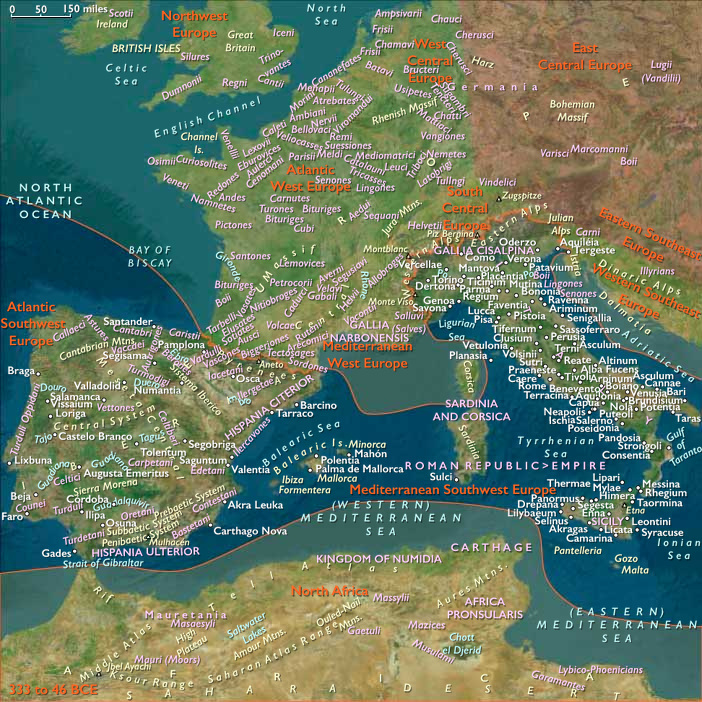
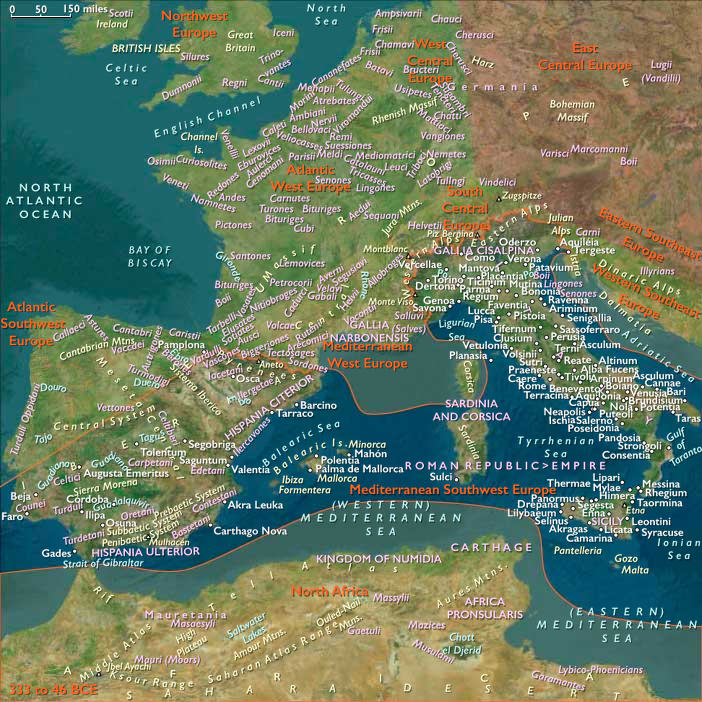
The area around Bologna, located at the foot of the Apennine Mountains, has been inhabited since the ninth century BCE, as evidenced by the archaeological digs in the nineteenth century in nearby Villanova.
This period, and up to the sixth century, is in fact generally referred to as Villanovian, and had various nuclei of people spread out around this area.
Etruria began in the seventh and sixth centuries BCE to have an influence on this area, and the population went from Umbrian to Etruscan.
The town was renamed Felsina.
The city and the surrounding area were conquered in the fourth century BCE by the Boii, a Celtic tribe from Transalpine Gaul.
The tribe settled down and mixed so well with the Etruscans, after a brief period of aggression, that they created a civilization that modern historians call Gaul-Etruscan (one of the best examples is the archaeological complex of Monte Bibele, in the Apennines near Bologna).
After the Battle of Telamon in 225 BCE, in which the forces of the Boii and their allies were badly beaten, the tribe had reluctantly accepted the influence of the Roman Republic, but with the outbreak of the Punic Wars the Celts once more went on the warpath.
They first helped Hannibal's army cross the Alps then they supplied him with a consistent force of infantry that proved itself decisive in several battles.
With the downfall of the Carthaginians came the end of the Boii as a free people: in 196 BCE, the Romans had destroyed many settlements and villages (Monte Bibele is one of them); they then establish the colonia of Bononia around 190 BCE.
The settlers include three thousand Latin families led by the consul Lucius Valerius Flaccus.
The Celtic population will ultimately be absorbed into the Roman society but the language will survive in some measure in the modern Bolognese dialect, which linguists say belongs to the Gallo-Italic group of languages and dialects.
Locations
Groups
Topics
Commodoties
Subjects
Regions
Subregions
Related Events
Showing 10 events out of 63455 total
Years: 190BCE - 190BCE
Locations
Groups
Topics
Commodoties
Subjects
Regions
Subregions