
The Arawak, a group of linguistically related …
Years: 1540 - 1551
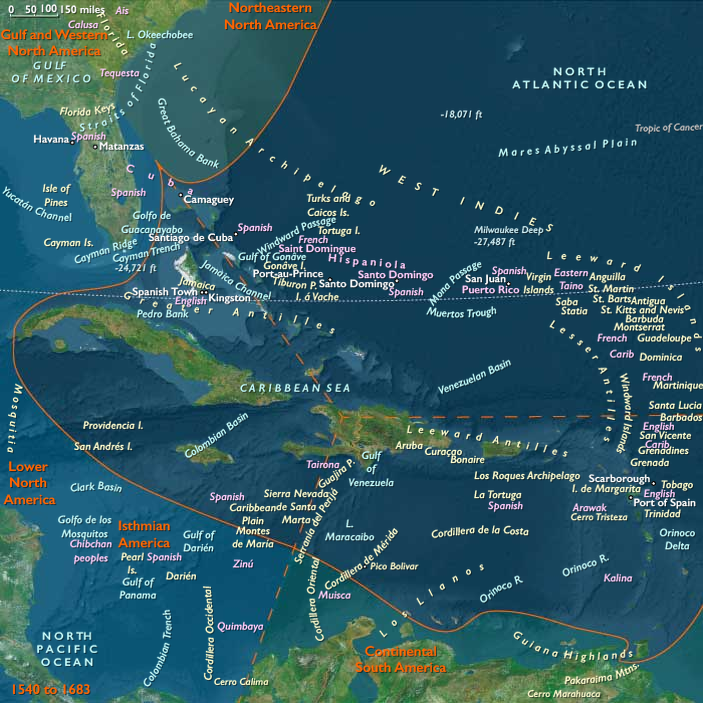
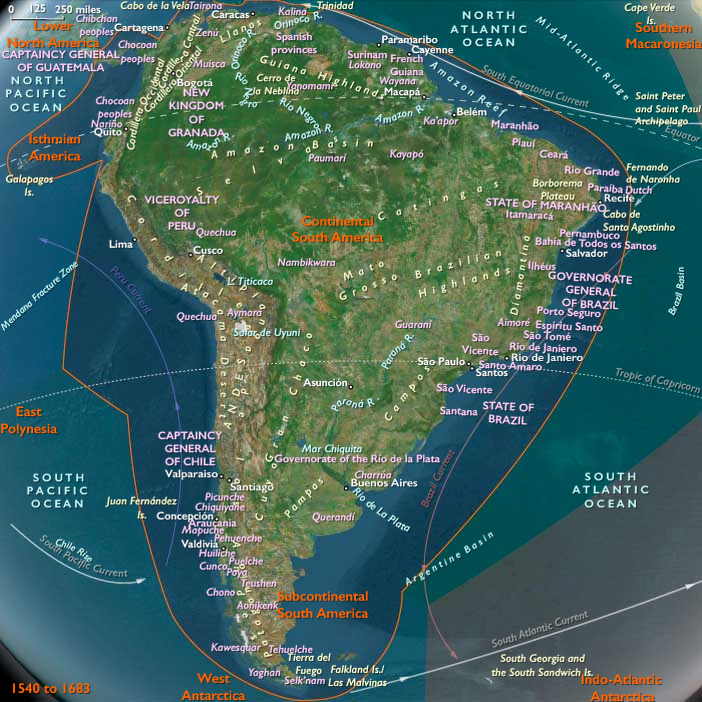
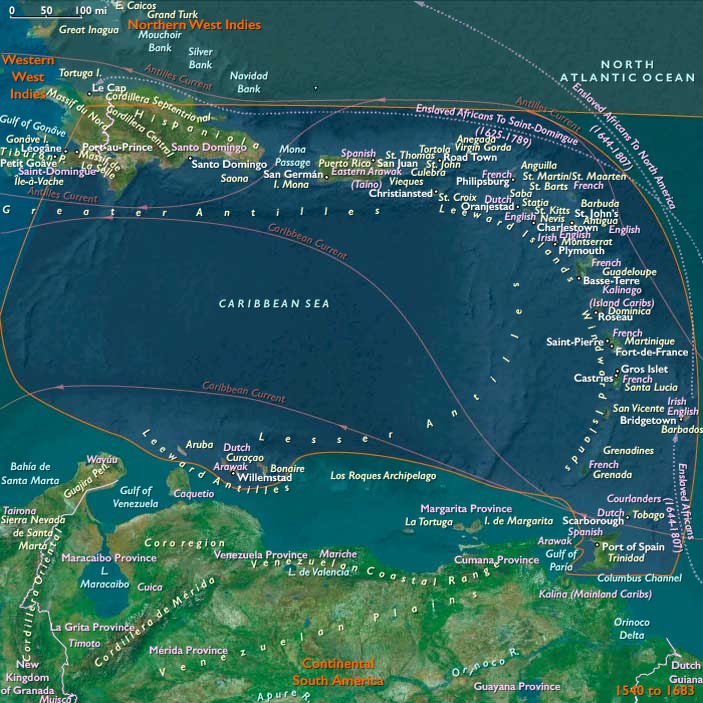
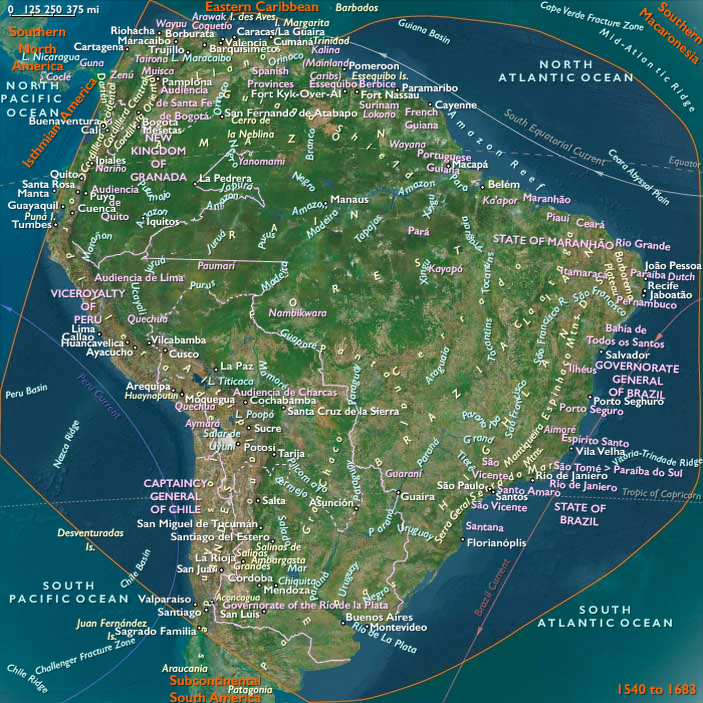
The Arawak, a group of linguistically related but culturally diverse Amerind-speaking peoples, inhabit the tropical forests of South America at the time of the Spanish conquest, especially north of the Amazon, extending from the Andean foothills to the Antilles.
Where resources are abundant, as along the lower Amazon and the coast of Brazil, mainland Arawakan communities are large, consisting of several lineage-based households numbering as many as two thousand people.
The mainland Arawak practice slash-and-burn horticulture and exploit river resources, in contrast to the Arawakan Taino of the Greater Antilles, who had based their culture (now devastated by the Spaniards) on the exploitation of rich maritime resources as well as on agriculture).
Residing in small communities of between one hundred and two hundred persons, their settlements often consist of a single large multifamily dwelling.
The Arawak believe in bush spirits and the power of local shamans.
Groups
Topics
- Colonization of the Americas, Portuguese
- Colonization of the Americas, Spanish
- Colonization of the Americas, German
Commodoties
- Fish and game
- Weapons
- Gem materials
- Grains and produce
- Strategic metals
- Slaves
- Sweeteners
- Lumber
- Land
- Tobacco
Subjects
Regions
Subregions
Years: 1540 - 1551
Groups
Topics
- Colonization of the Americas, Portuguese
- Colonization of the Americas, Spanish
- Colonization of the Americas, German
Commodoties
- Fish and game
- Weapons
- Gem materials
- Grains and produce
- Strategic metals
- Slaves
- Sweeteners
- Lumber
- Land
- Tobacco
Subjects
Regions
Subregions