
The Aragonese capture Oristano, capital of the …
Years: 1410 - 1410
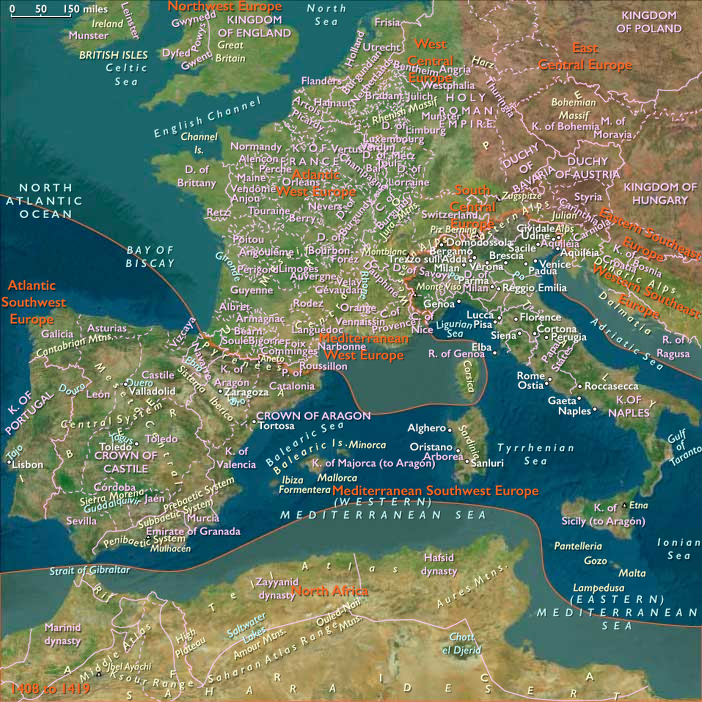
The Aragonese capture Oristano, capital of the Giudicato di Arborea in Sardinia.
William III of Narbonne, having returned to Sardinia in spring 1410, reorganizes his territories with his capital at Sassari.
With the help of Nicolò Doria, he recaptures Longosardo on August 9, and tries unsuccessfully to retake Oristano and …
Locations
People
Groups
Commodoties
Subjects
Regions
Subregions
Related Events
Showing 10 events out of 42435 total
Years: 1410 - 1410
Locations
People
Groups
Commodoties
Subjects
Regions
Subregions