
The Annales pisani antiquissimi, the civic …
Years: 1011 - 1011
The Annales pisani antiquissimi, the civic annals of Pisa compiled by Bernardus Marangonis, record only a few events from the tenth century, and all have to do with the waging of war.
"[T]he Pisans were in Calabria" in 970, probably making war on its Muslim occupants in order to secure safe passage for their merchants through the Strait of Messina that separated Muslim Sicily from the peninsula.
The Annales also record a Muslims naval attack on Pisa in 1004 and a Pisan victory over the Muslims off Reggio in 1005.
The Muslim assault of 1004 may have originated in Spain, or it may have been a typical pirate raid.
The Pisan attack was likely a response, and perhaps a serious attempt to put an end to Muslim piracy, for which Reggio served as a perennial base.
An embassy from the emperor Basil II to the court of the caliph Hishām II in 1006 had released some Andalusian soldiers who had been captured off the coasts of Corsica and Sardinia.
Together with Sicily, Corsica and Sardinia comprise the "route of the islands”, which links the north Italian towns to the markets of northern Africa and the eastern Mediterranean.
Without control of the islands the expansion of Pisan and Genoese mercantile ventures would have been severely hampered.
The rise of Pisan and Genoese trading in connecton with increased military activity, especially against the enemies of the Church, has a contemporary parallel on the other side of Italy in the burgeoning Republic of Venice.
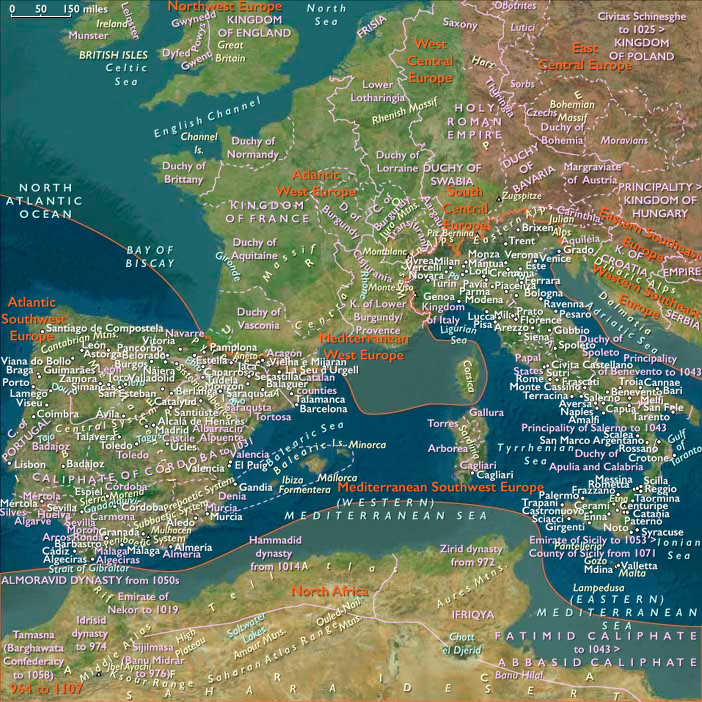
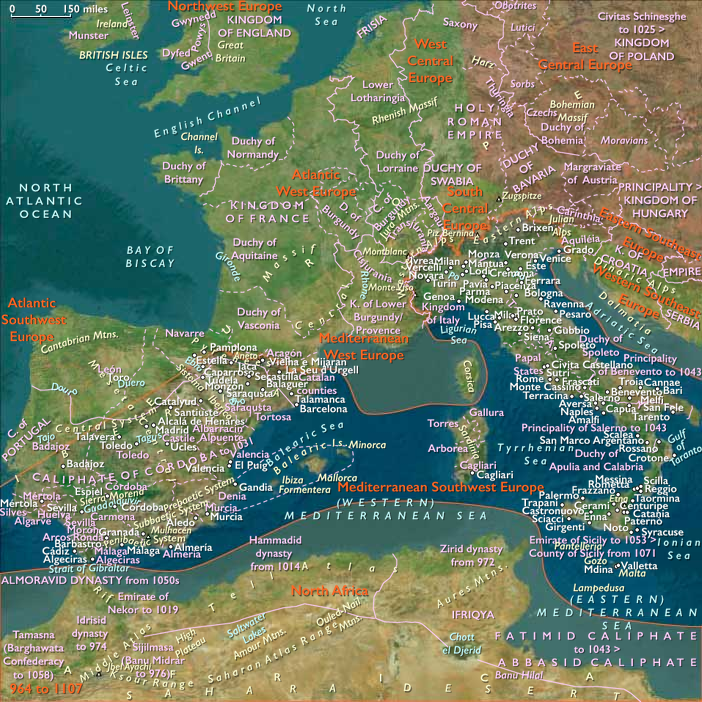
The Pisan annals record that a "fleet from Spain" came in 1011 to destroy the city, which suggests that the aggression was planned and organized and not merely a piratical raid.
The most probable source of the fleet is the port of Denia, ruled by Mujāhid al-‘Āmirī (Mogehid).
According to the chronicle of Ibn ‘Idhārī, Mujāhid had received Denia from the Córdoban hājib Muhammad Ibn Abī ‘Āmir al-Manṣūr, who died in 1002.
It is unclear from Ibn ‘Idhārī whether Mujāhid conquered the Balearics from his base at Denia, or whether he took control of Denia from a base in the Balearics.
A Muslim enclave had perhaps been established by Mujāhid's predecessor as ruler of the Balearics around 1000.
Pope John VIII, since Sardinia lay directly across the Tyrrhenian Sea from Rome, had urged the Christian lay powers to expel the Muslims from the island in 1004.
Locations
Groups
- Christianity, Chalcedonian
- Saracens
- Pisa, (first) Republic of
- Genoa, (Most Serene) Republic of
- Denia, Muslim statelet, or taifa, of
Commodoties
Subjects
Regions
Subregions
Years: 1011 - 1011
Locations
Groups
- Christianity, Chalcedonian
- Saracens
- Pisa, (first) Republic of
- Genoa, (Most Serene) Republic of
- Denia, Muslim statelet, or taifa, of
Commodoties
Subjects
Regions
Subregions