
Philip II and the Collapse of the …
Years: 1108 - 1251
Philip II and the Collapse of the Angevin Empire (1180–1223)
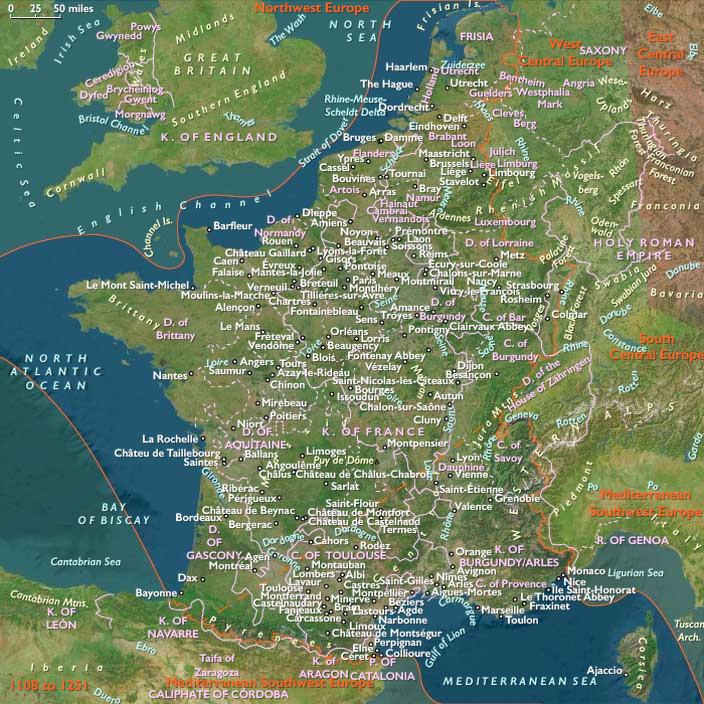
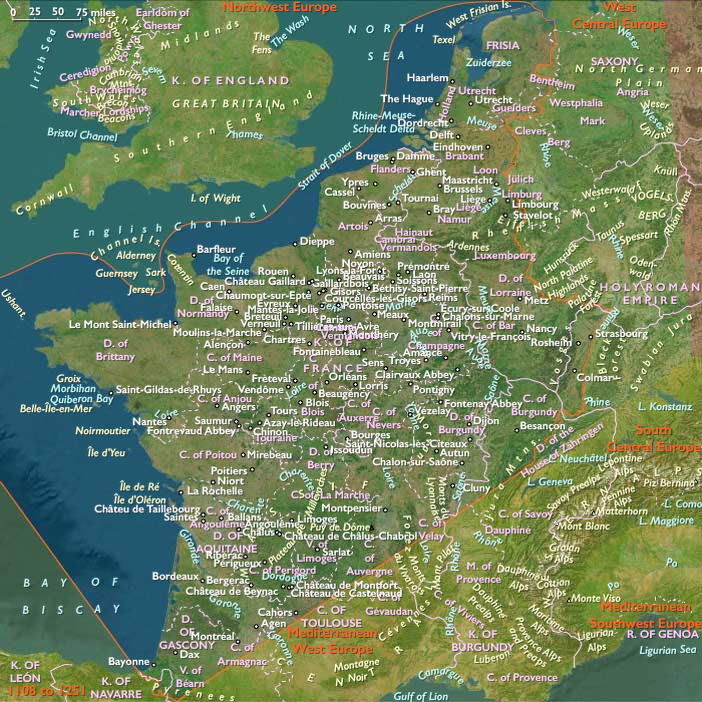
The ascension of Philip II Augustus in 1180 marked a turning point in the balance of power. Unlike his predecessors, Philip II aggressively pursued policies aimed at dismantling Angevin dominance. Through careful diplomacy and military campaigns, he exploited the internal divisions among Henry II's heirs, particularly after Richard I’s death in 1199 and the succession crisis involving John of England.
Philip’s decisive victory at the Battle of Bouvines in 1214 crushed Anglo-Angevin ambitions in Normandy, permanently integrating it into the French crown. The subsequent loss of Anjou, Maine, and Touraine weakened English influence on the continent, leaving Aquitaine as the last major English holding in Atlantic West Europe.
Philip's reign also saw the expansion of royal institutions, including the bailliage system, which increased the crown’s control over provincial administration, laying the foundation for a centralized French monarchy.
People
- Henry II of England
- John of England
- Louis VI of France
- Louis VII of France
- Philip II of France
- Richard I of England
Groups
- Maine, County of
- Anjou, County of
- Normandy, Duchy of
- Brittanny, Duchy of
- French people (Latins)
- Aquitaine, (Angevin) Duchy of
- France, (Capetian) Kingdom of
- Christians, Roman Catholic
- England, (Norman) Kingdom of
Topics
Commodoties
Subjects
Regions
Subregions
Years: 1108 - 1251
People
- Henry II of England
- John of England
- Louis VI of France
- Louis VII of France
- Philip II of France
- Richard I of England
Groups
- Maine, County of
- Anjou, County of
- Normandy, Duchy of
- Brittanny, Duchy of
- French people (Latins)
- Aquitaine, (Angevin) Duchy of
- France, (Capetian) Kingdom of
- Christians, Roman Catholic
- England, (Norman) Kingdom of
Topics
Commodoties
Subjects
Regions
Subregions