
The Ancient Pueblo population—the "Anasazi", from a …
Years: 892 - 903
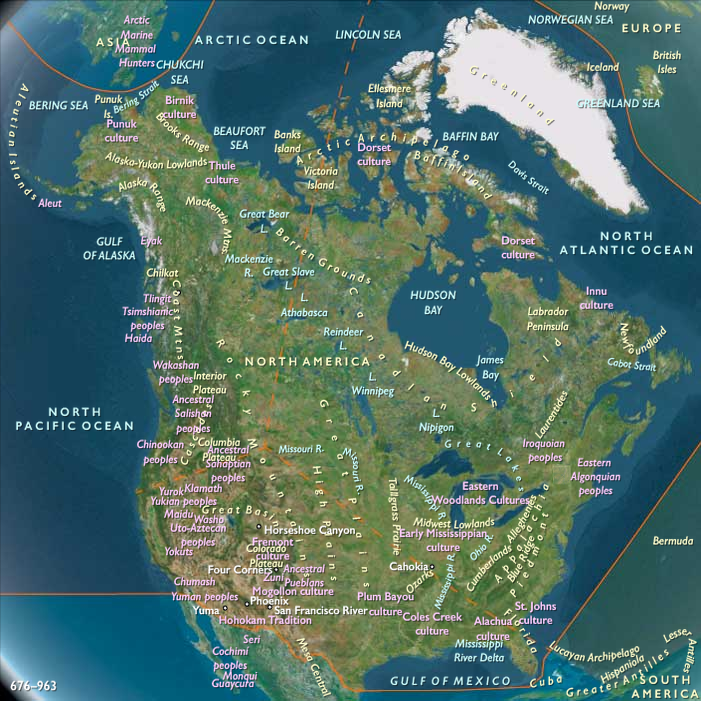
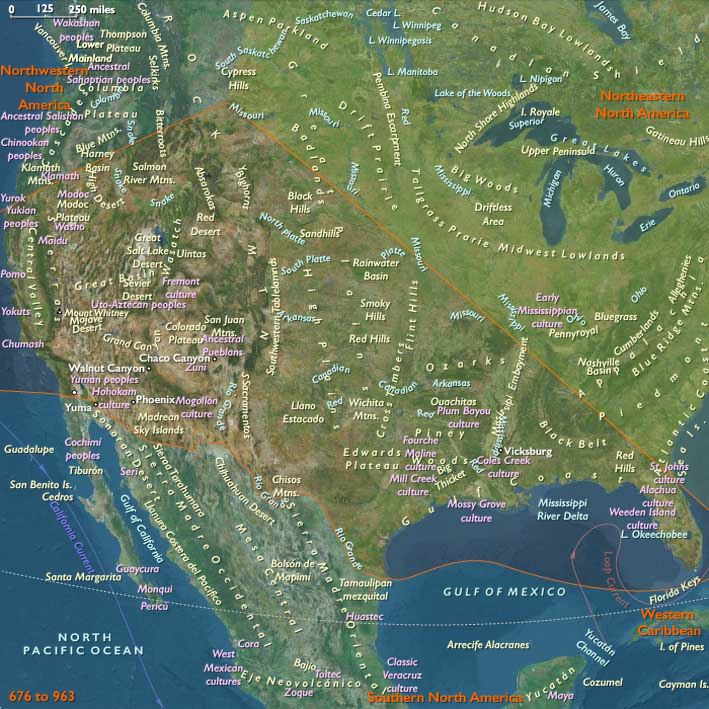
The Ancient Pueblo population—the "Anasazi", from a Ute term adopted by the Navajo denoting the "ancient ones" or "enemy ancestors"—had rapidly expanded by 850: groups resided in larger, denser pueblos.
Strong evidence attests to a canyon-wide turquoise processing and trading industry dating from the tenth century.
Around this time, the first section of Pueblo Bonito is built: a curved row of fifty rooms near its present north wall.
Native beadwork has continued to advance.
Beads are made from hand-ground and filled turquoise, coral, and shell.
Carved wood, animal bones, claws, and teeth are made into beads, which are then sewn onto clothing, or strung into necklaces.
Turquoise is one of the dominant materials of Southwestern Native American jewelry.
Thousands of pieces will be found in the Ancestral Pueblo sites at Chaco Canyon.
Some turquoise mines date back to Precolumbian times, and Ancestral Pueblo peoples trades the turquoise with Middle Americans.
Some turquoise found in southern Arizona dates back to 200 BCE.
Locations
Groups
Topics
Commodoties
Subjects
Regions
Subregions
Related Events
Showing 10 events out of 53685 total
Years: 892 - 903
Locations
Groups
Topics
Commodoties
Subjects
Regions
Subregions