
The allies, after refitting and establishing with …
Years: 1673 - 1673
August
The allies, after refitting and establishing with great difficulty somewhat more cordial relationships, decide to cruise off the Texel in the hope of drawing De Ruyter out of the Schooneveld and bringing him to action.
In the resultant Battle of Texel, Spragge and Tromp, commanding their respective rear divisions, clash repeatedly—Spragge had publicly sworn an oath in front of King Charles that this time he would either kill or capture his old enemy Tromp—each having their ships so damaged as to need to shift their flags to fresh ships three times.
Spragge drowns on the third occasion, when his ship takes a shot and sinks.
The English, with both fleets exhausted, eventually abandon their attempt to land troops (the landing force is still waiting in England to be shipped), and both sides retire.
No major ship has been sunk (although several fireships have been expended on each side), but many are seriously damaged and about three thousand men have died, two-thirds of them English or French.
Prince Rupert complains after the battle that the French had not done their share of the fighting, but historians ascribe the lack of French impact on the battle to de Ruyter's brilliant fleet handling.
It is true, however that Count d'Estrées, had strict orders from Louis XIV not to endanger the French fleet, as he himself admitted after the battle.
The battle, despite its inconclusive finish, is a clear strategic victory for the Dutch.
Locations
People
- Charles II
- Cornelis Tromp
- Edward Spragge
- Jean II d'Estrées
- Louis XIV of France
- Michiel de Ruyter
- Prince Rupert of the Rhine
- William III, Prince of Orange
Groups
- Münster, Prince-Bishopric of
- Cologne, Electorate of
- Netherlands, United Provinces of the (Dutch Republic)
- France, (Bourbon) Kingdom of
- Habsburg Monarchy, or Empire
- England, (Stewart, Restored) Kingdom of
Topics
Commodoties
Subjects
Regions
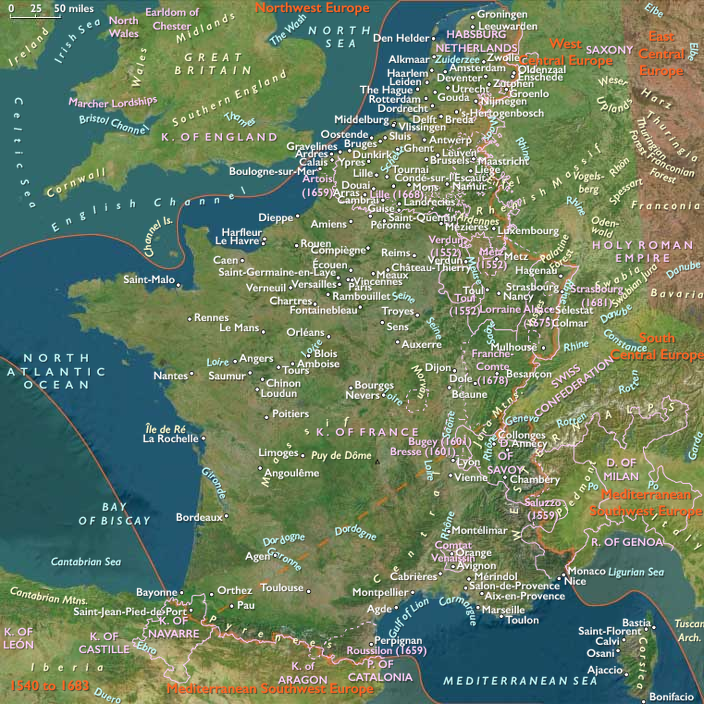
Subregions
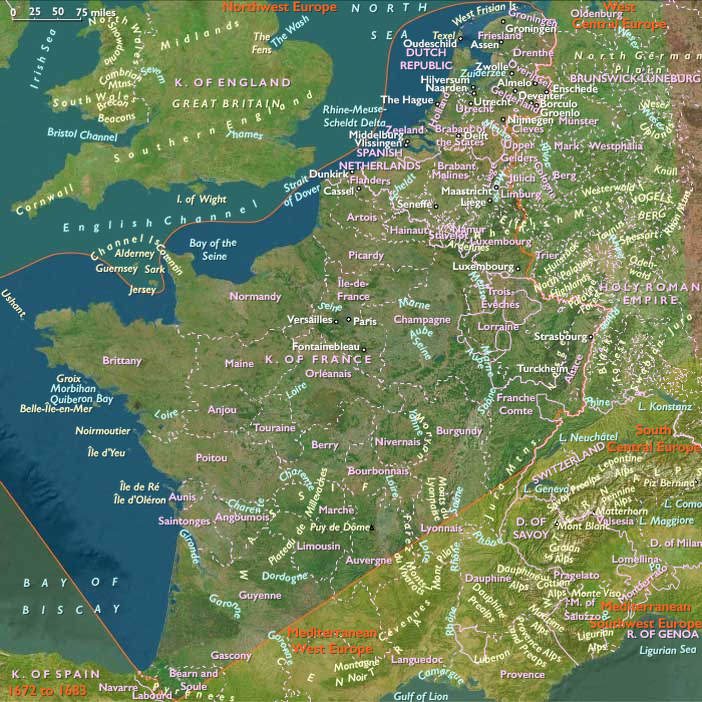
Related Events
Showing 3 events out of 3 total
Years: 1673 - 1673
August
Locations
People
- Charles II
- Cornelis Tromp
- Edward Spragge
- Jean II d'Estrées
- Louis XIV of France
- Michiel de Ruyter
- Prince Rupert of the Rhine
- William III, Prince of Orange
Groups
- Münster, Prince-Bishopric of
- Cologne, Electorate of
- Netherlands, United Provinces of the (Dutch Republic)
- France, (Bourbon) Kingdom of
- Habsburg Monarchy, or Empire
- England, (Stewart, Restored) Kingdom of
Topics
Commodoties
Subjects
Regions
Subregions