
Atlantic Southwest Europe (1828–1839): Liberal Turmoil, Constitutional …
Years: 1828 - 1839
Atlantic Southwest Europe (1828–1839): Liberal Turmoil, Constitutional Struggles, and Early Industrialization
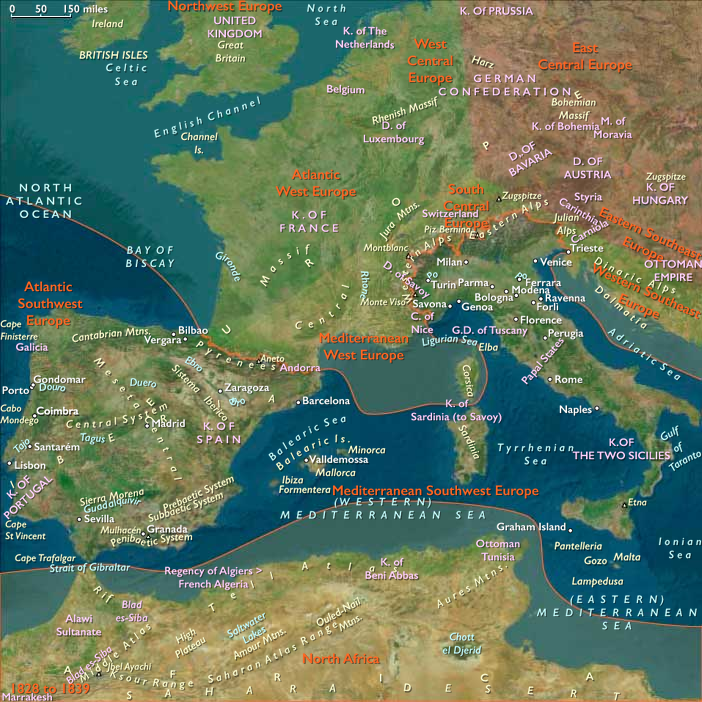
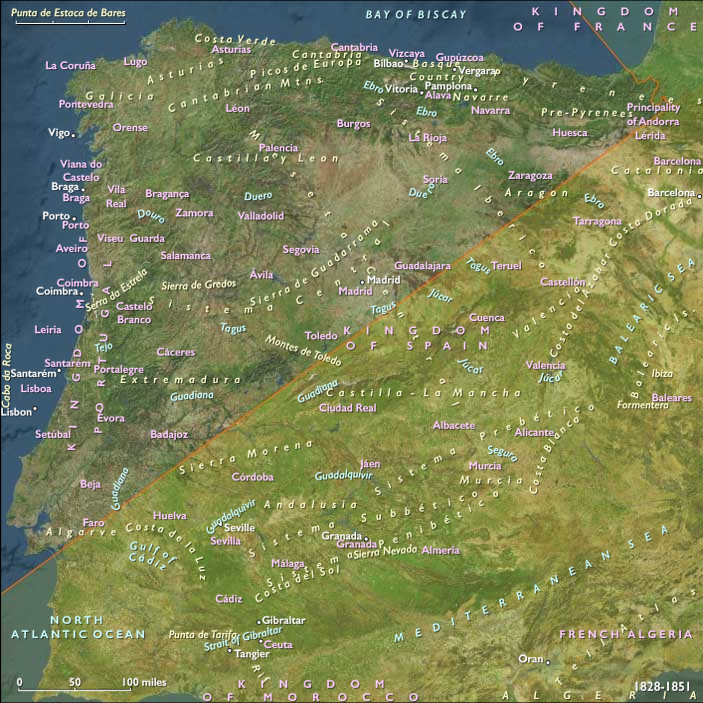
Between 1828 and 1839, Atlantic Southwest Europe—including northern and central Portugal (Lisbon, Porto), Galicia, Asturias, Cantabria, northern León and Castile, the Basque Country, and northern Navarre—entered a turbulent period defined by liberal revolutions, civil conflicts, constitutional struggles, and the early stages of industrialization. Portugal faced a bitter civil war between liberals and absolutists, while Spain grappled with similar tensions erupting into the First Carlist War. These upheavals reshaped regional identities, intensified political alignments, and set lasting foundations for modern governance and economic development.
Political and Military Developments
The Portuguese Liberal Wars (1828–1834)
-
Portugal descended into civil conflict known as the Liberal Wars between supporters of constitutional monarchy (Liberals) and absolutist factions loyal to Dom Miguel, who seized power in 1828.
-
Northern Portugal, especially Porto, became a bastion of liberal resistance during the 1832–1833 siege, famously enduring over a year of intense combat and hardship until liberal forces, led by Dom Pedro IV, successfully defeated Miguelist troops.
-
The liberal victory in 1834 resulted in Queen Maria II ascending the throne, solidifying constitutional monarchy, curtailing the political power of the Church and aristocracy, and definitively shifting Portugal toward parliamentary governance.
The First Carlist War in Northern Spain (1833–1839)
-
In Spain, King Ferdinand VII’s death in 1833 sparked the First Carlist War, a conflict between supporters of Ferdinand's daughter, Isabella II, backed by liberals, and those favoring Ferdinand's brother, Carlos V (Don Carlos), representing traditionalist absolutism.
-
Northern Spanish regions—particularly the Basque Country, Navarre, and rural areas of Cantabria, Asturias, and Galicia—became major battlegrounds. Carlists attracted significant rural support, leveraging regional discontent toward centralization and threats to traditional fueros (regional privileges).
-
The Carlist slogan "God, Country, and King" resonated strongly in conservative rural communities, although urban centers like Bilbao and Santander generally remained loyal to Isabella and liberal governance.
-
The conflict concluded provisionally with the Convention of Vergara (1839), negotiated by the liberal General Baldomero Espartero and moderate Carlist General Rafael Maroto, preserving Basque and Navarrese fueros and promising their integration within the Spanish liberal framework, though tensions lingered unresolved.
Economic Developments: Early Industrialization and Commercial Expansion
Industrialization in Northern Spain
-
Northern Spain, particularly the Basque Country and Cantabria, witnessed rapid industrial growth focused on iron mining, metallurgy, and shipbuilding. The development of ironworks around Bilbao and Santander laid foundations for significant future industrial expansion.
-
Coal mining in Asturias began modestly but steadily, supplying fuel to emerging industrial enterprises, gradually transforming the regional economy toward industrial capitalism.
Portuguese Economic Reorientation
-
Post-war economic recovery in northern Portugal focused on renewed maritime commerce, agricultural improvements, and early manufacturing industries around Porto and Lisbon, gradually reintegrating Portugal into European trade networks.
-
British influence remained strong, reflected in port wine exports from Porto and textile manufacturing, stabilizing the economy after the disruptions of civil war.
Social and Urban Developments: Urban Growth Amid Rural Distress
Urban Expansion and Social Change
-
Urban areas, particularly Porto, Lisbon, Bilbao, and Santander, grew significantly due to commercial and industrial opportunities. This attracted rural migrants seeking employment, causing rapid urbanization and increased social mobility but also deepening urban poverty and social tensions.
-
The growing middle class in these cities embraced liberal and constitutional ideologies, strongly influencing local politics and cultural life.
Rural Distress and Social Tensions
-
In Galicia, Asturias, northern León, and rural parts of Navarre, poverty persisted, aggravated by war disruptions and limited agricultural productivity. This fueled migration toward cities and overseas colonies (particularly Brazil and the Americas), significantly reshaping demographic patterns.
Religious and Cultural Developments: Liberal Reforms and Traditionalist Resistance
Ecclesiastical Reforms and Conflict
-
Liberal victories in Portugal (1834) and Spain (1839) significantly impacted Church authority. Portugal officially dissolved religious orders (1834), confiscating monastic lands and curtailing Church privileges. Similar measures, albeit more limited, were initiated in Spain, setting the stage for future ecclesiastical conflicts.
-
The suppression of religious orders and confiscation of church lands (desamortización) led to profound societal shifts, intensifying conflict between liberals and conservative religious elements, particularly in rural areas and among Carlists in Spain.
Cultural Expression and Romanticism
-
Romanticism emerged as the dominant cultural movement, promoting national and regional pride through literature, art, and folklore. Prominent authors and artists explored historical themes and regional identities, fueling nationalist and regionalist sentiments, especially visible in Galicia, the Basque Country, and northern Portugal.
-
The revival of regional languages (Galician, Basque) and cultural traditions expressed resistance to centralization, asserting distinctive regional identities amid national conflicts.
Legacy and Significance
The era from 1828 to 1839 marked a critical turning point for Atlantic Southwest Europe:
-
Political Liberalization and Constitutionalism: Liberal victories in Portugal and Spain definitively advanced constitutional governance, though conservative resistance persisted, sowing seeds for future conflict.
-
Economic Modernization and Industrial Growth: Early industrialization, particularly in the Basque Country and Cantabria, significantly transformed regional economies, initiating sustained economic growth and industrial development.
-
Strengthening of Regional Identities: Intense conflicts reinforced distinct regional identities and autonomy claims, particularly through the Carlist Wars in northern Spain, highlighting enduring tensions between centralizing national governments and local traditions.
Ultimately, these developments laid foundational structures for modern state formation, industrial economies, and ongoing struggles over regional autonomy, deeply influencing subsequent historical trajectories across Atlantic Southwest Europe.
People
- Baldomero Espartero, Prince of Vergara
- Ferdinand VII of Spain
- Isabella II of Spain
- Maria II of Portugal
- Miguel I of Portugal
Groups
Topics
- Liberal Wars, or Miguelite Wars (War of the Two Brothers)
- Carlist War, First
- Portuguese Moderates Reaction
Commodoties
- Domestic animals
- Grains and produce
- Textiles
- Fibers
- Strategic metals
- Beer, wine, and spirits
- Fuels, lubricants and sealants
- Manufactured goods
Subjects
Regions
Subregions
Related Events
Showing 10 events out of 19829 total
Years: 1828 - 1839
People
- Baldomero Espartero, Prince of Vergara
- Ferdinand VII of Spain
- Isabella II of Spain
- Maria II of Portugal
- Miguel I of Portugal
Groups
Topics
- Liberal Wars, or Miguelite Wars (War of the Two Brothers)
- Carlist War, First
- Portuguese Moderates Reaction
Commodoties
- Domestic animals
- Grains and produce
- Textiles
- Fibers
- Strategic metals
- Beer, wine, and spirits
- Fuels, lubricants and sealants
- Manufactured goods
Subjects
Regions
Subregions