
Filters:
The Liberal Resistance to Miguel’s Usurpation (1828) …
Years: 1828 - 1839
The Liberal Resistance to Miguel’s Usurpation (1828) and the Five Years of Repression
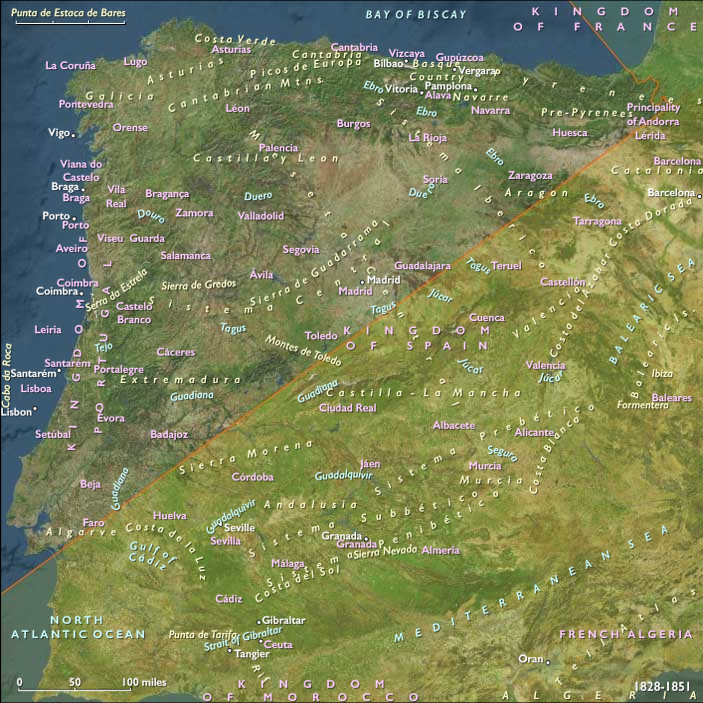
When Miguel declared himself absolute king of Portugal in 1828, the liberals did not accept his usurpation without a fight. His seizure of power violated the Constitutional Charter of 1826 and directly threatened the rights of Queen Maria II and her supporters.
The Liberal Rebellion Begins (May 18, 1828)
- On May 18, 1828, the garrison in Porto, Portugal’s most liberal city, declared its loyalty to Pedro IV, Queen Maria II, and the Constitutional Charter.
- The rebellion quickly spread to other cities, as liberals rose up against Miguel’s absolutist rule.
- However, Miguel’s forces moved swiftly to crush the resistance, using the army and police to suppress uprisings across Portugal.
Miguel’s Crackdown – Thousands Arrested or Exiled
- Many liberal officers, politicians, and intellectuals were arrested as Miguel tightened his grip on power.
- Thousands of liberals fled to Spain and Britain, where they sought foreign support for their cause.
- Some exiles regrouped in the Azores, which remained one of the few strongholds of liberal resistance.
The Five Years of Repression (1828–1833)
- Miguel’s reign became known for severe political persecution, with mass arrests, censorship, and executions of liberals.
- Portugal was ruled by absolutist policies, undoing the reforms that had been introduced under the Constitutional Charter of 1826.
- The press was censored, and political opposition was silenced, making Portugal a repressive absolutist state.
The Path to the Liberal Wars (1828–1834)
- The exiled liberals, led by Pedro IV, began organizing military resistance, setting the stage for the Portuguese Civil War (1832–1834), also known as the Liberal Wars.
- With support from Britain, France, and Spain, Pedro IV would eventually return to challenge Miguel’s rule, leading to one of the most significant conflicts in 19th-century Portuguese history.
Conclusion – Repression and the Struggle for Constitutionalism
Miguel’s absolutist coup led to five years of political persecution, but the liberal opposition did not disappear. Instead, they regrouped in exile and prepared for war, ensuring that the struggle between absolutism and constitutionalism would soon escalate into a full-scale conflict.
Locations
People
Groups
Topics
Subjects
Regions
Subregions
Years: 1828 - 1839
Locations
People
Groups
Topics
Subjects
Regions
Subregions