
Temperatures rise, probably to levels similar to …
Years: 7821BCE - 6094BCE
Temperatures rise, probably to levels similar to those today, and forests expand further, with the ending of the most recent ice age around ten thousand years ago and the beginning of the Holocene era.
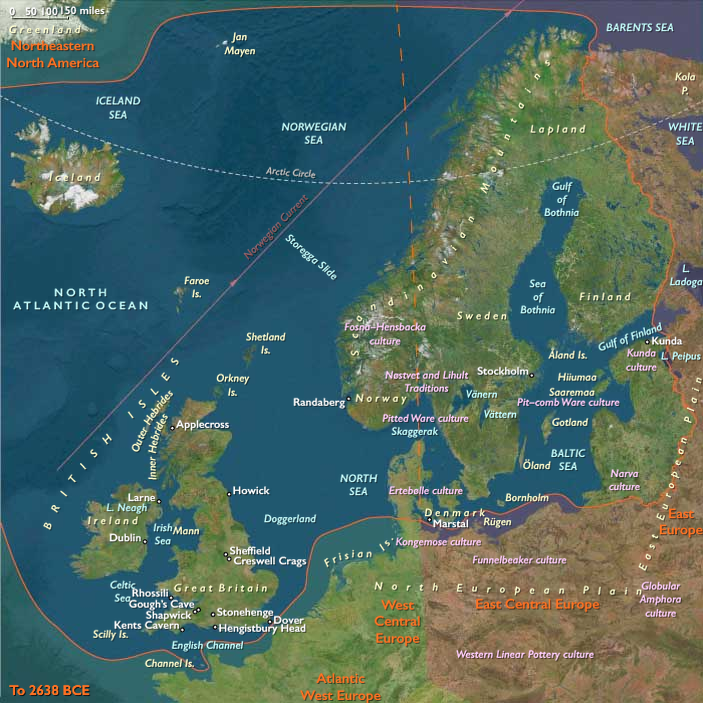
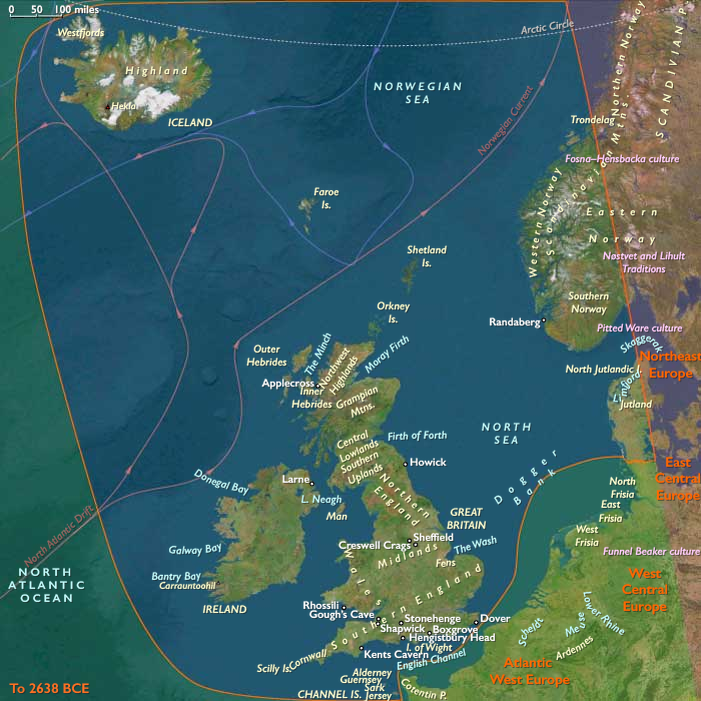
The rising sea levels caused by the melting glaciers cut Britain off from Ireland by nine thousand five hundred years ago, and by around 6500 to 6000 BCE, continental Europe is cut off for the last time.
The warmer climate changes the Arctic environment to one of pine, birch, and alder forest; this less open landscape is less conducive to the large herds of reindeer and wild horse that had previously sustained humans.
Those animals are replaced in people's diets by pig and less social animals such as elk, red deer, roe deer, wild boar and aurochs (wild cattle) which would have required different hunting techniques.
Tools change to incorporate barbs that can snag the flesh of an animal, making it harder for it to escape alive.
Tiny microliths are developed for hafting onto harpoons and spears.
Woodworking tools such as adzes appear in the archaeological record, although some flint blade types remain similar to their Paleolithic predecessors.
The dog is domesticated because of its benefits during hunting and the wetland environments created by the warmer weather would have been a rich source of fish and game.
It is likely that these environmental changes are accompanied by social changes.
Humans spread and reach the far north of Scotland during this period.
Topics
- Neolithic Revolution
- Boreal Period
- Neolithic Subpluvial, or Holocene climatic optimum, or Holocene Wet Phase
- Atlantic Period during the Neolithic Subpluvial
- 8.2 kiloyear event during the Neolithic Subpluvial
Commodoties
Subjects
Regions
Subregions
Years: 7821BCE - 6094BCE
Topics
- Neolithic Revolution
- Boreal Period
- Neolithic Subpluvial, or Holocene climatic optimum, or Holocene Wet Phase
- Atlantic Period during the Neolithic Subpluvial
- 8.2 kiloyear event during the Neolithic Subpluvial
Commodoties
Subjects
Regions
Subregions