
The 5.9 kiloyear event probably initiates the …
Years: 3933BCE - 3790BCE
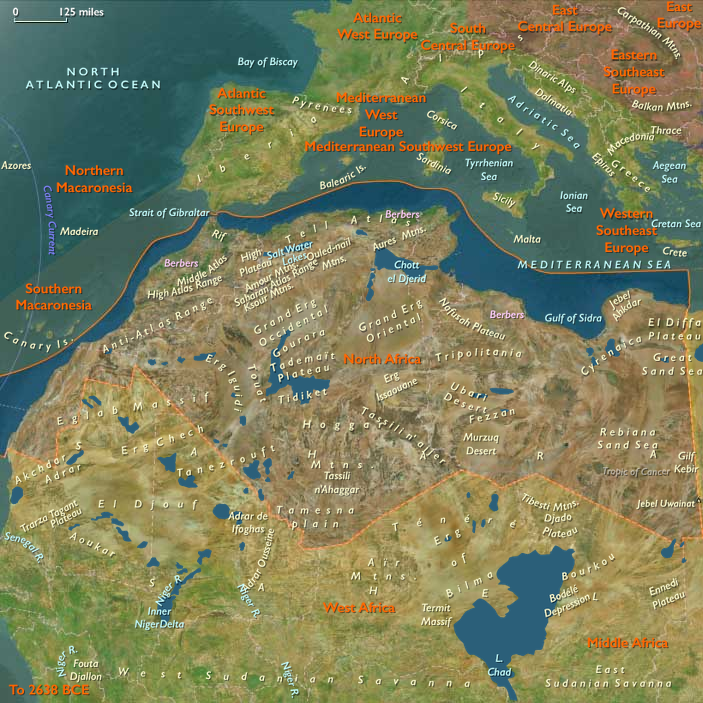
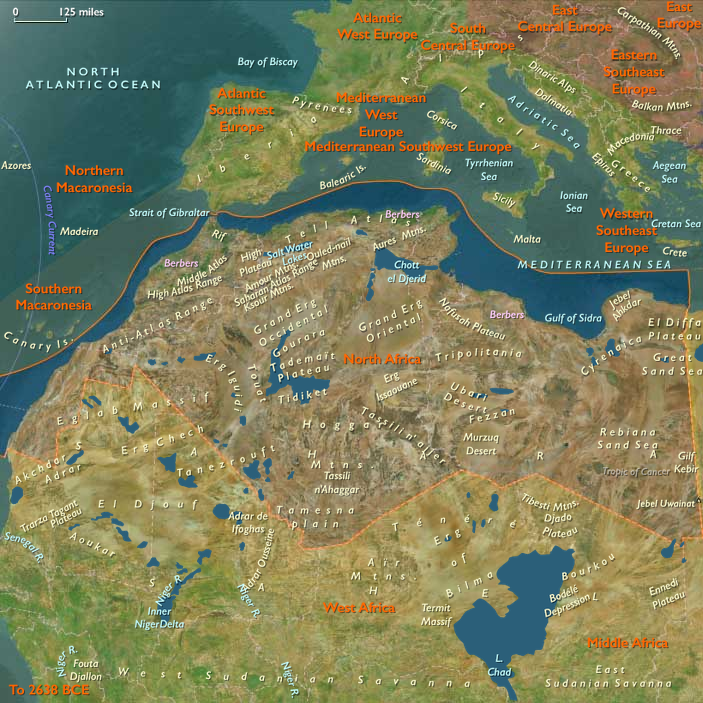
The 5.9 kiloyear event probably initiates the most recent desiccation of the Sahara desert around 3900 BCE, ending the Neolithic Subpluvial.
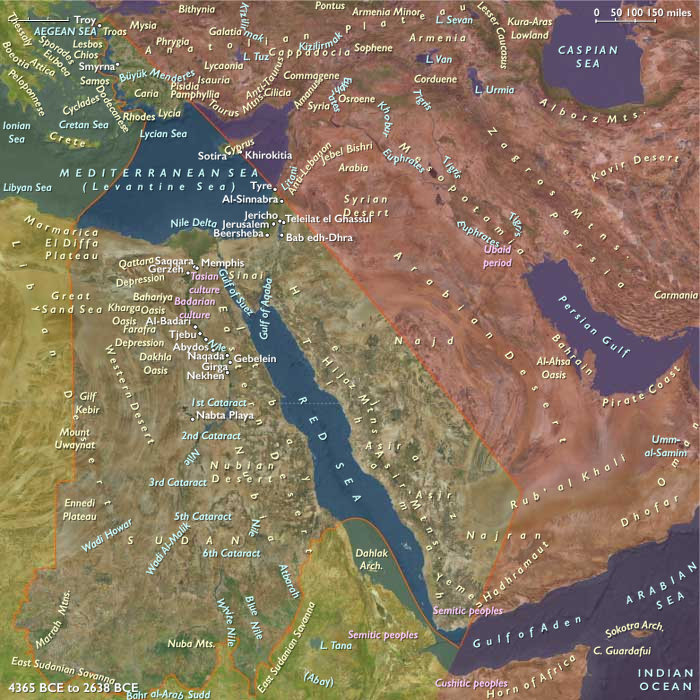
One of the most intense aridification events during the Holocene, it also triggers worldwide migration to river valleys, e.g., from central North Africa to the Nile Valley, what will lead eventually to the emergence of the first complex, highly organized, state-level societies in the fourth millennium BCE.
It is associated with the last round of the Sahara pump theory.
A model by Claussen et al. (1999) suggested rapid desertification associated with vegetation atmosphere interactions following a cooling event (Bond event 4).
Bond, et al., (1997) identified a North Atlantic cooling episode fifty-nine hundred years ago from ice-rafted debris, as well as other such now called Bond events that indicate the existence of a quasiperiodic cycle of Atlantic cooling events, which occur approximately every fifteen hundred years.
For some reason, all of the earlier of these arid events (including the 8.2 kiloyear event) were followed by recovery, as attested by the wealth of evidence of humid conditions in the Sahara between 10,000 and 6,000 BP.
However, it appears that only a partial recovery, at best, followed the 5.9 kiloyear event, with accelerated desiccation in the millennium that followed.
For example, Cremaschi (1998) describes evidence of rapid aridification in Tadrart Acacus of southwestern Libya, in the form of increased aeolian erosion, sand incursions and the collapse of the roofs of rock shelters.
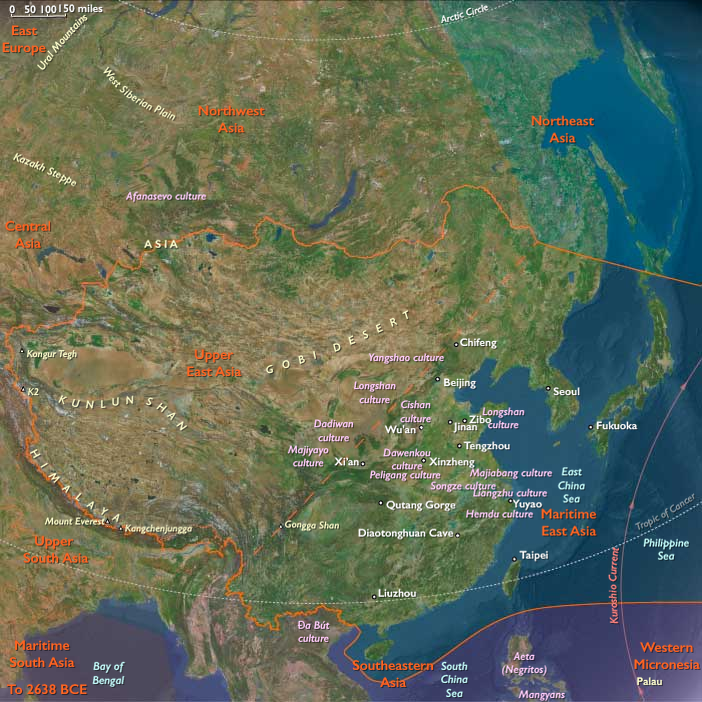
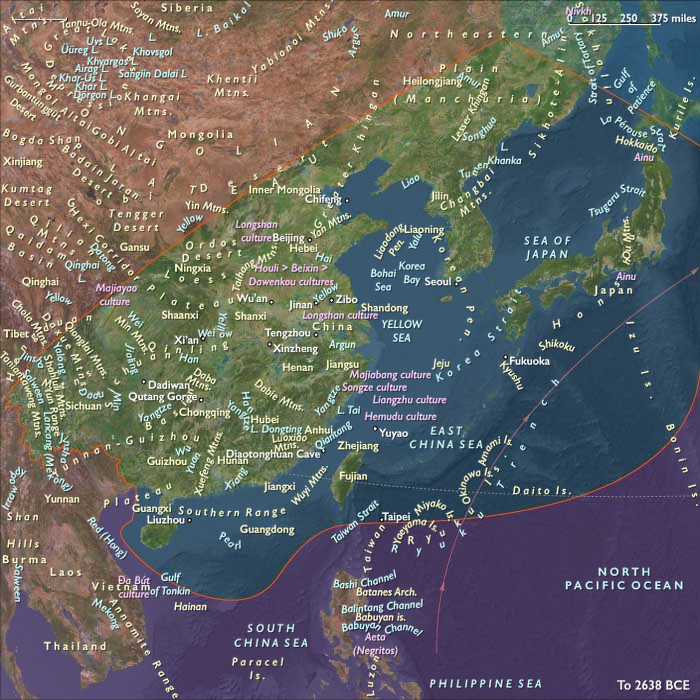
The 5.9 kiloyear event is also recorded as a cold event in the Erhai Lake (China) sediments.
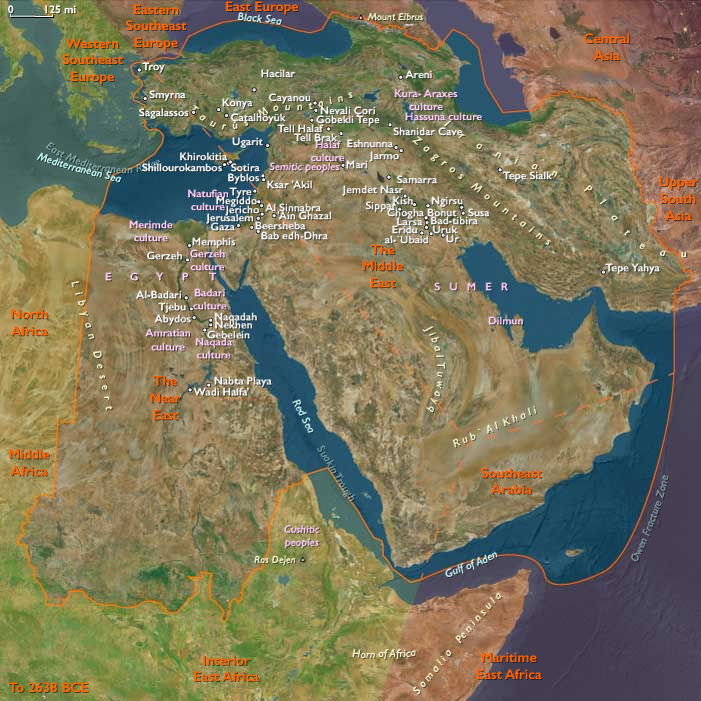
In the Middle East, the 5.9 kiloyear event leads to the abrupt end of the Ubaid period.
Topics
Subjects
Regions
Subregions

Related Events
Showing 10 events out of 68811 total
Years: 3933BCE - 3790BCE
Topics
Subjects
Regions
Subregions