
Filters:
Alessandria, founded initially as Civitas Nova with …
Years: 1168 - 1179
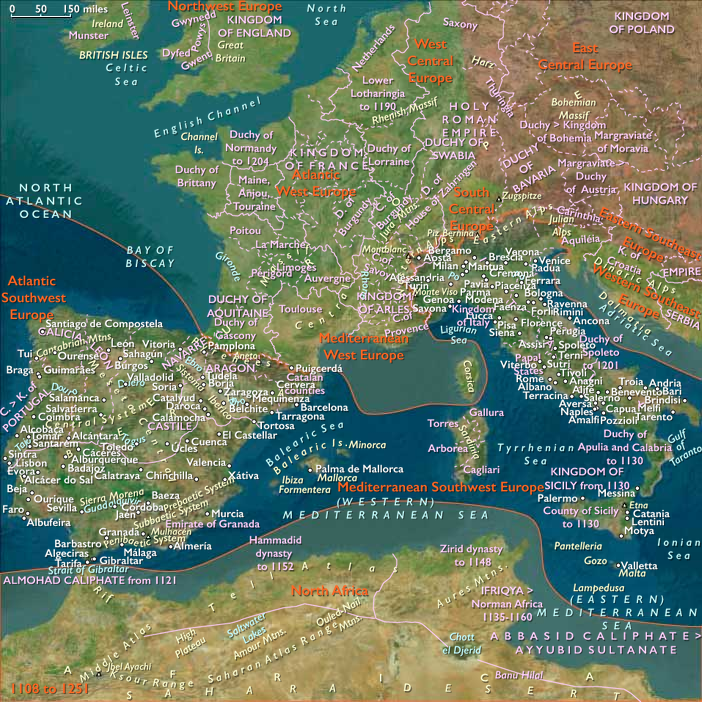
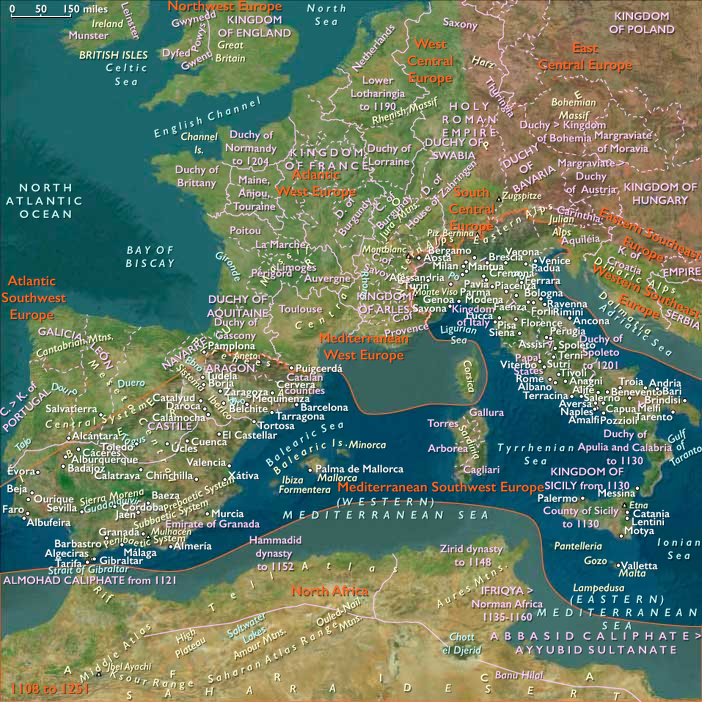
Alessandria, founded initially as Civitas Nova with a charter as a free comune, is sited upon a preexisting urban nucleus, to serve as a stronghold for the Lombard League, defending the traditional liberties of the communes of northern Italy against the Imperial forces of Frederick Barbarossa.
Sited in the Piedmont region southeast of Turin, Alessandria stands in the territories of the marchese of Montferrat, a staunch ally of the Emperor, with a name assumed in 1168 to honor the Emperor's opponent, Pope Alexander III.
In 1174–1175 the fortress is sorely tested by Imperial siege and stands fast.
A legend (related in Umberto Eco's book Baudolino, and which recalls one concerning Bishop Herculanus’ successful defense of Perugia several centuries earlier) says it was saved by a quick-witted peasant, Gagliaudo: he fed his cow with the last grain remaining within the city, then took it outside the city walls until he reached the Imperial camp.
Here he was captured, and his cow cut open to be cooked: when the Imperials found the cow's stomach filled with grain, Gagliaudo was asked the reason to waste such a rich meal.
He answered that he was forced to feed his cow with grain because there was such a lot of it, and no room to place it within the city.
The Emperor, fearing that the siege will last too long, leaves Alessandria free (malaria is probably the real cause of his departure).
A statue of Gagliaudo can be found today on the left corner of the city cathedral.
Sited in the Piedmont region southeast of Turin, Alessandria stands in the territories of the marchese of Montferrat, a staunch ally of the Emperor, with a name assumed in 1168 to honor the Emperor's opponent, Pope Alexander III.
In 1174–1175 the fortress is sorely tested by Imperial siege and stands fast.
A legend (related in Umberto Eco's book Baudolino, and which recalls one concerning Bishop Herculanus’ successful defense of Perugia several centuries earlier) says it was saved by a quick-witted peasant, Gagliaudo: he fed his cow with the last grain remaining within the city, then took it outside the city walls until he reached the Imperial camp.
Here he was captured, and his cow cut open to be cooked: when the Imperials found the cow's stomach filled with grain, Gagliaudo was asked the reason to waste such a rich meal.
He answered that he was forced to feed his cow with grain because there was such a lot of it, and no room to place it within the city.
The Emperor, fearing that the siege will last too long, leaves Alessandria free (malaria is probably the real cause of his departure).
A statue of Gagliaudo can be found today on the left corner of the city cathedral.
Locations
People
Groups
Topics
Subjects
Regions
Subregions
Related Events
Showing 3 events out of 3 total
Years: 1168 - 1179
Locations
People
Groups
Topics
Subjects
Regions
Subregions