
The excommunication of Henry IV had simply …
Years: 1080 - 1080
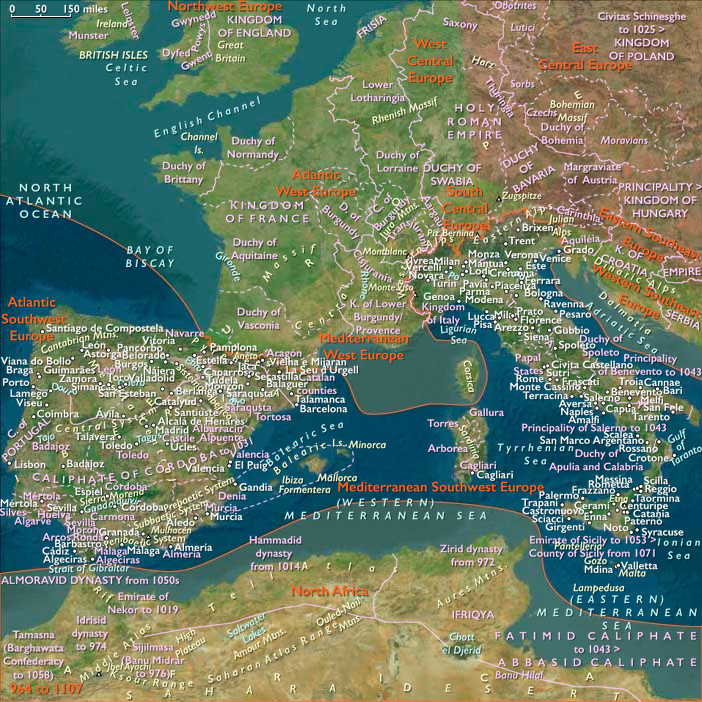
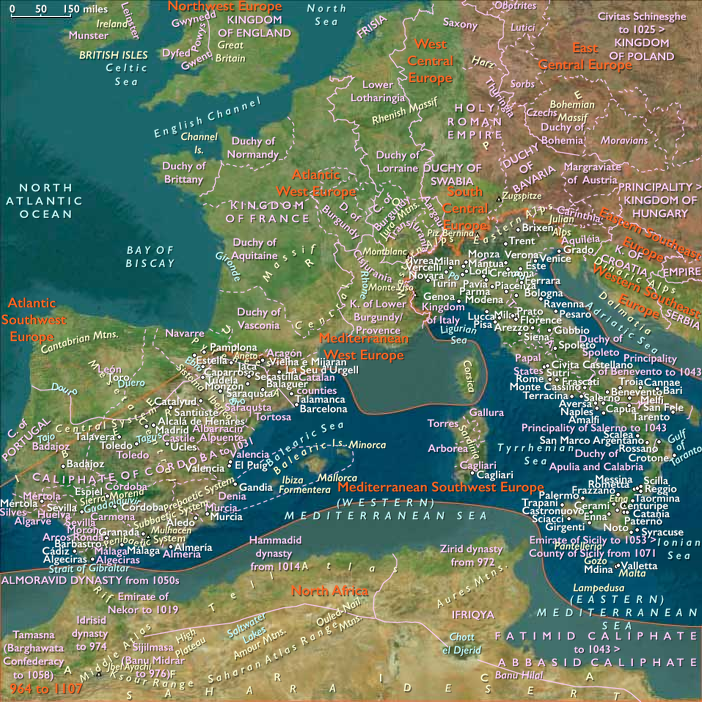
The excommunication of Henry IV had simply been a pretext for the opposition of the rebellious German nobles, who had not only persisted in their policy after his absolution, but had taken the more decided step of setting up a rival ruler in the person of Duke Rudolf of Swabia at Forchheim in March 1077.
The papal legates present at the election had observed the appearance of neutrality, and Gregory himself has sought to maintain this attitude during the subsequent years.
His task is made easier in that the two parties are of fairly equal strength, each trying to gain the upper hand by getting the pope on their side, but the result of his noncommittal policy is that he has largely lost the confidence of both parties.
Finally, he decides for Rudolf of Swabia after his victory at the Battle of Flarchheim on January 27, 1080.
Under pressure from the Saxons, and misinformed as to the significance of this battle, Gregory abandons his waiting policy and again pronounces the excommunication and deposition of King Henry at the Lenten Synod of March 7, 1080, but the papal censure now proves a very different thing from the one four years before.
It is widely felt to be an injustice, and people begin to ask whether an excommunication pronounced on frivolous ground is entitled to respect.
Although the anti-Hohenstaufen Welf faction gains Pope Gregory’s support in 1080, most German nobles back Henry and form the Waiblingen party (named for a primary castle of Henry’s Hohenstaufen family).
To make matters worse, Rudolf dies on October 16 of the same year.
Locations
People
Groups
- Saxons
- Papal States (Republic of St. Peter)
- Saxony, Duchy of
- Tuscany, Margravate of
- Swabia, Duchy of
- German, or Ottonian (Roman) Empire
- Italy, Kingdom of (Holy Roman Empire)
- Christians, Roman Catholic
Topics
Commodoties
Subjects
Regions
Subregions
Years: 1080 - 1080
Locations
People
Groups
- Saxons
- Papal States (Republic of St. Peter)
- Saxony, Duchy of
- Tuscany, Margravate of
- Swabia, Duchy of
- German, or Ottonian (Roman) Empire
- Italy, Kingdom of (Holy Roman Empire)
- Christians, Roman Catholic
Topics
Commodoties
Subjects
Regions
Subregions