
Arkansas becomes the twenty-fifth U.S. state.Slavery …
Years: 1836 - 1836
June
Arkansas becomes the twenty-fifth U.S. state.
Slavery has become a wedge issue in Arkansas, forming a geographic divide that will remain for decades.
Owners and operators of the cotton plantation economy in southeast Arkansas firmly support slavery, as they perceive slave labor as the best or "only" economically viable method of harvesting their commodity crops.
The "hill country" of northwest Arkansas is unable to grow cotton and relies on a cash-scarce, subsistence farming economy.
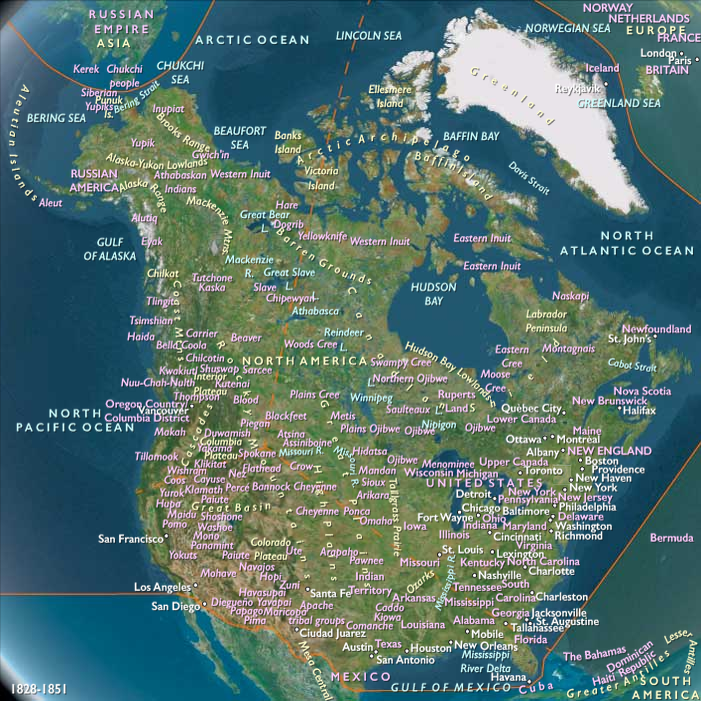
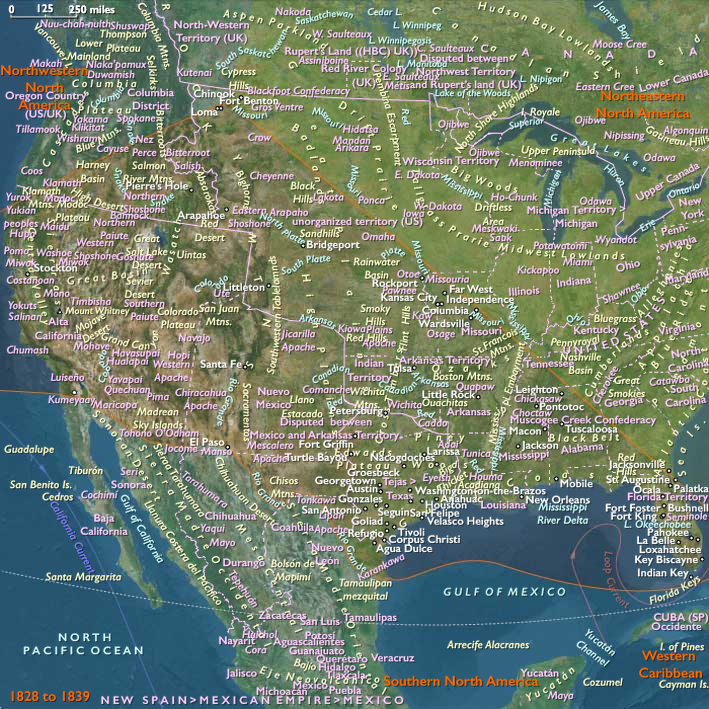
As European Americans settle throughout the East Coast and into the Midwest, in the 1830s the United States government forces the removal of many Native American tribes to Arkansas and Indian Territory west of the Mississippi River.
Additional Native American removals had begun in earnest during the territorial period, with final Quapaw removal complete by 1833 as they were pushed into Indian Territory.
The capital had been relocated from Arkansas Post to Little Rock in 1821, during the territorial period.
When Arkansas applied for statehood, the slavery issue was again raised in Washington, D.C..
Congress had eventually approved the Arkansas Constitution after a twenty-five-hour session, admitting Arkansas on June 15, 1836 as the twenty-fifth state and the thirteenth slave state, having a population of about sixty thousand.
Arkansas will struggle with taxation to support its new state government, a problem that will be made worse by a state banking scandal and worse yet by the Panic of 1837.
Slavery has become a wedge issue in Arkansas, forming a geographic divide that will remain for decades.
Owners and operators of the cotton plantation economy in southeast Arkansas firmly support slavery, as they perceive slave labor as the best or "only" economically viable method of harvesting their commodity crops.
The "hill country" of northwest Arkansas is unable to grow cotton and relies on a cash-scarce, subsistence farming economy.
As European Americans settle throughout the East Coast and into the Midwest, in the 1830s the United States government forces the removal of many Native American tribes to Arkansas and Indian Territory west of the Mississippi River.
Additional Native American removals had begun in earnest during the territorial period, with final Quapaw removal complete by 1833 as they were pushed into Indian Territory.
The capital had been relocated from Arkansas Post to Little Rock in 1821, during the territorial period.
When Arkansas applied for statehood, the slavery issue was again raised in Washington, D.C..
Congress had eventually approved the Arkansas Constitution after a twenty-five-hour session, admitting Arkansas on June 15, 1836 as the twenty-fifth state and the thirteenth slave state, having a population of about sixty thousand.
Arkansas will struggle with taxation to support its new state government, a problem that will be made worse by a state banking scandal and worse yet by the Panic of 1837.
Locations
Groups
- Quapaw, or Arkansas (Amerind tribe)
- United States of America (US, USA) (Washington DC)
- Arkansas, Territory of (U.S.A.)
- Arkansas, State of (U.S.A.)
Topics
Commodoties
Subjects
Regions
Subregions
Related Events
Showing 10 events out of 18452 total
Years: 1836 - 1836
June
Locations
Groups
- Quapaw, or Arkansas (Amerind tribe)
- United States of America (US, USA) (Washington DC)
- Arkansas, Territory of (U.S.A.)
- Arkansas, State of (U.S.A.)
Topics
Commodoties
Subjects
Regions
Subregions