
Tergeste, built mostly on a hillside that …
Years: 177BCE - 177BCE
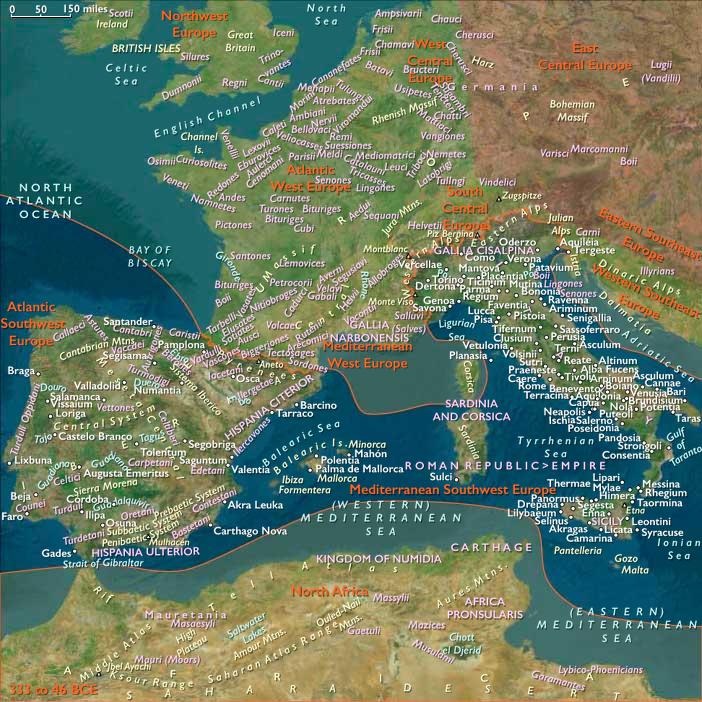
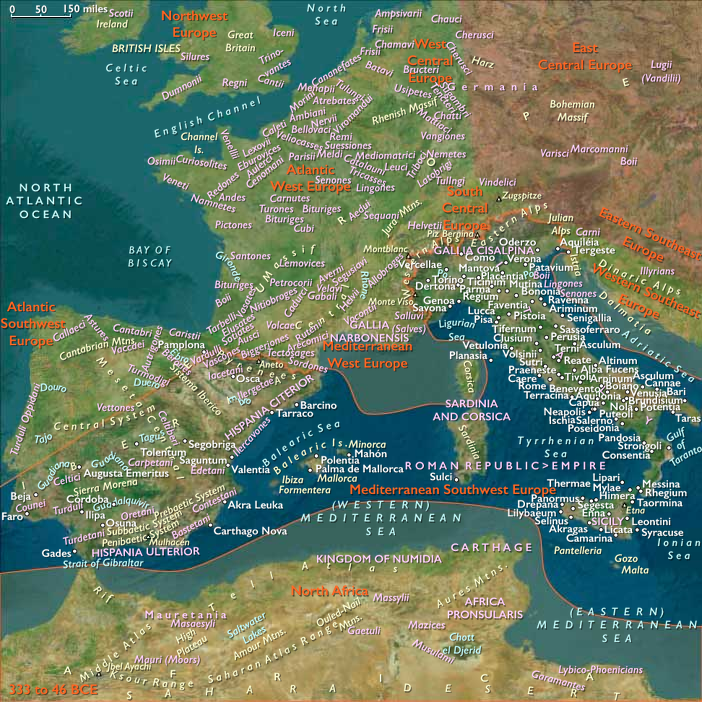
Tergeste, built mostly on a hillside that becomes a mountain at the head of the Adriatic Sea, was originally an Illyrian settlement but the town was later captured by the Carni; it falls to the Romans in 177 BCE.
Istria, the largest peninsula in the Adriatic Sea, located at the head of the Adriatic between the Gulf of Trieste and the Bay of Kvarner, is named for the Histri.
Classified in some sources as a "Venetic" Illyrian tribe, with certain linguistic differences from other Illyrians, the Romans describe the Histri as a fierce tribe of pirates, protected by the difficult navigation of their rocky coasts.
It had taken two military campaigns for the Romans to finally subdue them in 177 BCE.
Together with the Venetian part, the region is now called the X. Roman Region of "Venetia et Histria", the ancient definition of the northeastern border of Italy.
The eastern border of Italy, per ancient definition, is the river Arsia.
The eastern side of this river has been settled by people whose culture is different than Histrians.
Earlier influence of the Iapydes was attested here, while at some time between the fourth and first century BCE, the Liburnians extend their territory and it becomes a part of Liburnia.
On the northern side, Histria goes much further north and includes the newly garrisoned Tergeste (now the Italian city of Trieste, and the region of Venezia-Julia. For political reasons, modern Trieste and Venezia-Julia are not included in today’s Istria.)
Locations
Groups
Topics
Subjects
Regions
Subregions
Years: 177BCE - 177BCE
Locations
Groups
Topics
Subjects
Regions
Subregions