
Southern Africa (4,365 – 2,638 BCE): Late …
Years: 4365BCE - 2638BCE
Southern Africa (4,365 – 2,638 BCE): Late Neolithic / Chalcolithic — Coasts of Plenty, Highveld Gardens, and the First Herds
Geographic & Environmental Context
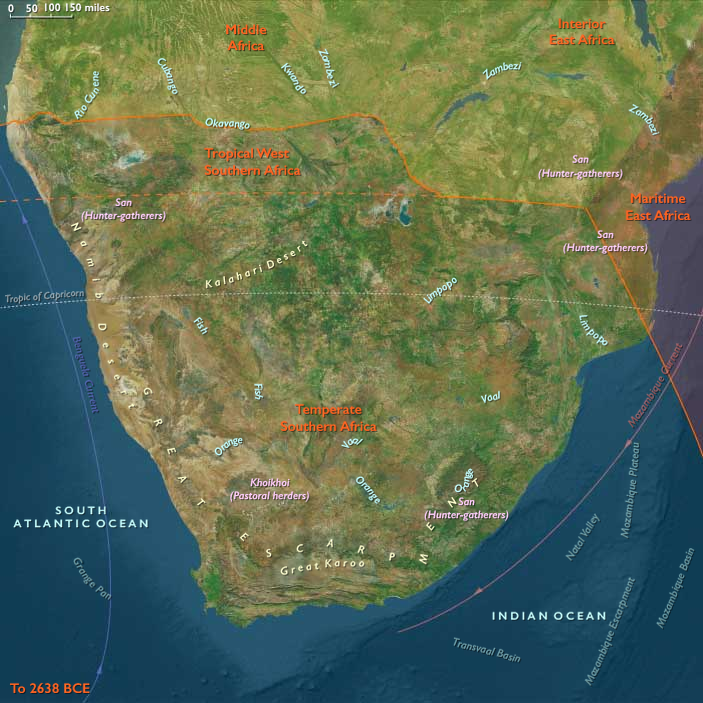
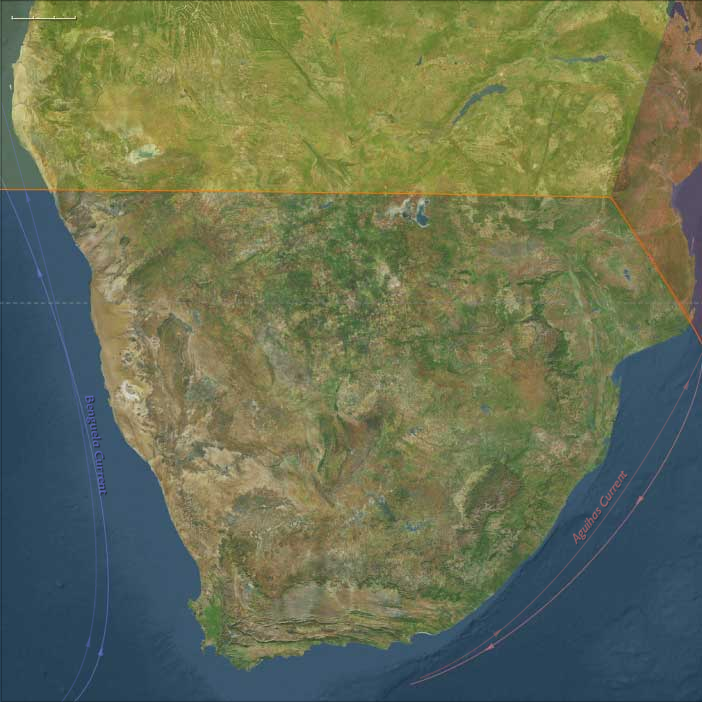
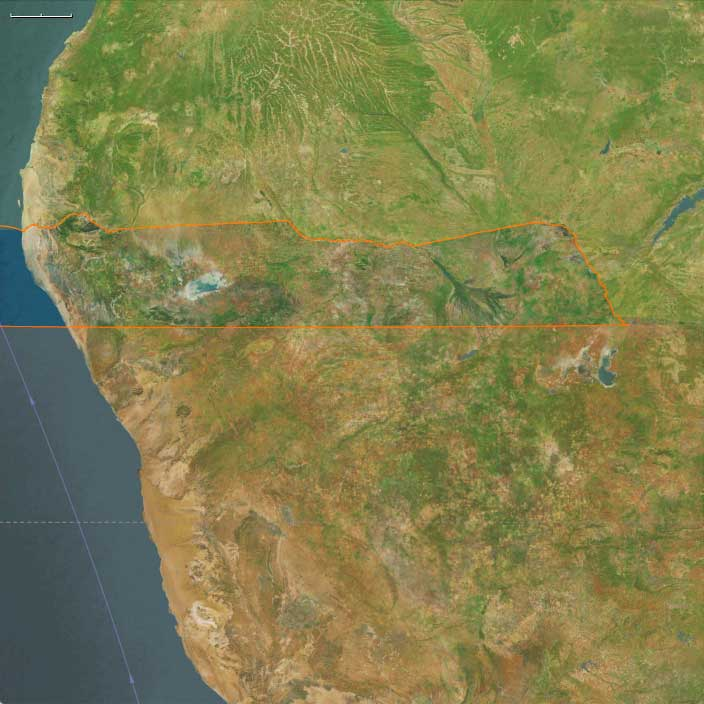
Southern Africa in this epoch formed a continuous land–water mosaic: fynbos and rich upwelling coasts along the Cape and Namaqualand, broad Highveld grasslands and Drakensberg–Lesotho headwaters, the Great Karoo’s basins, and, to the north, wetland belts—Okavango, Zambezi–Chobe–Cuando/Linyanti–Caprivi, and the Etosha pans—grading into thornveld and Skeleton Coast fog shores. These belts linked marine protein, riverine floodplains, and interior pastures into one integrated resource field.
Climate & Environmental Shifts
Conditions were generally stable but drier pulses pressed the Karoo and Namaqualand. The Highveld held reliable rainfall; northern wetlands kept annual flood pulses, though some years ran lower. Coastal upwelling remained productive; inland, moisture gradients sharpened the contrast between wetland margins and open savannas, steering seasonal movement.
Subsistence & Settlement
Forager communities sustained diverse coastal and inland economies: shellfish, line-fish, and strand-lop harvests on the Cape; antelope, small game, and plant foods across grassland and scrub.
Late in the window (c. mid–late 3rd millennium BCE), first livestock—sheep/goats—entered from the west coastal corridor, appearing in small numbers in the Cape–Namaqualand and at the Okavango–Caprivi–Etoshamargins. Herding was initially supplemental, folded into long-standing seasonal rounds rather than replacing them. Fishing, floodplain foraging, and small-game hunting continued as staples.
Technology & Material Culture
Microlithic hunting kits and stone adzes remained core. Pottery diffused gradually from the north, first as small cooking and storage vessels in wetland and corridor camps, complementing ostrich eggshell (OES) flasks and leather water bags. Early pastoral kraal forms appeared at favored springs and lee-slopes. Along the coast, robust shell-working and bone points persisted; in wetlands, basketry and fish traps accompanied flood-season harvests.
Movement & Interaction Corridors
Two braided systems organized movement:
-
The west-coast Namib–Namaqualand corridor, carrying stock and herding know-how toward the Cape littoral and inland basins.
-
The wetland–levee corridors of Zambezi–Chobe–Okavango–Caprivi–Etosha, where forager–pastoral exchanges brokered milk access, grazing rights, hides, and fish.
Transmontane tracks tied Drakensberg watersheds to the Limpopo–Maputo basins, moving stone, pigments, shells, and foodstuffs across elevation belts.
Cultural & Symbolic Expressions
Rock art began to depict sheep and goats even before they were widely herded, signaling prestige, novelty, or ritual potency. Long-standing emphases on rainmaking and fertility endured; coastal and floodplain feasts left dense midden signatures. Emerging kraals and favored waterholes gained ancestor and place-guard associations, and grazing/water taboos helped regulate access at sensitive moments in the flood–drought cycle.
Environmental Adaptation & Resilience
Resilience rested on mobility plus diversification. Coastal fisheries and shellfish beds buffered lean inland years; wetland–pasture pairing spread risk across seasons; small herds added milk and occasional meat as protein insurance during dry pulses. Kraal siting, rotational grazing, and continued forager breadth limited local overuse. Storage strategies—drying, smoking, and cached shellfish—smoothed shortfalls, while intergroup exchange redistributed surpluses after poor runs or failed rains.
Long-Term Significance
By 2,638 BCE, Southern Africa had become a mixed forager–pastoral landscape in embryo: maritime plenty at the Cape, durable river–pan livelihoods to the north, and the first livestock threading into established mobility systems. The region’s enduring pattern—portfolio subsistence, seasonal movement, and ritual regulation of water and pasture—set the ecological logic that later herding expansions, trade corridors, and highland–lowland exchanges would build upon in the Early Bronze–Iron Age horizons.
Groups
Topics
Commodoties
- Fish and game
- Weapons
- Hides and feathers
- Gem materials
- Colorants
- Domestic animals
- Grains and produce
- Strategic metals
Subjects
Regions
Subregions
Years: 4365BCE - 2638BCE
Groups
Topics
Commodoties
- Fish and game
- Weapons
- Hides and feathers
- Gem materials
- Colorants
- Domestic animals
- Grains and produce
- Strategic metals
Subjects
Regions
Subregions