
Temperate Southern Africa (7,821 – 6,094 …
Years: 7821BCE - 6094BCE
Temperate Southern Africa (7,821 – 6,094 BCE) Early Holocene — Rock Art Fluorescence and Pastoral Neighbors on Horizons
Geographic and Environmental Context
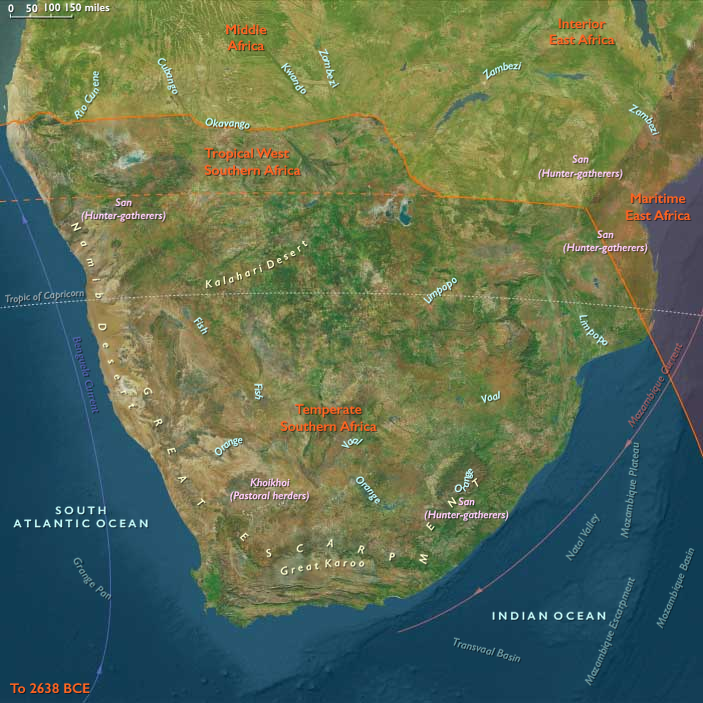
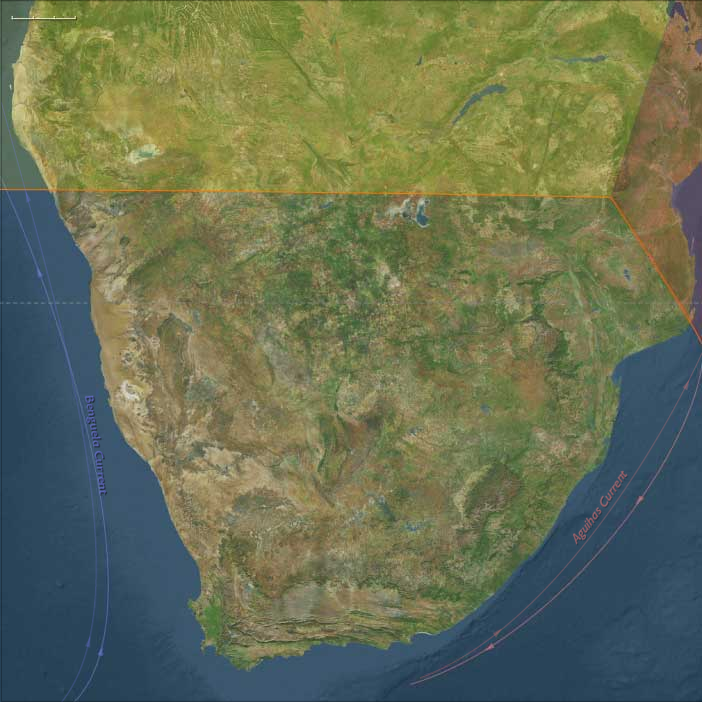
Temperate Southern Africa includes:-
South Africa (Cape littoral, Highveld, Drakensberg, Karoo, Namaqualand).
-
Lesotho and Eswatini.
-
Most of Namibia and Botswana, except the far northern sectors (Caprivi, Etosha, Okavango, Skeleton Coast — those are in Tropical Southern Africa).
-
Southern Zimbabwe and southwestern Mozambique (Maputo–Limpopo region).
Anchors: Cape littoral & fynbos, Drakensberg–Lesotho massif, Highveld grasslands (Witwatersrand, Free State), Namaqualand semi-desert, Kalahari southern margins, Great Karoo, Maputo–Limpopo basins, southern Zimbabwe plateau (Great Zimbabwe heartland).
-
Rainfall higher; rivers, wetlands abundant; grasslands lush.
-
Cape fynbos highly productive.
Climate & Environmental Shifts
-
Holocene thermal optimum; stable, wet, warm.
Subsistence & Settlement
-
Large seasonal villages along rivers and coasts.
-
Foragers harvested nuts, geophytes, fruits, fish, and hunted antelope.
-
Ostrich eggshell water flasks common.
Technology & Material Culture
-
Microlithic composite arrows; bows widespread.
-
Grinding slabs, bone awls, nets.
Movement & Interaction Corridors
-
Drakensberg–Highveld–Limpopo corridor tied uplands to lowlands.
-
Exchange of ostrich shell beads across networks.
Cultural & Symbolic Expressions
-
San rock art golden age: polychrome animal–human spiritual scenes.
-
Shamans depicted trance dances, eland ceremonies.
Environmental Adaptation & Resilience
-
Foraging diversified, seasonal rounds established.
Transition
By 6,094 BCE, temperate southern Africa’s foragers achieved symbolic richness unmatched worldwide.
Groups
Topics
Commodoties
- Fish and game
- Weapons
- Hides and feathers
- Gem materials
- Colorants
- Domestic animals
- Grains and produce
- Strategic metals
Subjects
Regions
Subregions
Years: 7821BCE - 6094BCE
Groups
Topics
Commodoties
- Fish and game
- Weapons
- Hides and feathers
- Gem materials
- Colorants
- Domestic animals
- Grains and produce
- Strategic metals
Subjects
Regions
Subregions