
Southern Africa (1396–1539 CE) Fynbos Shores, …
Years: 1396 - 1539
Southern Africa (1396–1539 CE)
Fynbos Shores, Karoo Uplands, and Delta Wetlands
Geography & Environmental Context
Southern Africa comprised two contrasting temperate and tropical subregions.
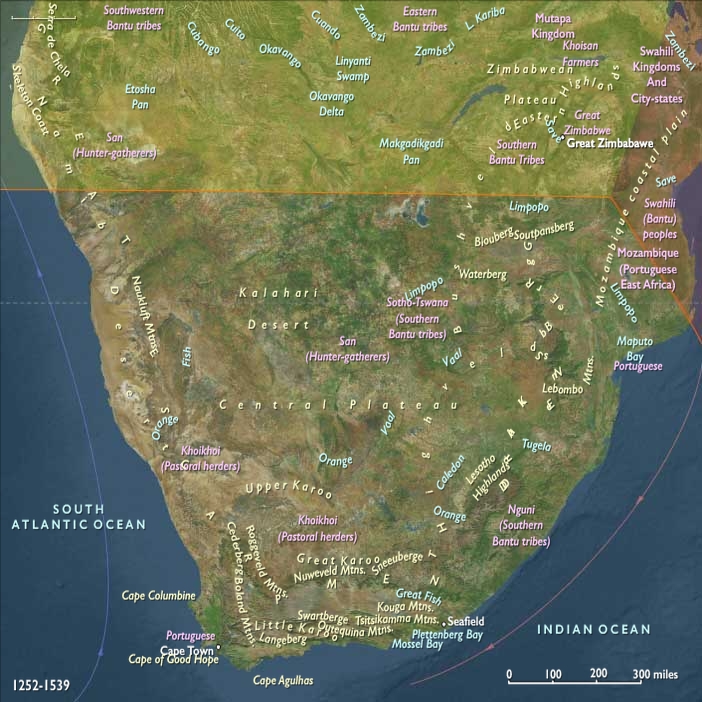
Temperate Southern Africa spanned the Cape Fold Belt, the Karoo basins, the Highveld plateau, and the Drakensberg–Lesotho escarpment, extending north into southern Zimbabwe and southwestern Mozambique.
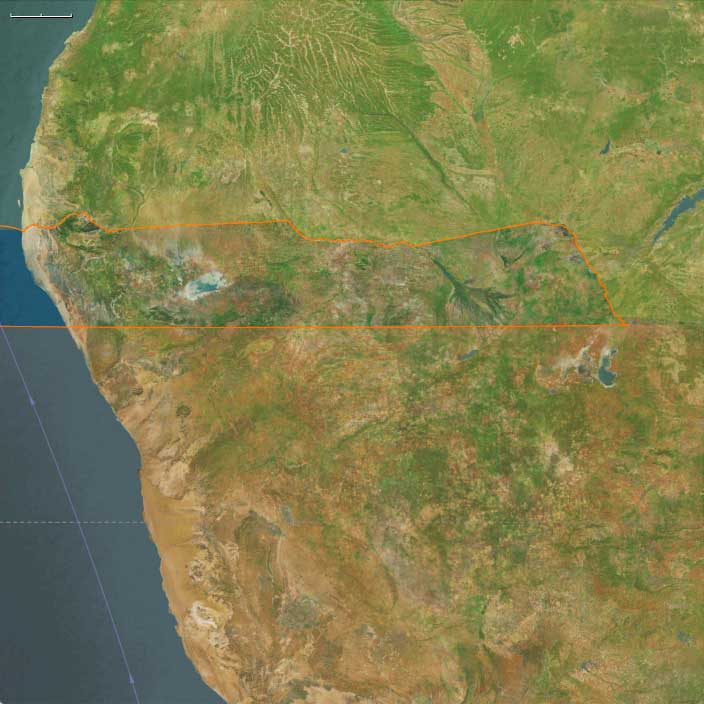
Tropical West Southern Africa encompassed the Etosha Pan, the Okavango Delta, the Chobe–Linyanti–Kwando corridor, the Caprivi–Upper Zambezi basin, and the Skeleton Coast.
Together these landscapes joined winter-rain fynbos, semi-arid steppe, and inland floodplains—the ecological bridge between the Atlantic and Indian Oceans.
Climate & Environmental Shifts
The onset of the Little Ice Age brought cooler winters and heightened variability.
-
Cape & Namaqualand: Alternating wet winters and multi-year droughts; frost frequent in inland valleys.
-
Karoo & Kalahari: Increased aridity punctuated by flash floods.
-
Highveld & southern Zimbabwe: Summer rainfall punctuated by droughts; frosts common in winter.
-
Drakensberg–Lesotho: Snow on summits, hail and summer storms.
-
Okavango & Chobe: Regular flood pulses from the upper Zambezi sustained wetlands even in dry years.
-
Skeleton Coast: Persistent aridity offset by fog moisture supporting desert flora and fauna.
Subsistence & Settlement
-
Cape herders (Khoekhoen): Practiced cattle- and sheep-herding transhumance between coastal plains and inland pans; kraals located near rivers and salt licks.
-
San foragers: Hunted antelope and zebra with bow and poison; gathered bulbs, fruits, and shellfish; rock shelters preserved seasonal camps.
-
Highveld & southern Zimbabwe farmers: Cultivated sorghum, millet, and beans; raised cattle as wealth and ritual currency; clustered villages with stone enclosures and grain bins reflected the Khami cultural horizon.
-
Southern Kalahari & Karoo: Mixed herding and foraging along pans and ephemeral rivers.
-
Southwestern Mozambique: Sorghum–millet–rice farming with cattle herding; linked indirectly to Indian Ocean traders at Sofala.
-
Northern Namibia & Botswana: Agro-pastoral Ovambo, Kavango, and Tswana groups farmed millet and sorghum, grazed cattle and goats, and used floodplains seasonally.
Technology & Material Culture
-
Khoekhoen: Skin cloaks, milk pails, hide bags, bead ornaments, kraal fencing.
-
San: Ostrich-eggshell beads, bone arrowpoints, stone scrapers, and painted rock panels.
-
Agro-pastoralists: Iron hoes, spears, and pottery; stone-walled homesteads, cattle byres, and woven mats; copper and gold from southern Zimbabwe traded north.
-
Fisheries: Stone tidal traps and basket nets along the Cape coast; dugout canoes in the Okavango.
-
Foragers of the Skeleton Coast: Crafted shell ornaments, leather water bags, and wooden digging sticks adapted to arid survival.
Movement & Interaction Corridors
-
Cape transhumance: Seasonal shifts through the Berg–Breede–Olifants valleys.
-
Highveld–Zimbabwe trade: Grain, livestock, copper, and gold linked southern chiefdoms with Great Zimbabwe’s waning network.
-
Drakensberg–Lesotho shelters: Ritual and hunting stations adorned with rock art.
-
Okavango–Chobe–Caprivi: Wet-season canoe routes joined fishing and farming zones.
-
Etosha–Ovambo plains: Grain and stock exchanges connected floodplain villages.
-
Early European contact: Bartolomeu Dias (1488) rounded the Cape; Vasco da Gama (1497–98) anchored at Mossel Bay, marking the first coastal encounters with herders.
Cultural & Symbolic Expressions
-
San rock art: Rain-animals, therianthropes, and trance dances in the Cederberg, Drakensberg, and Matobo Hills.
-
Khoekhoen: Cattle feasts, cairn offerings, herd naming, and ancestor invocations.
-
Bantu-speaking farmers: Rainmaking, initiation, and ancestor veneration integrated crop cycles with cattle ritual.
-
Floodplain societies: Cattle feasts and rain-calling ceremonies celebrated seasonal renewal.
-
Forager cosmologies: Along the Skeleton Coast, mythic beings embodied the struggle between sea, fog, and desert.
Environmental Adaptation & Resilience
-
Mobility: Herd movement between seasonal pastures prevented overuse; San groups shifted hunting ranges and stored dried meat and fish.
-
Storage: Grain bins and ostrich-eggshell caches preserved reserves; dried fish and meat carried communities through drought.
-
Diversification: Farmers intercropped legumes, rotated fields, and relied on cattle loans and reciprocity to cushion scarcity.
-
Floodplain adaptation: Villages relocated seasonally; millet and sorghum sown on receding waters; fisheries maintained protein security.
-
Arid-coast survival: Foragers exploited fog vegetation, seals, and seabirds; desert knowledge ensured continuity.
Technology & Power Shifts (Conflict Dynamics)
-
Local contests: Stock raiding between herders and hunters; village disputes over water and grazing.
-
Regional hierarchies: The Khami polity rose as Great Zimbabwe declined, drawing livestock and goods from southern chiefdoms.
-
Trade links: Cattle and ivory moved north; beads, iron, and cloth filtered south.
-
European intrusion: Portuguese explorers placed stone padrões along the Cape but made no inland incursions; first exchanges of trinkets and livestock occurred on the coast.
Transition (to 1539 CE)
By 1539 CE, Southern Africa sustained a mosaic of lifeways:
Mobile Khoekhoen herders ranged the Cape; San foragers painted trance visions across upland rock; Nguni, Sotho–Tswana, and southern Shona farmers built stone-walled settlements on the Highveld and Lesotho rim; floodplain peoples along the Okavango and Chobe wove fishing and herding into one cycle.
Portuguese ships had rounded the Cape and skirted the coast, yet inland societies remained autonomous.
The region’s enduring balance of mobility, diversification, and ritual stewardship carried its peoples securely into the early modern age soon to follow.
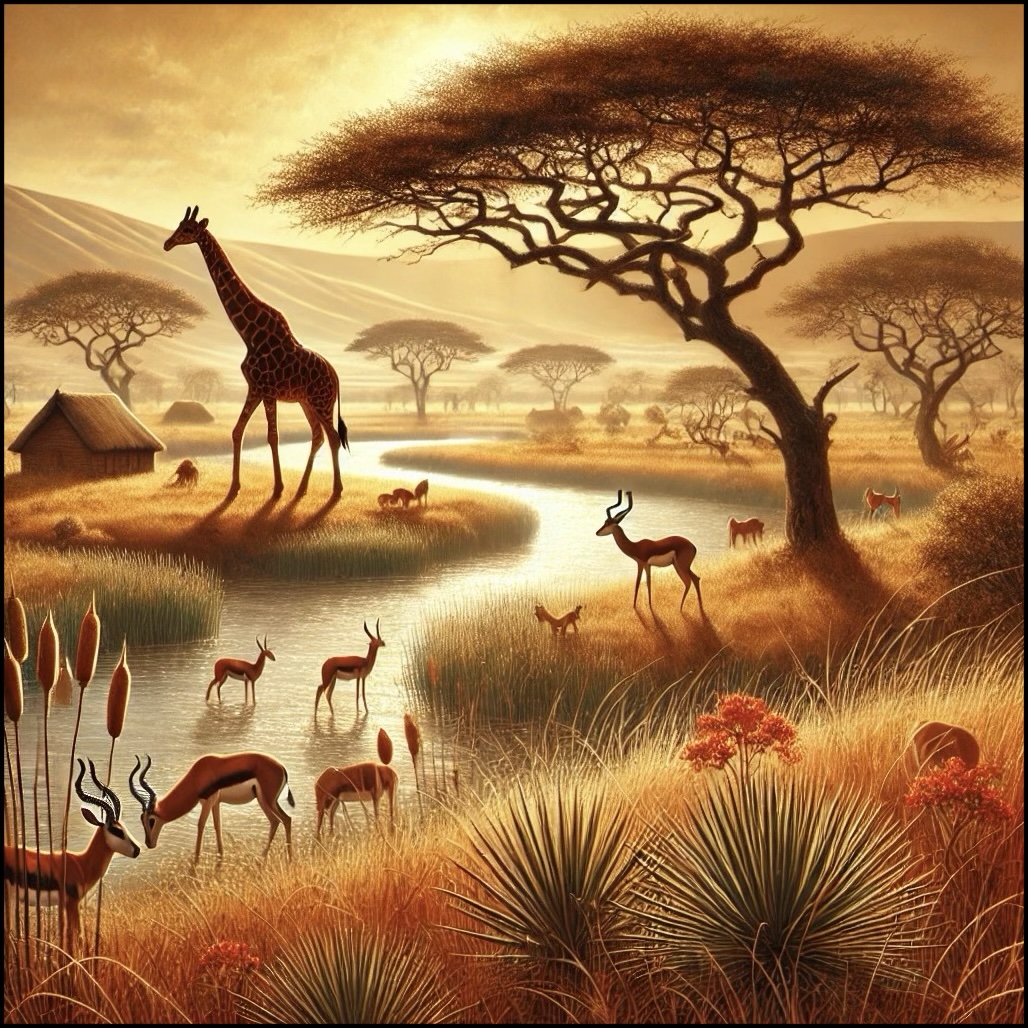
Temperate Southern Africa (with civilization) ©2024-25 Electric Prism, Inc. All rights reserved.
People
Groups
Topics
Commodoties
- Fish and game
- Weapons
- Hides and feathers
- Gem materials
- Glass
- Domestic animals
- Grains and produce
- Strategic metals
- Poisons
Subjects
- Commerce
- Architecture
- Painting and Drawing
- Decorative arts
- Faith
- Government
- Custom and Law
- Technology
- Metallurgy
Regions
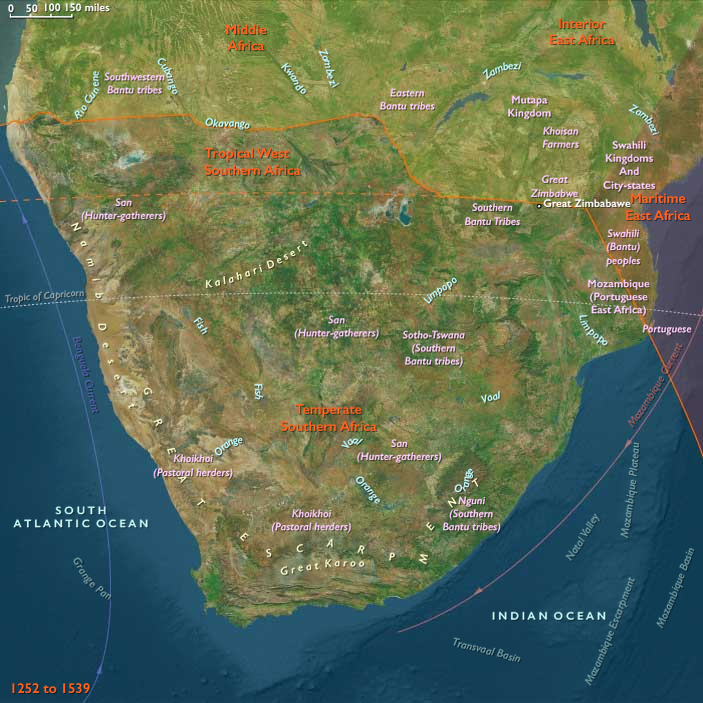
Subregions
Related Events
Showing 10 events out of 43406 total
Years: 1396 - 1539
Temperate Southern Africa (with civilization) ©2024-25 Electric Prism, Inc. All rights reserved.
People
Groups
Topics
Commodoties
- Fish and game
- Weapons
- Hides and feathers
- Gem materials
- Glass
- Domestic animals
- Grains and produce
- Strategic metals
- Poisons
Subjects
- Commerce
- Architecture
- Painting and Drawing
- Decorative arts
- Faith
- Government
- Custom and Law
- Technology
- Metallurgy
Regions
Subregions