
Temperate Southern Africa (1396–1539 CE): Fynbos Shores, …
Years: 1396 - 1539
Temperate Southern Africa (1396–1539 CE): Fynbos Shores, Karoo Uplands, and Plateau Homesteads
Geographic & Environmental Context
The subregion of Temperate Southern Africa includes all of the Republic of South Africa, Lesotho, and Eswatini; Namibia, Botswana, and Zimbabwe south of ~19.47°S; and the adjoining temperate corridor of southwestern Mozambique. Anchors spanned the Cape Fold Belt (fynbos and renosterveld, Berg, Breede, Gouritz rivers, Agulhas Plain), Namaqualand and the Orange River mouth, the semi-arid Karoo basins, the Highveld plateau and Bushveld interior, the Drakensberg–Lesotho escarpment (including Eswatini’s foothills), the southern Kalahari(Botswana–Namibia margins), the southern Zimbabwe plateau south of the Tokwe and Save rivers, and the Limpopo–Inhambane corridor in southwestern Mozambique.
Climate & Environmental Shifts
During the Little Ice Age, cooler winters and greater variability prevailed:
-
Cape & Namaqualand: winter-rain pulses punctuated by multi-year droughts; frost in valleys.
-
Karoo & Kalahari margins: heightened aridity, occasional floods after cloudbursts.
-
Highveld & southern Zimbabwe: summer rainfall with occasional droughts; frosts in winter.
-
Drakensberg–Lesotho: snow on summits, hail and storms in summer.
-
Southwest Mozambique: monsoon-fed summer rains, variable but sufficient for farming.
Subsistence & Settlement
-
Cape herders (Khoekhoen): Cattle and sheep transhumance between coast and inland pans; kraals near rivers and salt licks.
-
San foragers: Bow-and-poison hunting of antelope, eland, zebra; gathering bulbs, fruits, and shellfish along coastlines.
-
Highveld & southern Zimbabwe farmers: Sorghum, millet, beans, gourds in terraced and alluvial fields; cattle central to wealth and social status; village clusters with grain bins and stone enclosures.
-
Southern Kalahari & Karoo: Forager–herder overlap; sheep herding along pans, game hunting, and wild fruit collection.
-
Southwest Mozambique: Agro-pastoral villages along rivers; mixed sorghum–millet–rice farming and cattle husbandry.
Technology & Material Culture
-
Khoekhoen: Milk pails, skin bags, kraal fencing, hide cloaks, beadwork.
-
San: Ostrich eggshell beads, bone arrowpoints, stone scrapers, rock paintings.
-
Farming peoples (Nguni, Sotho–Tswana, southern Shona): Iron hoes, spears, pottery, stone-walled homesteads (e.g., Khami influence extending into southern Zimbabwe), cattle byres, woven mats.
-
Marine adaptations: Stone tidal traps, basket fishing, seal hunting.
Movement & Interaction Corridors
-
Cape transhumance routes: Berg–Breede–Olifants valleys.
-
Drakensberg–Lesotho shelters: Hunting–ritual nodes and painting sites.
-
Highveld–southern Zimbabwe exchange: Cattle, grain, and metals circulated; copper and gold moved north to Great Zimbabwe’s orbit, with southern chiefdoms contributing livestock and food.
-
Southwest Mozambique corridors: Linked Limpopo farmers to Indian Ocean traders at Sofala, though influence was indirect.
-
Early European contact: Bartolomeu Dias rounded the Cape (1488); Vasco da Gama made landfall at Mossel Bay (1497–98). Cautious barter and skirmishes occurred with herders.
Cultural & Symbolic Expressions
-
San rock art: Rain animals, therianthropes, and trance dances across Cederberg, Drakensberg, Matobo Hills (southern Zimbabwe).
-
Khoekhoen: Cattle feasts, cairn offerings, and herd-naming traditions.
-
Highveld & southern Zimbabwe: Ancestor veneration, rainmaking rituals, initiation ceremonies tied to cattle and crop cycles.
-
Mozambique–Limpopo farmers: Ritual beer feasts, spirit-mediumship, and shrines linked to Indian Ocean trade goods (beads, cloth).
Environmental Adaptation & Resilience
-
Herders diversified stock (sheep/cattle), trekked flexibly between pastures, and relied on shellfish during drought.
-
San hunter-gatherers broadened prey and stored meat/fish; ostrich eggshell caches preserved water.
-
Farmers rotated crops, intercropped legumes, and managed terraces.
-
Grain storage bins and reciprocal cattle loans buffered shortages.
Technology & Power Shifts (Conflict Dynamics)
-
Local tensions: Stock raiding between herders and hunters; disputes between villages over grazing and water.
-
Regional powers: Southern Zimbabwe fell within the shifting sphere of Great Zimbabwe’s waning influence and Khami’s rise (15th–16th c.).
-
First European probes: Dias and da Gama marked the coastline with padrões; no permanent impact inland but first written notices of herder encounters.
Transition
By 1539 CE, Temperate Southern Africa combined mobile Khoekhoen herders, San foragers, and settled agro-pastoral communities on the Highveld, Lesotho, Eswatini, southern Zimbabwe, and southwestern Mozambique. The Portuguese had rounded the Cape and probed the coast, but inland lifeways continued largely intact.
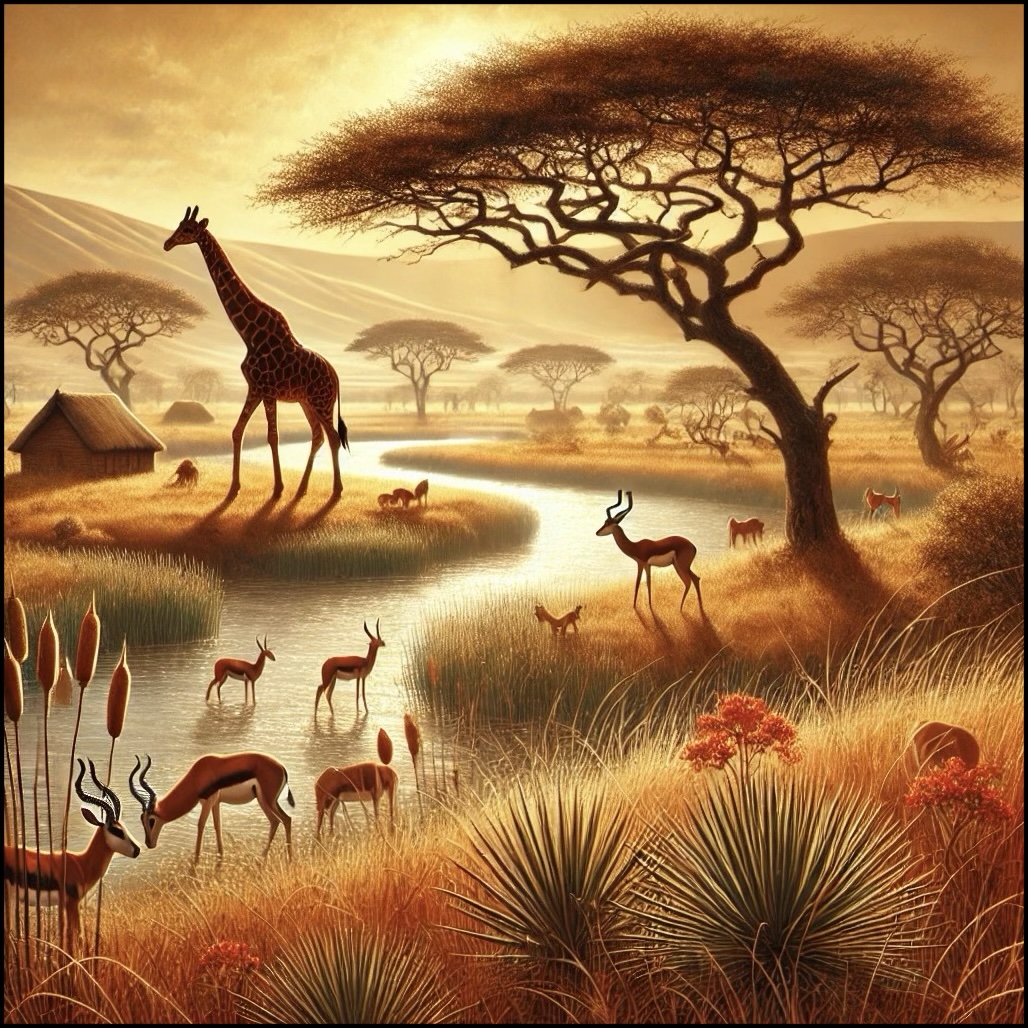
Temperate Southern Africa (with civilization) ©2024-25 Electric Prism, Inc. All rights reserved.
People
Groups
Topics
Commodoties
- Fish and game
- Weapons
- Hides and feathers
- Gem materials
- Glass
- Domestic animals
- Grains and produce
- Strategic metals
- Poisons
Subjects
- Commerce
- Architecture
- Painting and Drawing
- Decorative arts
- Faith
- Government
- Custom and Law
- Technology
- Metallurgy
Regions
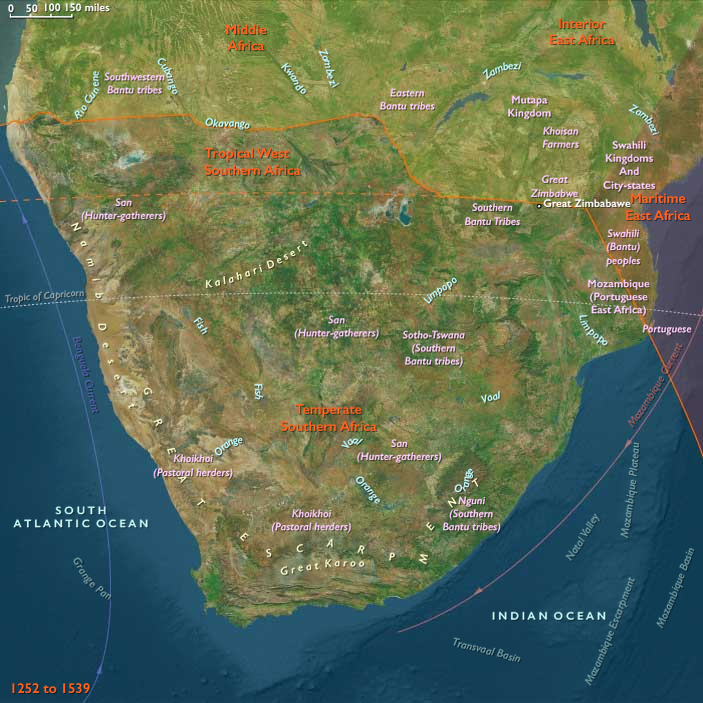
Subregions
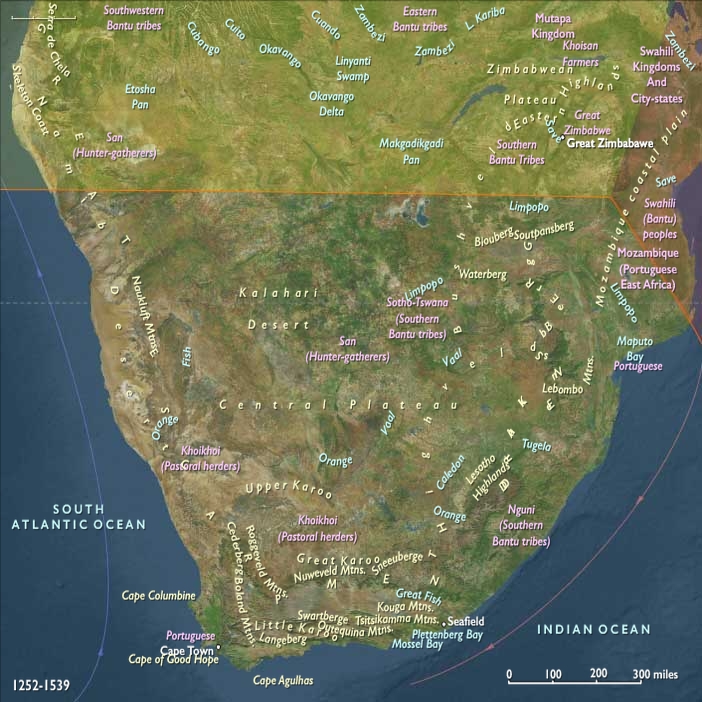
Years: 1396 - 1539
Temperate Southern Africa (with civilization) ©2024-25 Electric Prism, Inc. All rights reserved.
People
Groups
Topics
Commodoties
- Fish and game
- Weapons
- Hides and feathers
- Gem materials
- Glass
- Domestic animals
- Grains and produce
- Strategic metals
- Poisons
Subjects
- Commerce
- Architecture
- Painting and Drawing
- Decorative arts
- Faith
- Government
- Custom and Law
- Technology
- Metallurgy
Regions
Subregions