
Northern Australia (28557 – 7822 BCE): Monsoon …
Years: 28577BCE - 7822BCE
Northern Australia (28557 – 7822 BCE): Monsoon Coasts and Inland Savannas
Geographic and Environmental Context
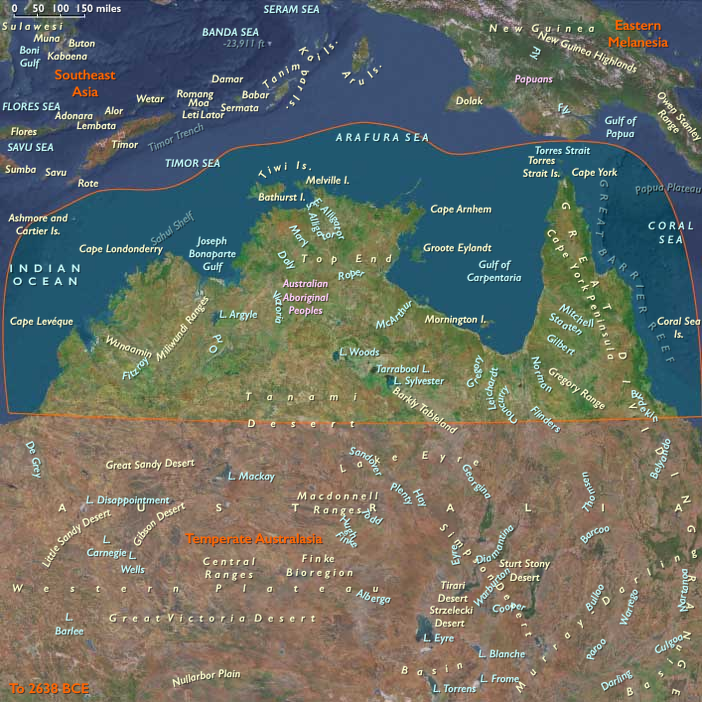
Northern Australia—including northern Queensland, the Northern Territory’s Top End, and the Kimberley region of Western Australia—was defined by a monsoonal climate with distinct wet and dry seasons.
-
Coastal zones included mangrove-fringed estuaries, tidal flats, and offshore reefs.
-
Inland savannas were dotted with billabongs and seasonal streams, backed by sandstone escarpments and open woodland.
-
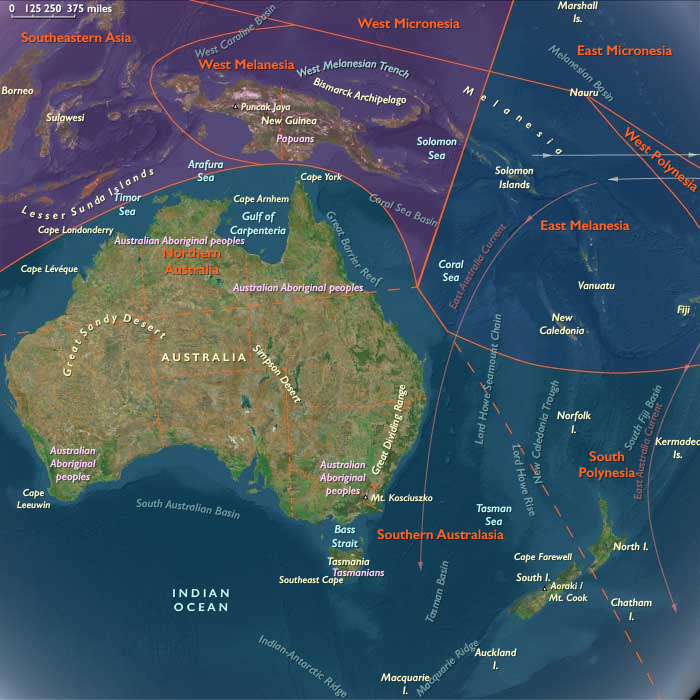
During lower sea levels, the Arafura Plain connected Australia to New Guinea, creating a vast Sahul landmasswith extensive northern coastal plains.
Climate and Environmental Shifts
-
Last Glacial Maximum (c. 26,500 – 19,000 BCE): Cooler, drier conditions weakened the summer monsoon; many wetlands shrank, and coastal plains expanded seaward. Mangroves retreated, and inland waterholes became critical dry-season refuges.
-
Bølling–Allerød (c. 14,700 – 12,900 BCE): Warming and stronger monsoon rains revitalized floodplains and coastal ecosystems; mangroves expanded, and inland plant productivity increased.
-
Younger Dryas (c. 12,900 – 11,700 BCE): Slightly cooler and drier conditions contracted wetlands and reduced some seasonal streams; resource reliability declined in more arid inland pockets.
-
Early Holocene (after c. 11,700 BCE): Full monsoon strength returned; rising seas inundated low-lying plains, creating the modern Gulf of Carpentaria and Torres Strait, and reshaping northern coastlines.
Subsistence and Settlement
-
Coastal foragers harvested fish, shellfish, dugong, marine turtles, and seabirds, using tidal rhythms to maximize catches.
-
Inland groups hunted wallabies, kangaroos, and emus; trapped waterfowl during wet-season breeding; and gathered yams, pandanus fruit, and nuts.
-
Seasonal movement followed the monsoon cycle: wet-season inland dispersal to exploit aquatic and plant abundance, dry-season concentration along reliable waterholes and the coast.
-
During the LGM and Younger Dryas, increased reliance on freshwater and estuarine fishing helped buffer against terrestrial resource scarcity.
Technology and Material Culture
-
Stone toolkits included flaked and ground-edge axes, scrapers, and backed microliths.
-
Wooden spears, throwing sticks, and clubs were adapted for both terrestrial hunting and fishing.
-
Bark canoes and rafts allowed nearshore fishing and travel along rivers and estuaries.
-
Ochre was widely used in rock art and ceremonial contexts.
Movement and Interaction Corridors
-
The exposed Arafura Plain during low sea level created overland routes between Arnhem Land and southern New Guinea, enabling cultural and genetic exchange.
-
River corridors such as the Victoria and Daly in the Top End, and the Fitzroy in the Kimberley, linked inland and coastal groups.
-
Stone raw material and ochre sources were important nodes in seasonal mobility patterns.
Cultural and Symbolic Expressions
-
Rock art traditions flourished, with depictions of animals, human figures, and geometric designs—some possibly representing ancestral beings in Dreaming narratives.
-
Ceremonial gatherings at key wet-season sites reinforced alliances and facilitated exchange.
Environmental Adaptation and Resilience
-
Seasonal mobility and ecological mapping of plant and animal cycles ensured reliable access to food.
-
Fire management maintained hunting grounds and encouraged the growth of edible plants.
-
Dietary diversity and resource-sharing between groups buffered against unpredictable rainfall.
Transition Toward the Holocene
By 7822 BCE, Northern Australia’s coastlines were reshaped by rising seas, the Arafura Plain was flooding, and rich monsoonal ecosystems supported dense seasonal gatherings. The integration of marine and terrestrial resources in subsistence strategies ensured continuity of lifeways through these environmental transformations.
Groups
Topics
Commodoties
Subjects
Regions
Subregions
Years: 28577BCE - 7822BCE
Groups
Topics
Commodoties
Subjects
Regions
Subregions