
Southern Australasia (820 – 963 CE): Songline …
Years: 820 - 963
Southern Australasia (820 – 963 CE): Songline Landscapes, Eel Aquaculture, and Unpeopled Islands
Geographic and Environmental Context
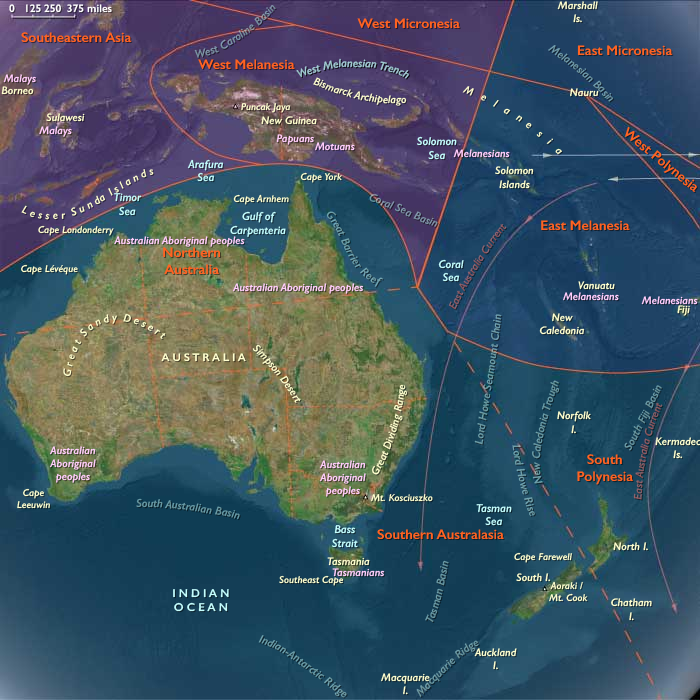
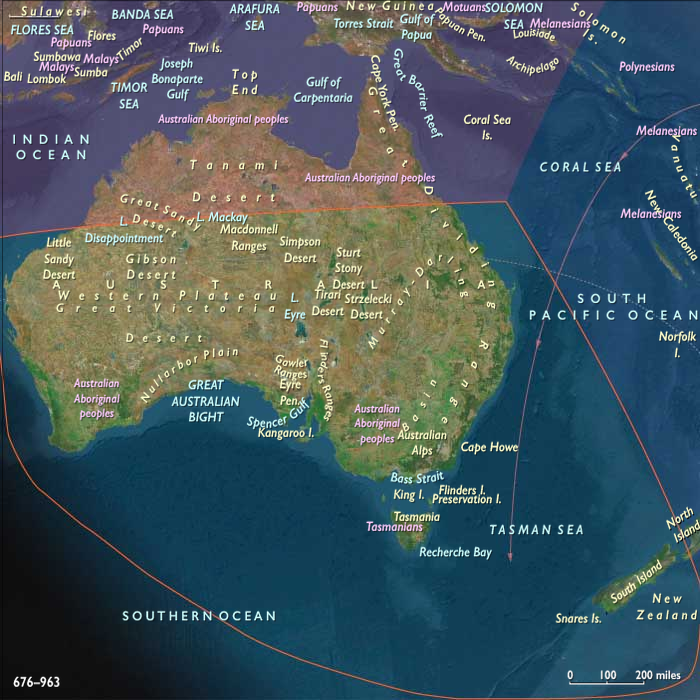
Southern Australasia includes central and southern Australia—the southern portions of Western Australia and Northern Australia, central and southern Queensland, New South Wales, Victoria, South Australia, and Tasmania—together with New Zealand’s South Island, the southwestern coast of the North Island, and the southern island groups (Stewart, Auckland, Campbell, Antipodes, Bounty, and Snares).
-
Australia: A broad arc of temperate woodlands, river valleys, and open plains, with the Murray–Darling system anchoring large ceremonial and subsistence networks.
-
Tasmania: A cool, maritime island with forests, grasslands, and rich coastal resources.
-
New Zealand (South Island + SW North Island) and the subantarctic islands: still uninhabited, maintaining intact ecosystems of seabirds, moa, and seal colonies.
Climate and Environmental Shifts
-
A generally cool-temperate regime, moving toward the onset of the Medieval Warm Period by c. 950.
-
Seasonal rainfall variability defined subsistence schedules across the Murray–Darling and coastal plains.
-
The subantarctic islands remained cold, stormy, and rich in marine life but untouched by humans.
Societies and Political Developments
-
Aboriginal nations in southern Australia—Gunditjmara, Ngarrindjeri, Yorta Yorta, Noongar, Palawa, and many others—organized through kinship and songline-based law.
-
Ceremonial gatherings along rivers, coasts, and wetlands reaffirmed alliances, traded resources, and renewed law through performance and ritual.
-
In western Victoria, the Gunditjmara operated one of the world’s oldest aquaculture systems at Budj Bim, engineering weirs and ponds to trap and store eels.
-
Tasmania: The Palawa pursued seasonal mobility between inland plains, highlands, and coastal fisheries.
-
New Zealand and subantarctic islands: uninhabited, maintaining untouched ecosystems.
Economy and Trade
-
Exchange networks moved ocher, stone, shells, fiber, wood, and smoked fish across long distances.
-
Surplus eels from Budj Bim were smoked and traded widely, forming a prestige resource.
-
Seasonal feasts redistributed fish, shellfish, and marsupial meat, strengthening inter-group ties.
Subsistence and Technology
-
Fire-stick farming created patchworks of grassland and woodland, favoring game and tubers.
-
Eel aquaculture at Budj Bim; fish traps and weirs along the Murray–Darling and coastal rivers.
-
Toolkits: ground-edge axes, wooden spears with spear-throwers, digging sticks, nets, bark containers, ocher pigments.
-
Tasmania: bone points, reed rafts, and fire-carrying techniques central to Palawa lifeways.
Movement and Interaction Corridors
-
Murray–Darling basin: a hub of ceremonial life and exchange.
-
Coastal voyaging (rafts, canoes) bridged inlets and offshore islands.
-
Tasmania: channel crossings linked mainland to smaller islands in Bass Strait.
-
New Zealand’s South Island & subantarctic islands: no voyaging arrivals yet, ecosystems intact.
Belief and Symbolism
-
Dreaming law bound groups to ancestral landscapes, mapping rivers, mountains, and wetlands as sacred story places.
-
Rock art, engravings, and body painting expressed cosmology and kinship.
-
Animal abundance (kangaroo, emu, eel, fish) reflected ancestral provision and required ritual observance.
Adaptation and Resilience
-
Portfolio economies (wetland eels, woodland tubers, marsupial hunts, coastal shellfish) spread risk.
-
Controlled burning ensured long-term productivity and travel corridors.
-
Ceremonial redistribution of surpluses cushioned groups against drought and ecological stress.
Long-Term Significance
By 963 CE, Southern Australasia sustained highly engineered landscapes (Budj Bim eel systems, fire-managed plains) and resilient kinship economies, while New Zealand and the subantarctic islands remained uninhabited ecological frontiers, awaiting future voyaging arrivals.
Groups
- Australians, Indigenous
- Yuin nation
- Ngarrindjeri
- Yorta Yorta
- Noongar
- Gunditjmara
- Aboriginal Tasmanians
- Polynesians
- Aotearoa
Topics
Commodoties
Subjects
Regions
Subregions
Related Events
Showing 10 events out of 54673 total
Years: 820 - 963
Groups
- Australians, Indigenous
- Yuin nation
- Ngarrindjeri
- Yorta Yorta
- Noongar
- Gunditjmara
- Aboriginal Tasmanians
- Polynesians
- Aotearoa
Topics
Commodoties
Subjects
Regions
Subregions