
Tarsus, a prosperous port city on the …
Years: 67BCE - 67BCE
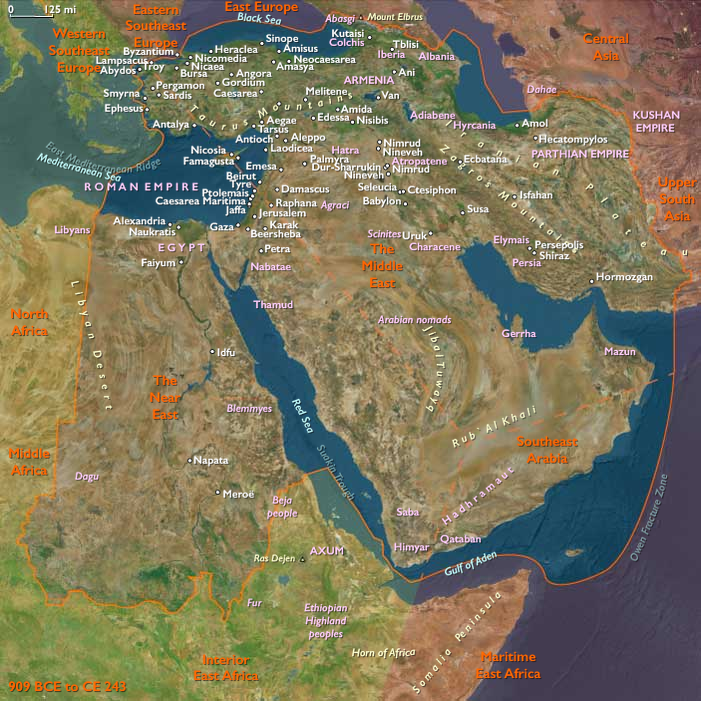
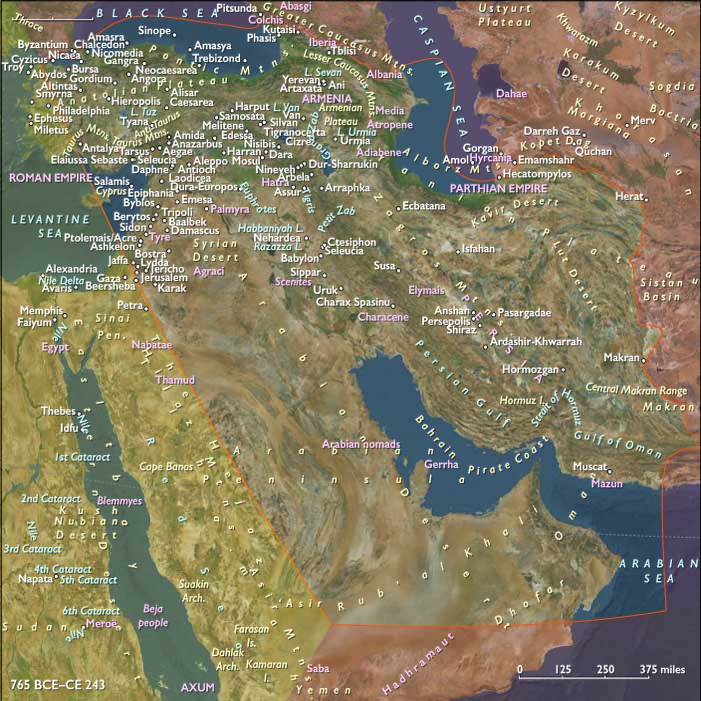
Tarsus, a prosperous port city on the Tarsus (Cydnus) River in the heart of the fertile Cilician plain in southern Turkey, about two hundred and fifty miles (four hundred kilometers) southeast of modern Ankara, was already largely influenced by Greek language and culture by the time Alexander the Great passed through with his armies in 333 BCE, and as part of the Seleucid Empire it has become increasingly Hellenized.
Strabo praises the cultural level of Tarsus in this period with its philosophers, poets and linguists.
The schools of Tarsus rival Athens and Alexandria.
2 Maccabees (4:30) records its revolt in about 171 BCE against Antiochus IV Epiphanes, who had renamed the town Antiochia on the Cydnus.
In his time, the library of Tarsus held two hundred thousand books, including a huge collection of scientific works.
The name didn't last, however, due to the confusion of so many cities named Antioch.
Pompey, having in 67 cleared the sea of the pirate menace to Rome’s grain supply, spends the rest of that year and the beginning of the next visiting the cities of Cilicia and Pamphylia, and providing for the government of newly conquered territories.
He subjects Tarsus to Rome, and in 67 BCE it becomes capital of the Roman province of Cilicia, the metropolis where the governor resides.
Locations
People
Groups
Topics
- Classical antiquity
- Roman Republic, Crisis of the
- Mithridatic War, Third
- Roman-Armenian War of 72-66 BCE
Commodoties
Subjects
Regions
Subregions
Related Events
Showing 10 events out of 62636 total
Years: 67BCE - 67BCE
Locations
People
Groups
Topics
- Classical antiquity
- Roman Republic, Crisis of the
- Mithridatic War, Third
- Roman-Armenian War of 72-66 BCE
Commodoties
Subjects
Regions
Subregions