
Taras (modern Taranto, Italy), one of the …
Years: 338BCE - 338BCE
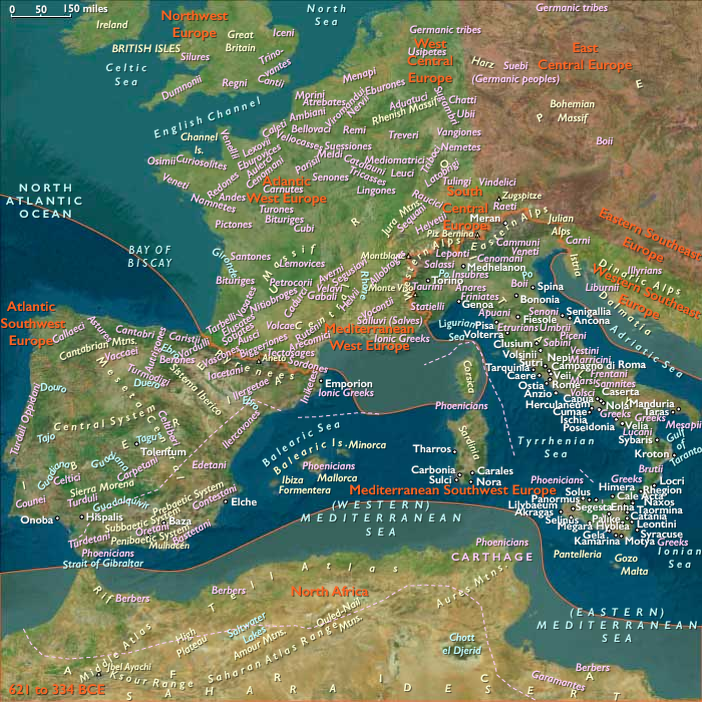
Taras (modern Taranto, Italy), one of the leading cities of Magna Graecia (Greek colonies in southern Italy), had reached its zenith of military power and prosperity in the first half of the fourth century BCE under the great philosopher, scientist and major Pythagorean mathematician Archytas, who served for seven years as commander in chief of his city.
After his death, however, the city has suffered in a series of wars.
Locations
People
Groups
- Greece, classical
- Italy, classical
- Sparta, Kingdom of
- Magna Graecia
- Peloponnesian League (Spartan Alliance)
Topics
- Iron Age Europe
- Greek colonization
- Iron Age Cold Epoch
- Classical antiquity
- Sicilian Wars, or Carthaginian-Syracusan Wars
Commodoties
Subjects
Regions
Subregions
Related Events
Showing 10 events out of 64576 total
Years: 338BCE - 338BCE
Locations
People
Groups
- Greece, classical
- Italy, classical
- Sparta, Kingdom of
- Magna Graecia
- Peloponnesian League (Spartan Alliance)
Topics
- Iron Age Europe
- Greek colonization
- Iron Age Cold Epoch
- Classical antiquity
- Sicilian Wars, or Carthaginian-Syracusan Wars
Commodoties
Subjects
Regions
Subregions