
…Tao, and along the easternmost border of …
Years: 1000 - 1000
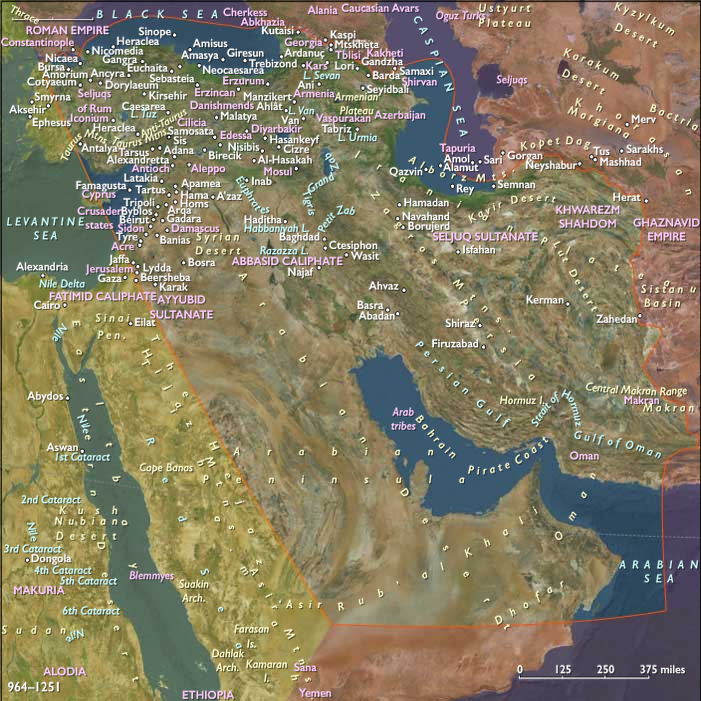
…Tao, and along the easternmost border of the Empire, the lands directly controlled by Constantinople.
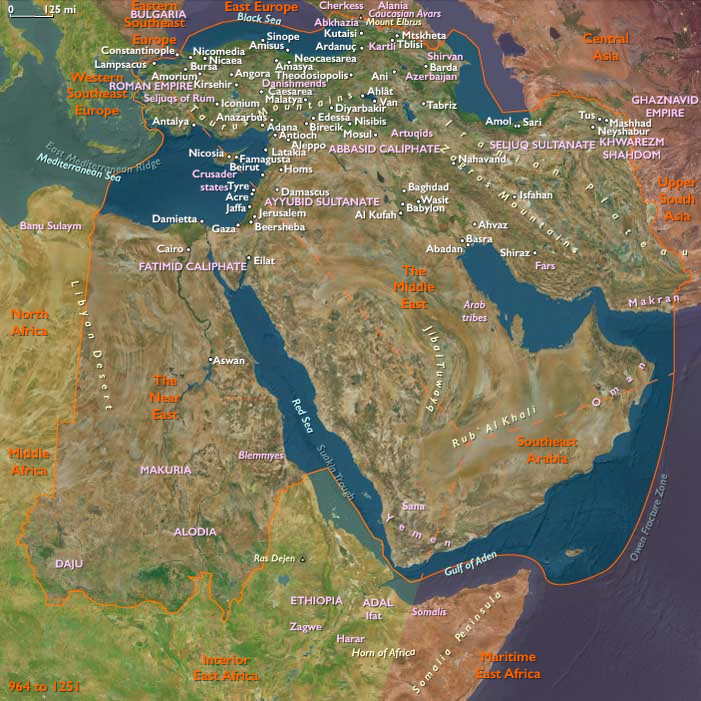
The fragmented petty kingdoms of Armenia have already begun to be destroyed from the west: the province of Taron had been annexed to the Constantinople’s empire in 968.
Armenian historians of this period speak of their adversaries as “… long-haired Turkmens armed with bow and lance on horses which flew like the wind … .” The Armenian princes appeal to Constantinople for protection from these forays, and Emperor Basil II has compelled David of Tao to bequeath him his lands on his death.
Basil gathers his inheritance upon David’s death in 1000, forcing the successor Georgian Bagratid ruler Bagrat III to recognize the new rearrangement.
Locations
People
Groups
- Georgians
- Armenian people
- Oghuz Turks
- Greeks, Medieval (Byzantines)
- Tao-Klarjeti (Georgian [Kartvelian] kingdoms and principalities)
- Roman Empire, Eastern: Macedonian dynasty
- Vaspurakan, Kingdom of
- Armenia, Bagratid
- Armenia, Zakarid
- Iberia (theme)
Commodoties
Subjects
Regions
Subregions
Related Events
Showing 10 events out of 52074 total
Years: 1000 - 1000
Locations
People
Groups
- Georgians
- Armenian people
- Oghuz Turks
- Greeks, Medieval (Byzantines)
- Tao-Klarjeti (Georgian [Kartvelian] kingdoms and principalities)
- Roman Empire, Eastern: Macedonian dynasty
- Vaspurakan, Kingdom of
- Armenia, Bagratid
- Armenia, Zakarid
- Iberia (theme)
Commodoties
Subjects
Regions
Subregions