
The Taíno (”good people”), an Arawakan group, …
Years: 1252 - 1396
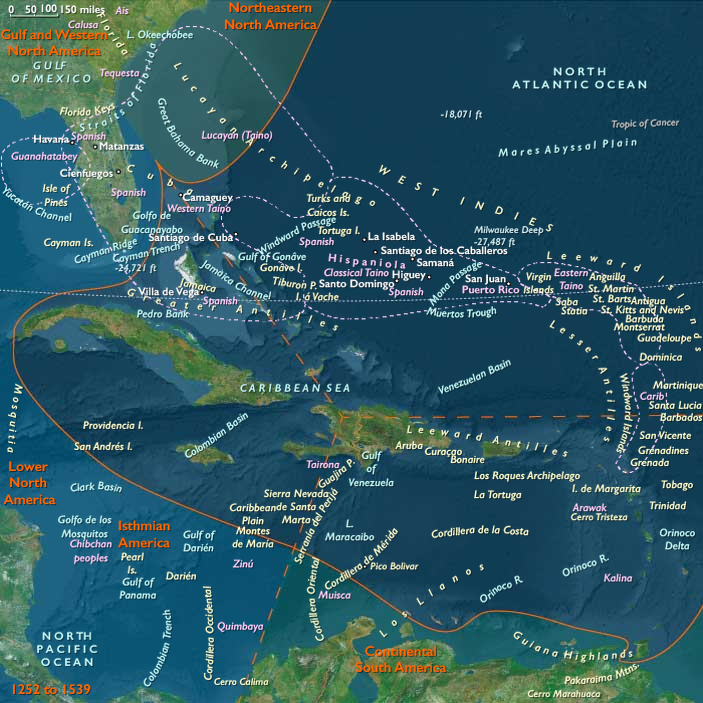
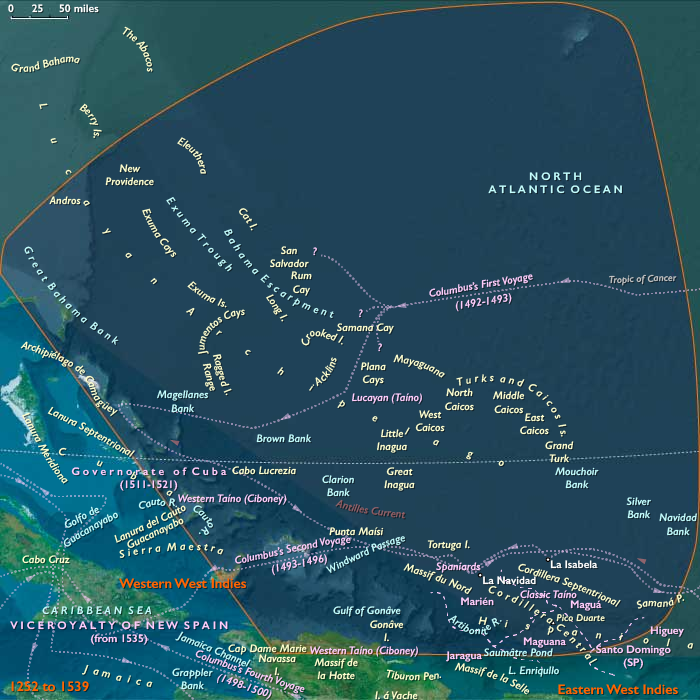
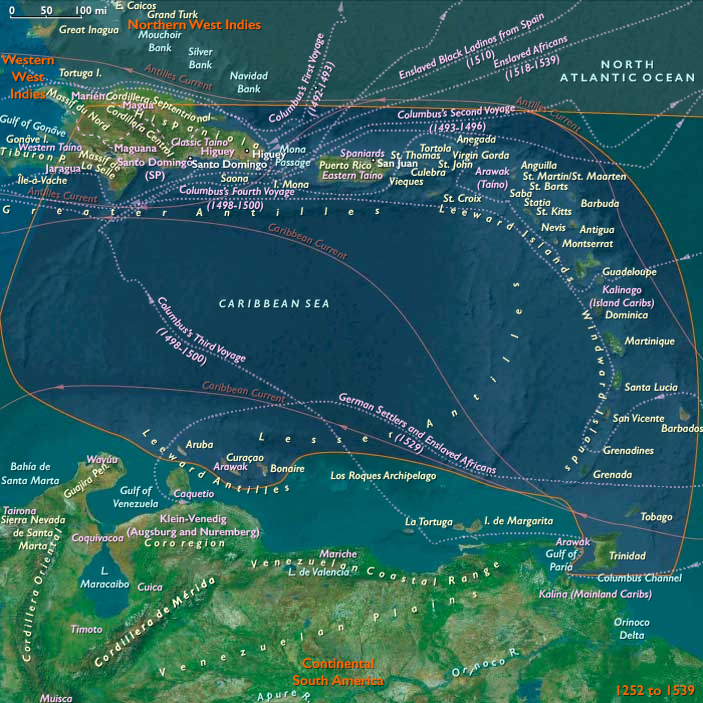
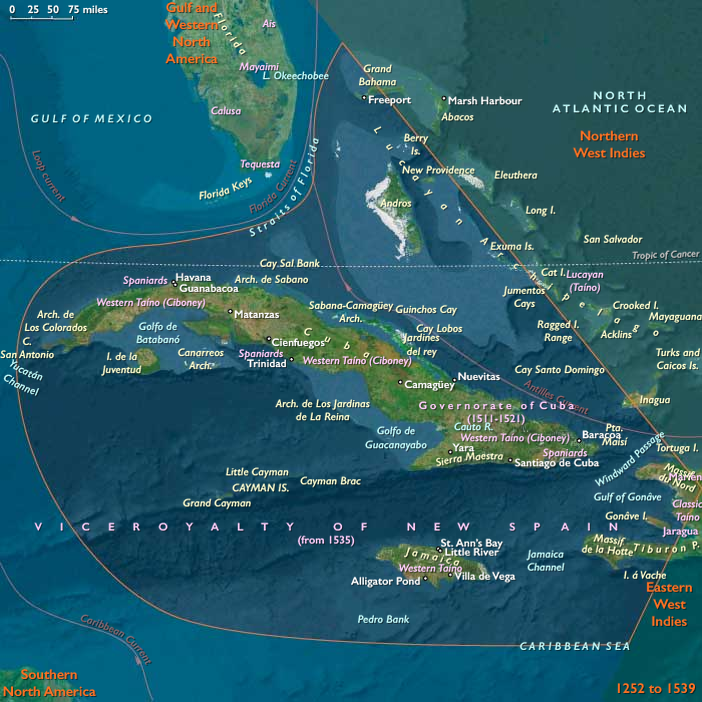
The Taíno (”good people”), an Arawakan group, populate Quisqueya, their name for the island presently known as Hispaniola. (An alternate name is Ayiti, meaning ”mountainous place”.)
Their Ciboney predecessors, an Arawakan people with lower technology, become concentrated in the west.
The Taíno practice a high-yielding form of slash-and-burn agriculture to grow their staple foods, cassava and yams.
Corn (maize), beans, squash, tobacco, peanuts (groundnuts), and peppers are also grown, and wild plants are gathered.
Birds, lizards, and small animals are hunted for food, the only domesticated animals being dogs and, occasionally, parrots used to decoy wild birds within range of hunters.
Fish and shellfish are another important food source.
Taíno settlements range from single families to groups of three thousand people, and houses are built of logs and poles with thatched roofs.
Men wear loincloths, and women wear aprons of cotton or palm fibers.
Both sexes paint themselves red on special occasions, and they wear earrings, nose rings, and necklaces, which are sometimes made of gold.
Other Taíno crafts are few; some pottery and baskets are made, and stone and wood are worked skillfully.
A favorite form of recreation among the Taíno is a ball game that they play on rectangular courts.
The Taíno follow an elaborate system of religious beliefs and rituals that involve the worship of spirits (zemis) by means of carved representations.
They also have a complex social order.
Their government is by hereditary chiefs and subchiefs, and there are classes of nobles, commoners, and serfs (or slaves).
Groups
Topics
Commodoties
Subjects
Regions
Subregions
Years: 1252 - 1396
Groups
Topics
Commodoties
Subjects
Regions
Subregions