
Tacitus, Plutarch and Pliny the Elder describe …
Years: 66 - 66
Tacitus, Plutarch and Pliny the Elder describe Gaius Petronius as the elegantiae arbiter, "judge of elegance" in the court of the emperor Nero.
After serving as consul in the year CE 62, he has become a member of the senatorial class who devote themselves to a life of pleasure, whose relationship to Nero is apparently akin to that of a fashion advisor.
Petronius is the reputed author of the vivid Satyricon, a robust portrayal of life in first-century CE Rome.
The novel blends prose and verse in recounting the bawdy escapades of the rogue Encolpius who wanders through Rome in search of his lost virility, accompanied by his young friend Giton and the jealous Ascyltus.
The novel’s central section, "Trimalchio's Feast," apparently satirizes the cruel and capricious emperor.
None of the ancient sources give any further detail about his life, or mention that he was a writer.
However a medieval manuscript, written around 1450, of the Satyricon credited a "Titus Petronius" as the author of the original work.
Traditionally this reference is linked with Petronius Arbiter, since the novel appears to have been written or at least set during his lifetime.
The link, however, remains speculative and disputed.
Petronius' development of his characters in the Satyricon, namely Trimalchio, transcends the traditional style of writing of ancient literature.
In the literature written during Petronius' life the emphasis is always on the typical considerations of plot, which had been laid down by classical rules.
The character, which is hardly known in ancient literature, is secondary.
Petronius goes beyond these literary limitations in his exact portrayals of detailed speech, behavior, surroundings, and appearance of the characters.
Another literary device Petronius employs in his novel is a collection of specific allusions.
The allusions to certain people and events are evidence that the Satyricon was written during Nero's time.
These also suggest that it was aimed at a contemporary audience in which a part consisted of Nero's courtiers and even Nero himself.
The message Petronius tries to convey in his work is far from moral and does not intend to produce reform, but is written above all to entertain and should be considered artistically.
As the title implies, the Satyricon is a satire, specifically a Menippean satire, in which Petronius satirizes nearly anything, using his impeccable taste as the only standard.
It is speculated that Petronius' depiction of Trimalchio mirrors that of Nero.
Although we never know the author's own opinion, we see the opinions of the characters in the story and how Encolpius criticizes Trimalchio.
Petronius' high position soon made him the object of envy for those around him.
Having attracted the jealousy of Tigellinus, the commander of the emperor's guard, he was accused of treason.
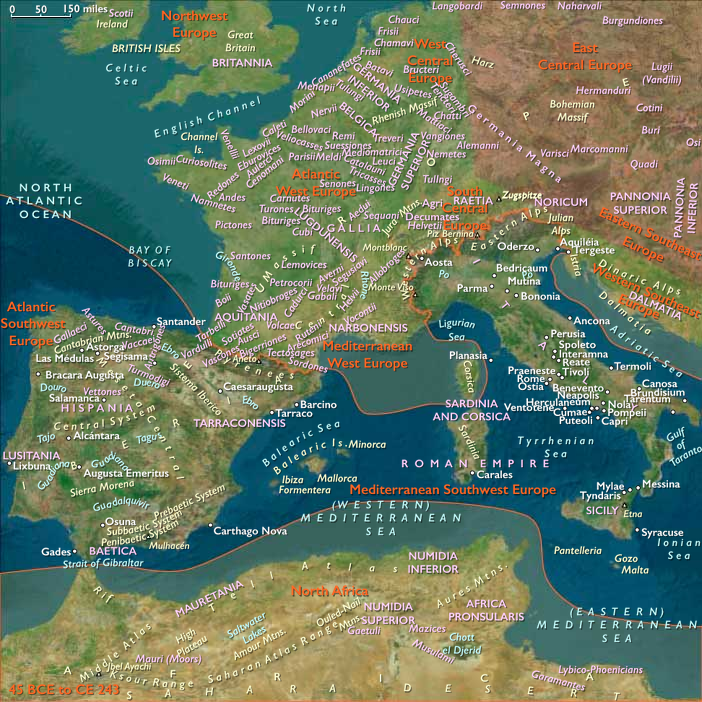
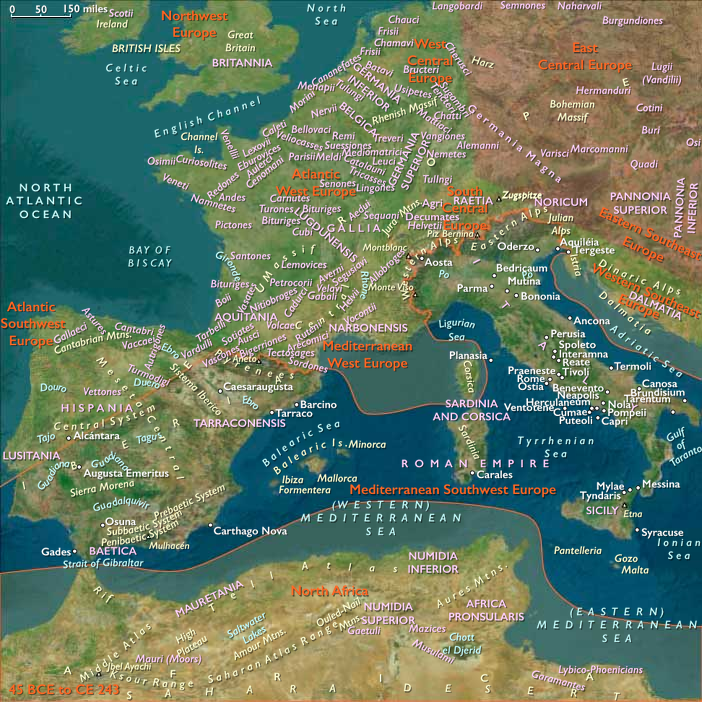
Arrested at Cumae in 65 CE, but did not wait for a sentence but instead chose to take his own life.
Locations
People
Groups
Topics
Commodoties
Subjects
Regions
Subregions
Years: 66 - 66
Locations
People
Groups
Topics
Commodoties
Subjects
Regions
Subregions