
Syrian Zengid ruler Nur al-Din, much admired …
Years: 1174 - 1174
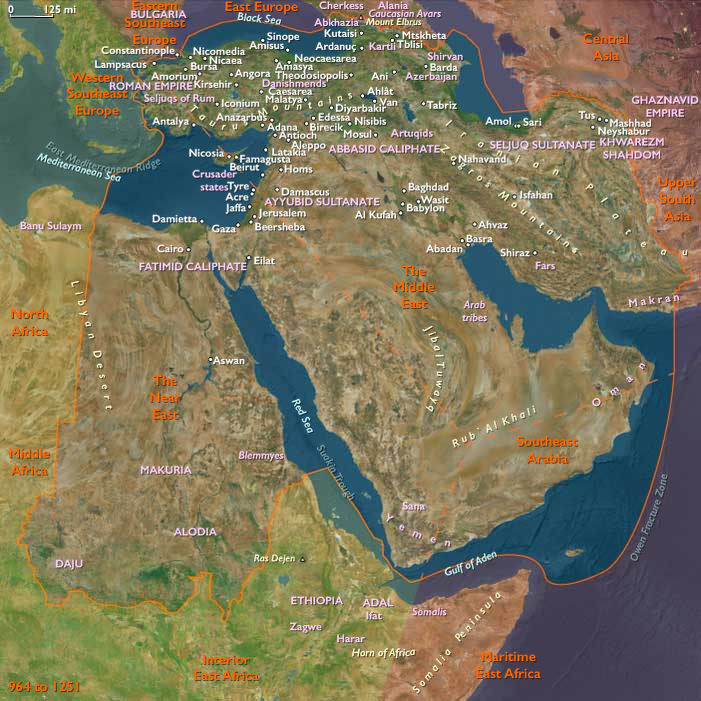
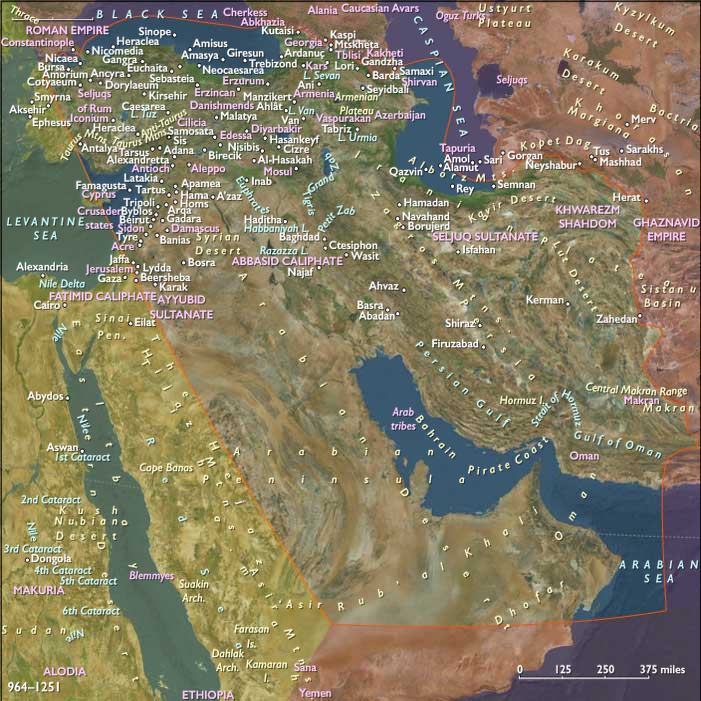
Syrian Zengid ruler Nur al-Din, much admired for his integrity and piety, dies on May 15, 1174, thereby opening the way for his protégé, the Kurdish general Saladin, to plan the conquest of the Zangid Sultanate of Mosul as a preliminary to the holy war (jihad) against the Crusaders.
Although still officially serving as a vassal for Nur al-Din, Saladin has taken on an increasingly independent foreign policy.
This becomes openly so after the death of Nur al-Din.
Using his rich agricultural possessions in Egypt as a financial base, Saladin soon moves into Syria with a small but strictly disciplined army to claim the regency on behalf of the young son of his former suzerain.
On November 23, he is welcomed in Damascus by the governor of the city.
Soon abandoning this claim, however, Saladin begins the zealous pursuit of the goal of uniting, under his own standard, all the Muslim territories of Syria, northern Mesopotamia, Palestine, and Egypt.
This, Saladin will accomplish by skillful diplomacy backed when necessary by the swift and resolute use of military force.
Gradually, his reputation will grow as a generous and virtuous but firm ruler, devoid of pretense, licentiousness, and cruelty.
In contrast to the bitter dissension and intense rivalry that has up to now hampered the Muslims in their resistance to the crusaders, Saladin's singleness of purpose induces them to rearm both physically and spiritually.
Saladin's every act is inspired by an intense and unwavering devotion to the idea of jihad, or holy war—the Muslim equivalent of the Christian crusade.
It is an essential part of his policy to encourage the growth and spread of Muslim religious institutions.
He courts its scholars and preachers, founds colleges and mosques for their use, and commissions them to write edifying works, especially on the jihad itself.
Through moral regeneration, which is a genuine part of his own way of life, he tries to re-create in his own realm some of the same zeal and enthusiasm that had proved so valuable to the first generations of Muslims when, five centuries before, they had conquered half the known world.
Locations
People
Groups
- Islam
- Muslims, Sunni
- Muslims, Shi'a
- Abbasid Caliphate (Baghdad)
- Christians, Roman Catholic
- Zengid dynasty of Syria
- Damascus, Ayyubid Dynasty of
- Egypt, Ayyubid Sultanate of
Topics
Commodoties
Subjects
Regions
Subregions
Years: 1174 - 1174
Locations
People
Groups
- Islam
- Muslims, Sunni
- Muslims, Shi'a
- Abbasid Caliphate (Baghdad)
- Christians, Roman Catholic
- Zengid dynasty of Syria
- Damascus, Ayyubid Dynasty of
- Egypt, Ayyubid Sultanate of
Topics
Commodoties
Subjects
Regions
Subregions