
Expansion and Influence of the Anabaptist Movement …
Years: 1528 - 1539
Expansion and Influence of the Anabaptist Movement (1527)
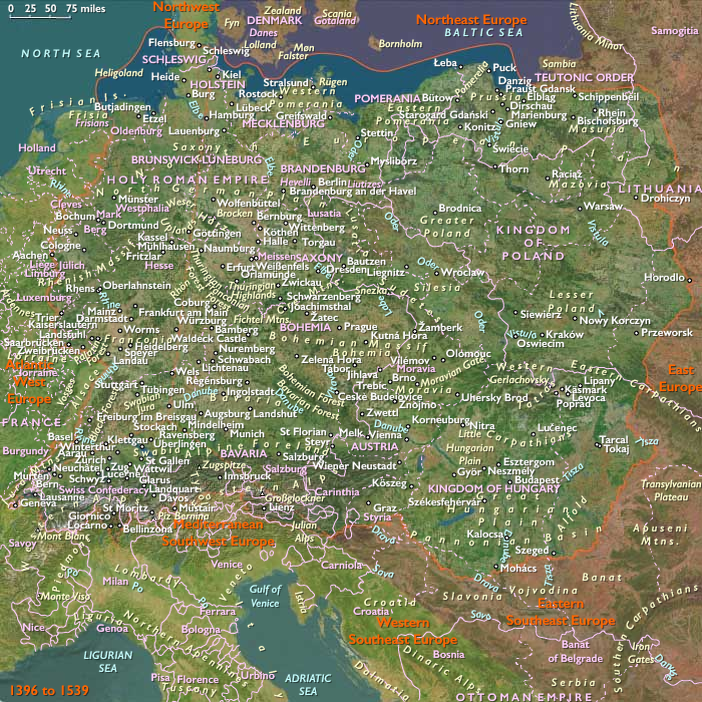
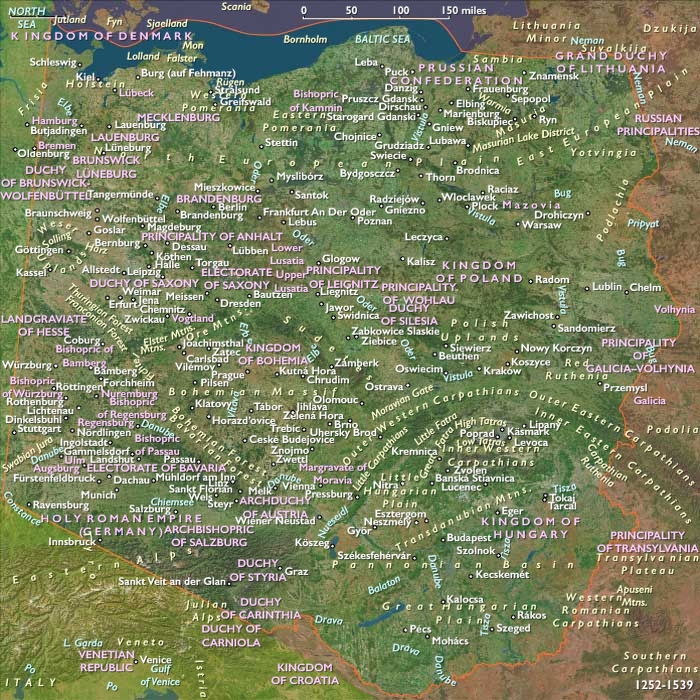
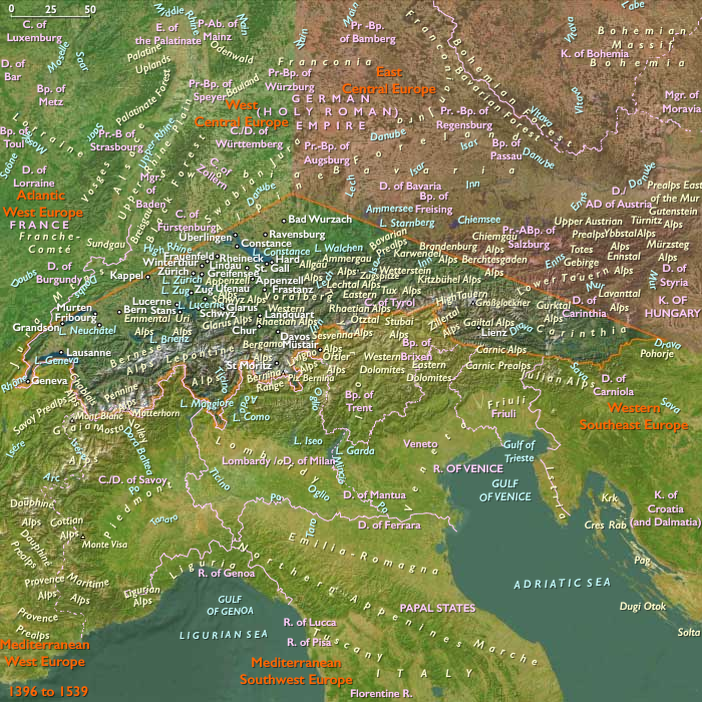
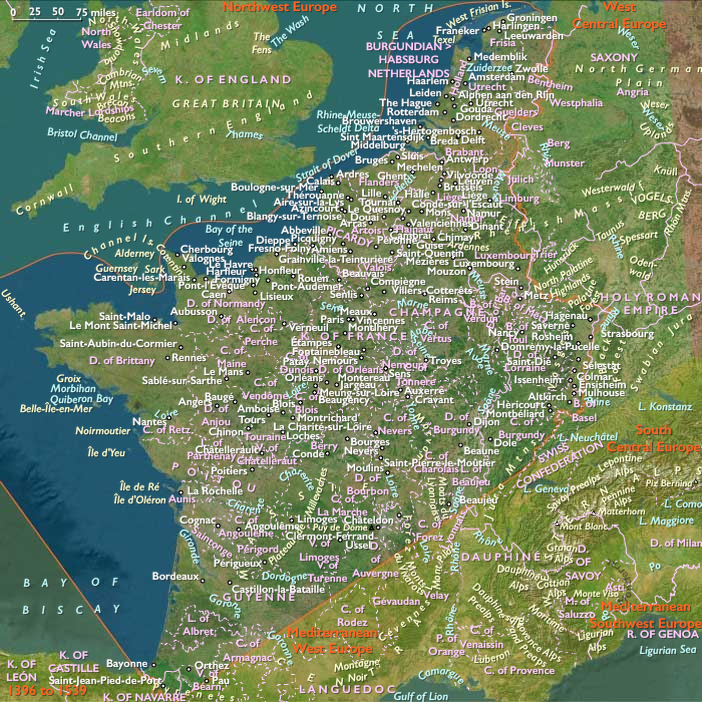
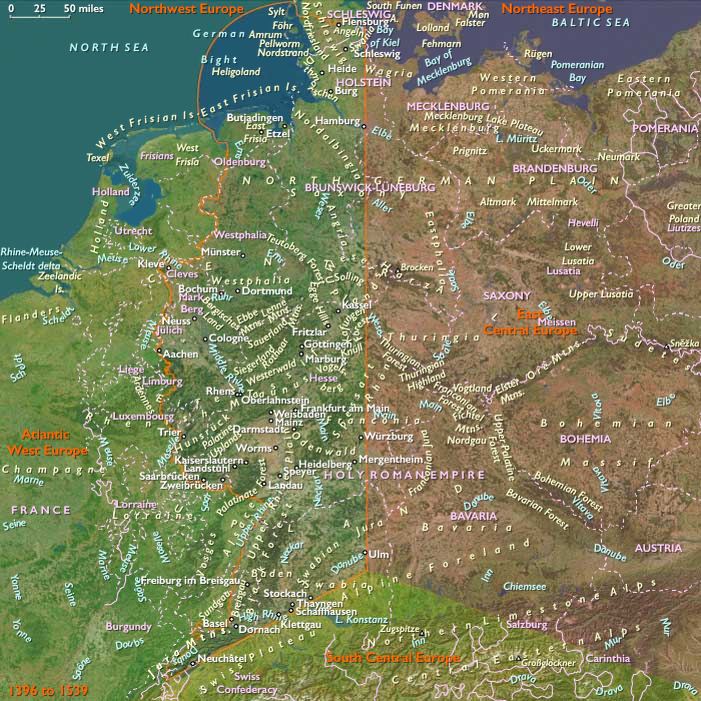
The Anabaptist movement, originating among radical religious reformers in the early stages of the Protestant Reformation, significantly expands its geographic reach by 1527. Initially concentrated in central German-speaking regions, the movement now spreads swiftly into southwest Germany, Austria, Moravia, along the Danube, and down the Rhine into the Netherlands.
Emerging in the turbulent aftermath of the German Peasants' War (1524–1525), the Anabaptists emphasize adult baptism, communal ownership, pacifism, separation from secular authority, and a rejection of established ecclesiastical hierarchies. By 1527, Anabaptist communities—small yet fervently dedicated—comprise less than one percent of the population in central Europe. Notably, the majority of these adherents belong to the lower social strata, including artisans, peasants, and urban laborers, reflecting the movement’s strong appeal among those marginalized or dissatisfied with the established political and religious order.
Key Thematic Elements
- Social Composition: Predominantly lower social classes; movement thrives among artisans, peasants, and urban poor.
- Doctrine and Practices: Core teachings include believer’s baptism, communal sharing of goods, rejection of oaths, and nonviolence.
- Geographical Spread: Moves rapidly into Moravia, where Anabaptists establish communities based on communal property, as well as into urban centers in the Netherlands and along the Rhine valley.
- Repression and Persecution: Authorities, both Protestant and Catholic, view Anabaptists as subversive, resulting in widespread persecution.
Long-term Consequences and Significance
The spread of Anabaptism in 1527 is a critical development within the broader Protestant Reformation, challenging both secular and religious authorities. Despite intense persecution, the movement’s ideas persist and will significantly influence subsequent religious groups, most notably the Mennonites, Amish, and Hutterites. The Anabaptist insistence on religious liberty, the separation of church and state, and pacifism profoundly shapes Protestant thought in Europe and, later, contributes to concepts of religious freedom and communal living in North America.
Groups
- Austria, Archduchy of
- Moravian Margravate
- Bohemia, Kingdom of
- Holy Roman Empire
- Netherlands, Habsburg
- Protestantism
- Anabaptists
Topics
Subjects
Regions

Subregions
Related Events
Showing 10 events out of 38215 total
Years: 1528 - 1539
Groups
- Austria, Archduchy of
- Moravian Margravate
- Bohemia, Kingdom of
- Holy Roman Empire
- Netherlands, Habsburg
- Protestantism
- Anabaptists
Topics
Subjects
Regions
Subregions