
Sybaris had amassed great wealth and a …
Years: 573BCE - 562BCE
Sybaris had amassed great wealth and a huge population by the sixth century BCE as a result of the rich farming land nearby and its policy of admitting settlers of other nations to its citizenry, a practice shunned by other Greek colonies.
During this period, Sybaris' wealth and power is greatly envied and admired by the rest of the Hellenic world.
It mints its own coinage and its innovations include perhaps the world's first primitive yet effective street-lighting system and the concept of intellectual property.
The latter notion was developed, according to Athenaeus' "Banquet of the Learned" (Deipnosophistae), to ensure that cooks could exclusively profit from their signature dishes for a whole year.
Sybaris is also a dominant power in the region.
We are told by Strabo that the Sybarites ruled over twenty-five subject cities, and could bring into the field three hundred thousand of their own citizens, although this is probably an exaggeration.
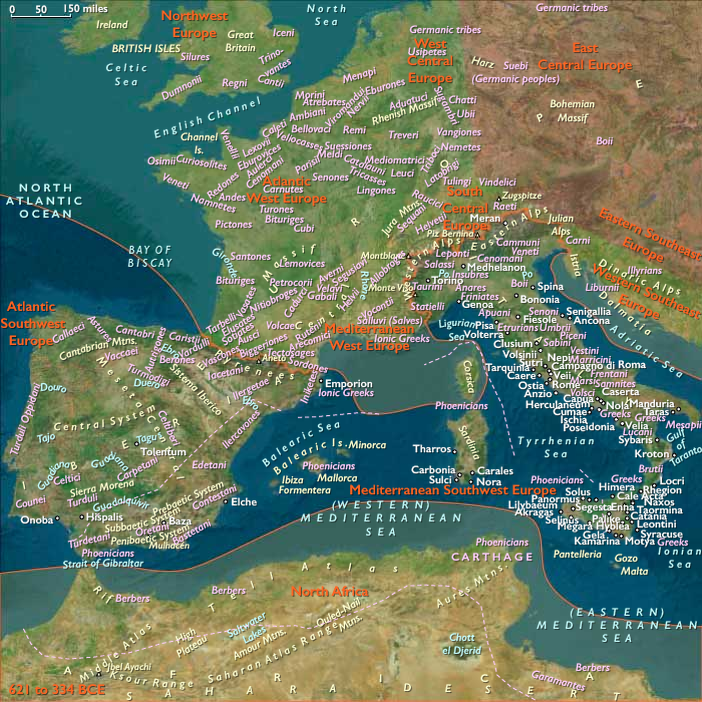
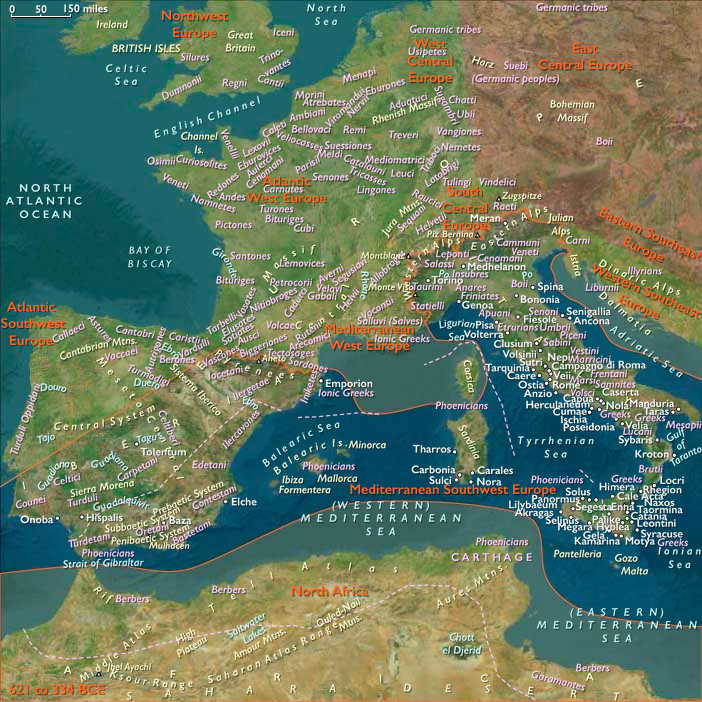
Most of the subject cities are probably Oenotrian towns in the interior, but we know that Sybaris had extended its dominion across the peninsula to the Tyrrhenian Sea, where it has founded the colonies of Poseidonia (Paestum), Laüs (Laus), and Scidrus.
The city itself is said to be no less than fifty stadia in circumference, and it is said by Athenaeus that five thousand knights attended its religious processions, which would mean that their number was four times greater than at Athens.
Sybaris is at its height around 580 BCE to 560 BCE during the time of Smindyrides, a prominent citizen who Herodotus claims surpassed all other men in refined luxury.
He is the wealthiest suitor for the daughters of Cleisthenes of Sicyon and was accompanied by a train of one thousand slaves on this occasion.
Athenaeus provides many examples of the opulent wealth for which Sybaris is famous in this period.
In particular, they are renowned for the splendor of their attire, which is made from the finest Milesian wool, and as such have developed extensive commercial relations and a close friendship with Miletus.
Another example of Sybaritic luxury is found in the story of Alcimenes of Sybaris, who gave a splendid figured robe as a votive offering to the temple of Lacinian Juno.
Much later, the robe will fall into the possession of Dionysius of Syracuse and be sold by him for one hundred and twenty talents.
Locations
People
Groups
- Polytheism (“paganism”)
- Oenotrians
- Miletus (Ionian Greek) city-state of
- Italy, classical
- Sicyon, Greek city-state of
- Magna Graecia
- Sybaris (Achaean Greek) city-state of
Topics
Commodoties
- Weapons
- Grains and produce
- Fibers
- Textiles
- Ceramics
- Strategic metals
- Slaves
- Beer, wine, and spirits
- Money
- Land
- Manufactured goods
Subjects
- Commerce
- Watercraft
- Environment
- Labor and Service
- Fashion
- Conflict
- Faith
- Government
- Custom and Law
- Technology
Regions
Subregions
Related Events
Showing 10 events out of 65873 total
Years: 573BCE - 562BCE
Locations
People
Groups
- Polytheism (“paganism”)
- Oenotrians
- Miletus (Ionian Greek) city-state of
- Italy, classical
- Sicyon, Greek city-state of
- Magna Graecia
- Sybaris (Achaean Greek) city-state of
Topics
Commodoties
- Weapons
- Grains and produce
- Fibers
- Textiles
- Ceramics
- Strategic metals
- Slaves
- Beer, wine, and spirits
- Money
- Land
- Manufactured goods
Subjects
- Commerce
- Watercraft
- Environment
- Labor and Service
- Fashion
- Conflict
- Faith
- Government
- Custom and Law
- Technology
Regions
Subregions