
Sweden's sudden determination to take over Finland …
Years: 1249 - 1249
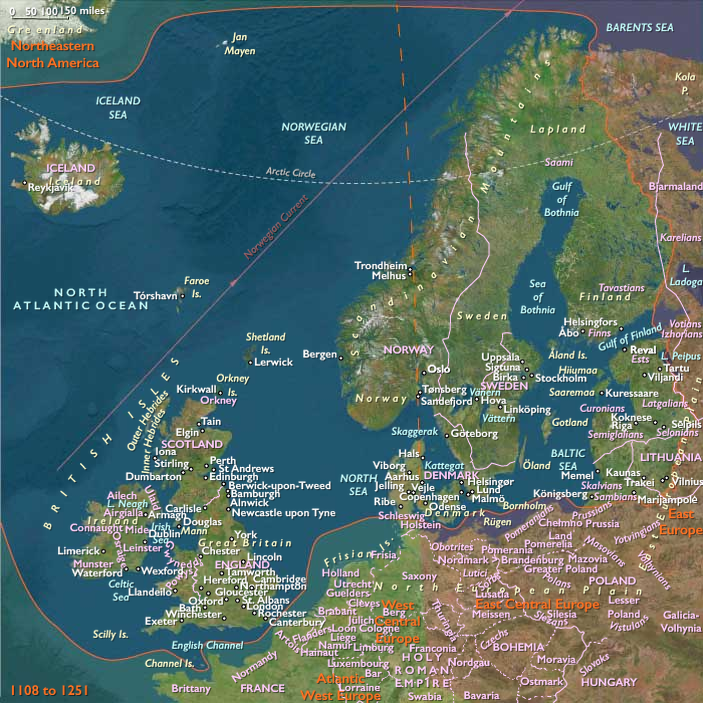
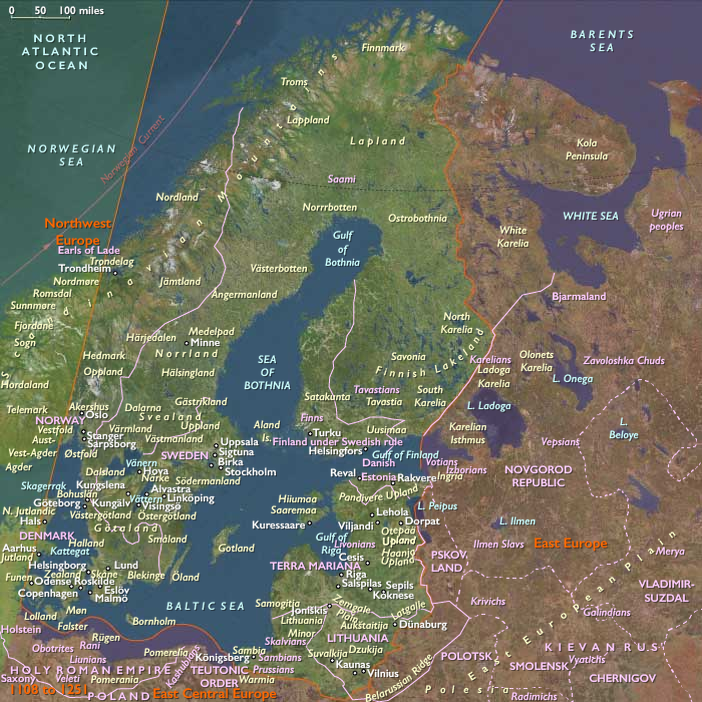
Sweden's sudden determination to take over Finland has not been explained, but for one reason or another Finland is high on Birger Jarl's agenda.
Finland has become an integrated part of Sweden since there was a lot of exchange between the regions, especially via the Åland archipelago.
During this time, it is easier to travel by sea than by land.
Birger Jarl seems to have headed for Finland just after having both crushed the Folkung uprising of 1247-1248 and finalized the Treaty of Lödöse with Norway earlier in the summer of 1249.
Sweden's previous attempts to gain a foothold in Estonia in 1220 may have urged Sweden to settle for what is still available.
Eric's Chronicle also points out the threat from Russians, mentioning that the "Russian king" had now lost the conquered land.
All details of the crusade are from Eric's Chronicle, which is largely propagandist in nature, written amidst internal unrest and war against Novgorod.
The chronicle has caused a long controversy on the actual target of the expedition, since it presents Tavastians (taffwesta) as the Swedish opponents.
Based on this, it is usually assumed that the target of the crusade was also Tavastia, even though that is not explicitly said in the chronicle.
Tavastians are known to have rebelled against the church in the 1230s, which had resulted in a papal demand for a crusade against them in a letter in 1237.
According to the chronicle, the expedition was prepared in Sweden and then conducted over sea to a land on the coast, where the enemy was waiting.
Since Tavastia was inland, this contradiction was later explained so that there was a Tavastian port somewhere on the coast that was the primary target of the attack.
The Chronicle also mentions that a castle called "taffwesta borg" was established after the war.
There have been many attempts to identify the castle with either Häme Castle or Hakoinen Castle in central Tavastia, but neither has been indisputably dated to such an early period.
The first Swedish garrisons in Finland seem to have been not far from Turku and Koroinen, the fortified church-residence of the early bishops, along the Oxen Way to central Tavastia.
Pope Innocent IV, probably related to preventing other parties from getting involved in the conflict, takes Finland under his special protection in August, 1249, without , however, mentioning Sweden in any way.
Finland's bishop Thomas, probably a Dominican monk, had resigned already in 1245 and died three years later in a Dominican convent in Gotland.
The seat being vacant, the diocese had probably been under the direct command of the papal legate William of Modena, whose last orders to Finnish priests were given in June, 1248.
Swedish Bero had eventually been appointed as the new bishop in 1248/9, presumably soon after William's visit to Sweden for an important church meeting at Skänninge that ended on March 1, 1248.
The so-called "Palmsköld booklet" from 1448 notes that it was Bero who gave Finns' tax to the Swedish king.
Bero comes directly from the Swedish court, as will his two successors.
It seems that Swedish bishops also hold all secular power in Finland until the 1280s nd the establishment of the position of the Duke of Finland.
In 1249, the situation is also seen clear enough to have the first Dominican convent established in Finland.
There had been no monasteries in Finland before this.
The convent is situated next to the bishop's fortification in Koroinen, and will remain here until the end of the century.
Locations
People
Groups
- Polytheism (“paganism”)
- Finns
- Sweden, Kingdom of
- Christians, Roman Catholic
- Swedes (Scandinavians)
- Novgorod Republic
- Dominicans, or Order of St. Dominic
Topics
Commodoties
Subjects
Regions
Subregions
Years: 1249 - 1249
Locations
People
Groups
- Polytheism (“paganism”)
- Finns
- Sweden, Kingdom of
- Christians, Roman Catholic
- Swedes (Scandinavians)
- Novgorod Republic
- Dominicans, or Order of St. Dominic
Topics
Commodoties
Subjects
Regions
Subregions