
Suryavarman II has built the colossal (4920 …
Years: 1150 - 1150
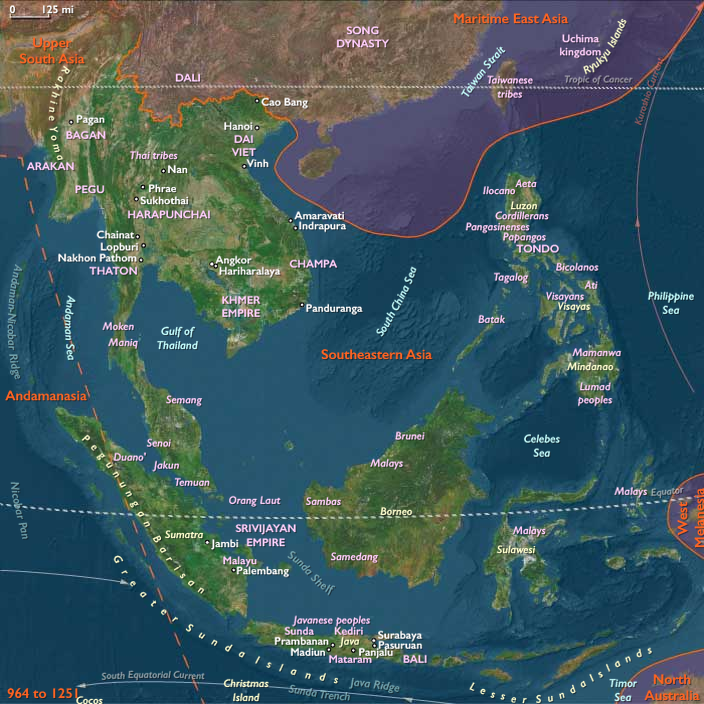
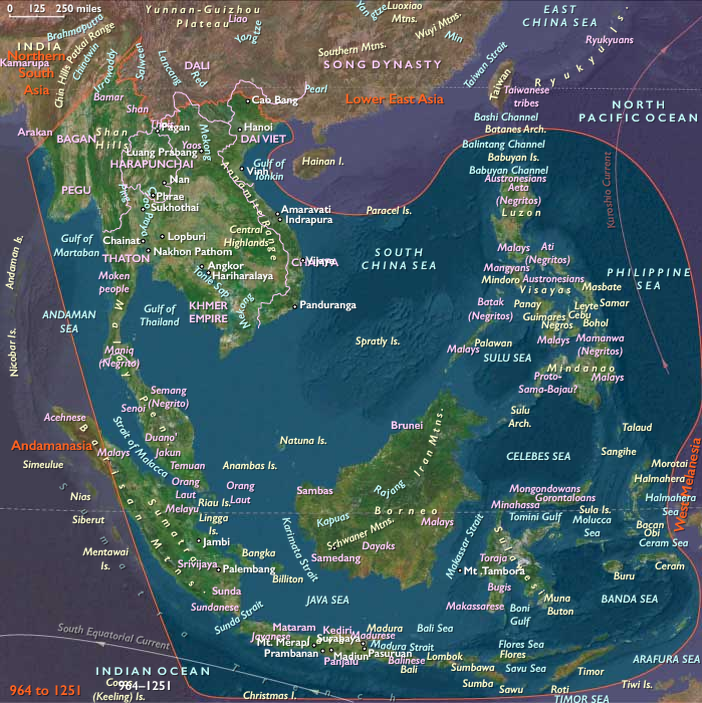
Suryavarman II has built the colossal (4920 by 4265 feet/1500 by 1300-meters) temple complex known as Angkor Wat during a reign of nearly four decades.
Dedicated to Vishnu, it has been built as the king's state temple and capital city.
The largest monument ever built in the capital, Angkor Wat fills the temple mountain it is meant to emulate, like all Angkor’s previous temple mountains, with three-dimensional images and miles of relief sculpture that cover every inch of available wall space.
According to Guinness World Records, it is the largest religious structure in the world.
Work seems to have come to an end on the king's death around 1150, with some of the bas-reliefs unfinished.
As the best-preserved temple at the site, it is the only one to have remained a significant religious center since its foundation—first Hindu, then Buddhist.
The modern name, Angkor Wat, in use by the sixteenth century, means "City Temple": Angkor is a vernacular form of the word nokor which comes from the Sanskrit word nagara (capital), while wat is the Khmer word for temple.
Prior to this time the temple is known as Preah Pisnulok, after the posthumous title of its founder.
Inscriptional evidence suggests that Suryavarman II died between 1145 and 1150, possibly during a military campaign against Champa.
He is succeeded by Dharanindravarman II, a cousin, son of the brother of the king’s mother.
A period of weak rule and feuding begins.
Locations
People
Groups
Topics
Commodoties
Subjects
Regions
Subregions
Years: 1150 - 1150
Locations
People
Groups
Topics
Commodoties
Subjects
Regions
Subregions